
RM6 Operating Mechanism: Working Principle, Motorization, Replacement and Maintenance Guide
Compatibility Disclaimer:RM6 is a registered trademark and product series of Schneider Electric. All products mentioned in this article are independently manufactured, RM6-compatible aftermarket replacement components. Our units are not original Schneider parts, nor are they sponsored, authorised or endorsed by Schneider Electric. All technical guidance is for qualified electrical engineers only.
Introduction
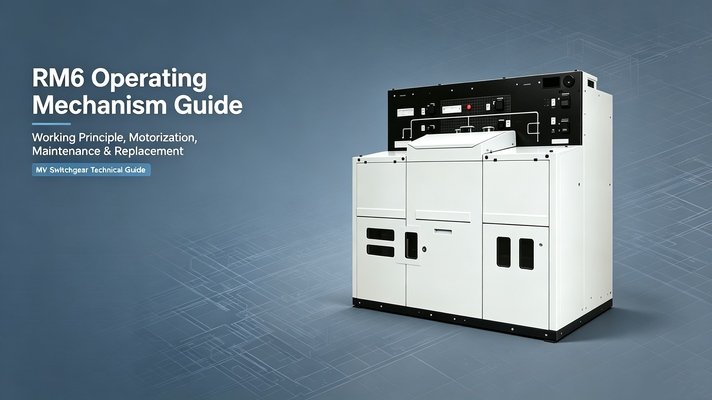
The RM6 compact SF6 ring main unit (RMU) is widely deployed in medium voltage (MV) distribution networks across Europe, the Middle East, and Southeast Asia. At the core of every RMU sits the RM6 operating mechanism, the mechanical assembly responsible for closing, opening and latching load switches and earthing switches.
Asset managers and field engineers frequently search for practical information: how the RM6 operating mechanism works, options for RM6 motorization, routine maintenance procedures, fault diagnosis, and guidance for RM6 operating mechanism replacement.
Many ageing RM6 installations still rely on manual operation, while network automation projects demand remote control capability via motorised drive units. When mechanical wear occurs, sourcing reliable RM6 operating mechanism spare parts becomes critical to avoid prolonged grid downtime.
This guide consolidates practical engineering knowledge to answer common field questions and help operators select suitable replacement and motorisation solutions.
How does an RM6 Operating Mechanism Work?
Understanding the RM6 operating mechanism working principle helps technicians identify wear patterns and prevent unexpected RM6 operating mechanism failure.
Standard RM6 switchgear uses a spring-charged mechanical operating system. Manual operation via a lever stores energy in internal torsion springs. Once fully charged, triggering the latch releases spring force to drive the switch contact assembly rapidly into open or closed positions.
Mechanical interlocks are built into the frame to prevent dangerous incorrect operation: load switch and earthing switch cannot be closed simultaneously.
Two main configuration types exist:
- Manual RM6 operating mechanism: Operated exclusively via hand crank/lever; suitable for sites without remote automation requirements.
- RM6 motor operating mechanism (motorised variant): Adds an electric motor unit to automate spring charging, enabling local push-button or remote SCADA control.
The mechanical core is largely interchangeable between manual and motorised setups. This is why an RM6 motorization kit can often be retrofitted on-site without full disassembly of the ring main unit.
RM6 Motorization & Motorised Operating Mechanism Options
Network automation is driving growing demand for RM6 operating mechanism motorization (alternate spelling: motorisation). Many asset owners want to upgrade existing manual RM6 panels to remote control without replacing the complete SF6 switchgear tank.
What is an RM6 motorization kit?
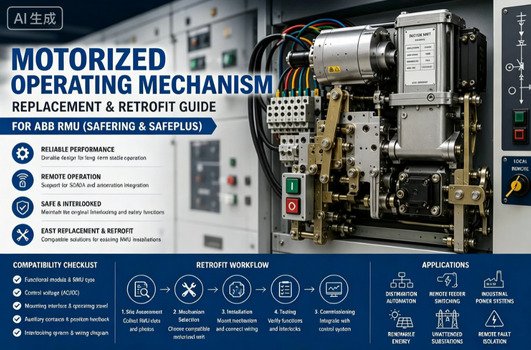
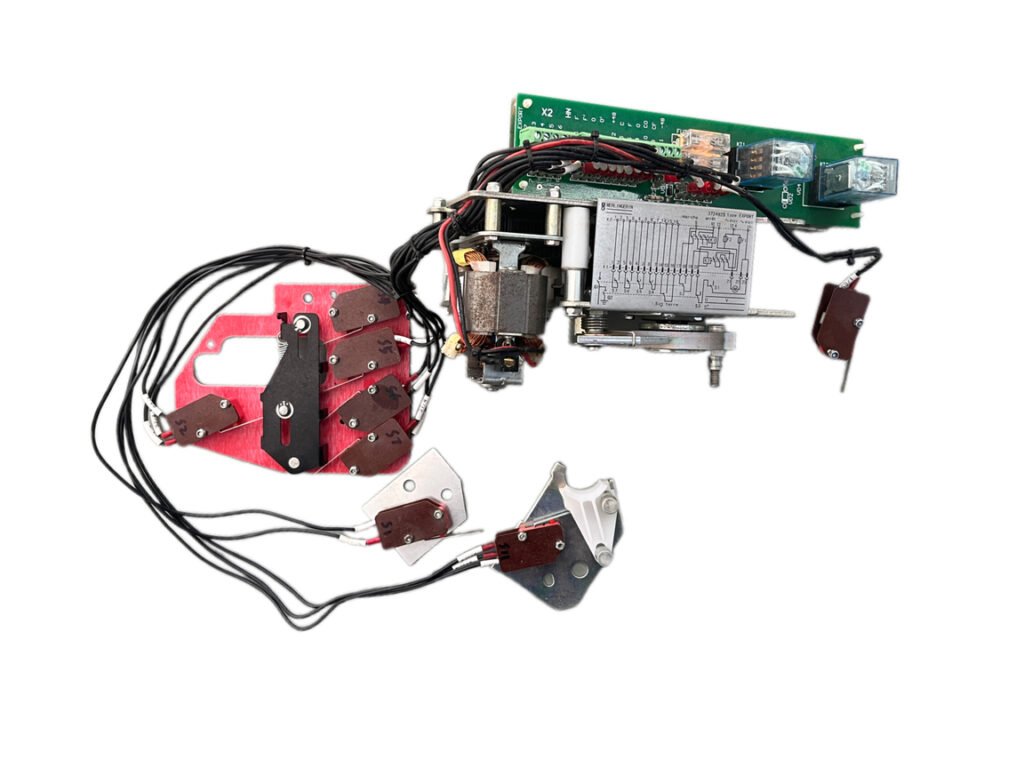
An RM6 motorization kit consists of DC motor, drive gear set, limit switches, auxiliary contact blocks and pre-wired control terminals. The kit connects directly to the existing RM6 operating mechanism frame to automate spring charging.
Key considerations before purchasing a motorisation upgrade:
- Confirm RM6 manufacturing year and serial number; compatibility varies across production batches
- Select correct control voltage: DC110V, DC220V, DC48V or AC options
- Verify available mounting space inside the RM6 cabinet door
- Check secondary wiring requirements for remote signalling
Our 7S-RM-IM Electric Operating Mechanism is designed as a drop-in compatible solution for RM6 motorization retrofits. It supports both new-build RMU assembly and field upgrade projects, matching the mechanical interface dimensions of standard RM6 operating mechanisms.
If you need a manual replacement mechanism without motor drive, view our 7S-RM-QM manual compatible operating mechanism for direct swap applications.
RM6 Operating Mechanism Maintenance Beat Practices
Scheduled RM6 operating mechanism maintenance extends service life and reduces unplanned outages. Most manufacturers recommend periodic inspection after a defined number of mechanical operations, typically 1,000 switching cycles.
Core miantenance checklist for field engineers
1. Visual inspection: Check for corrosion, loose fasteners, deformed linkages and cracked plastic transmission components
2. Lubrication: Apply approved low-temperature grease to sliding joints and pivot points; avoid over-lubrication which attracts dust
3. Functional test: Complete several open/close cycles to check for sticking, delay or abnormal noise
4. Auxiliary contact inspection: Clean contact surfaces, test continuity for remote status signalling
5. Motor unit check (motorised versions): Verify motor current, limit switch operation and wiring terminal tightness
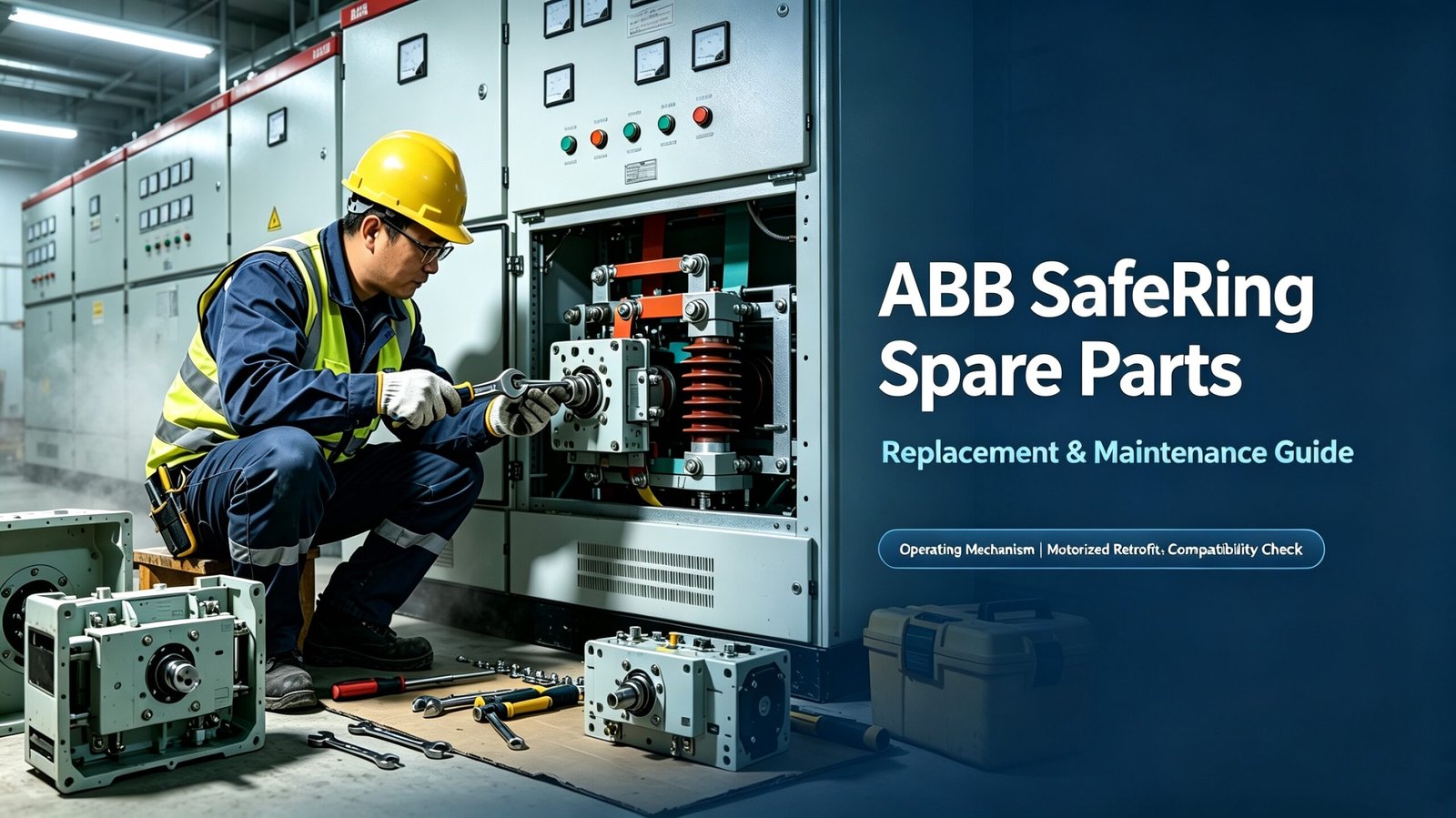
Warning: All maintenance work must be carried out by certified MV electrical personnel, with the RMU isolated and earthed in accordance with local safety standards. Do not perform disassembly while the unit is energised.
RM6 Operating Mechanism Troubleshooting-Common Faults & Solutions
When operators encounter an RM6 operating mechanism not working, systematic RM6 operating mechanism troubleshooting reduces diagnosis time. Below are the most frequent field faults and likely root causes.
Common RM6 operating mechanism problems
1. Mechanism stuck, cannot open or close
Primary causes: Dry pivot joints, bent transmission rods, foreign debris inside the mechanism housing or damaged latch components.
Action: Isolate equipment, clean and lubricate moving parts; inspect linkages for deformation. If components are permanently damaged, source RM6 operating mechanism spare parts for replacement.
2. Motorised unit fails to charge springs (RM6 motorization failure)
Primary causes: Loose control wiring, faulty limit switches, burnt motor winding or incorrect supply voltage. Action: Measure control supply voltage, inspect terminal connections, test motor resistance and auxiliary contact operation.
3. Switch position indicator does not match actual contact status
Primary causes: Disconnected indicator linkage or worn drive pins. Action: Re-adjust indicator rod; replace worn pins if excessive play exists.
4. Interlock failure risk
Primary causes: Misaligned interlock plates after maintenance or partial component wear. Action: Do not energise the panel until mechanical interlocks function correctly.
If repeated faults appear after servicing, partial repair may no longer be cost-effective. In this scenario, planning full RM6 operating mechanism replacement is recommended.
RM6 Operating Mechanism Replacement Guidance
Asset managers often ask: when should I plan RM6 mechanism replacement instead of ongoing repairs?
Key indicators for replacement
1. Excessive mechanical play in linkages that cannot be adjusted out
2. Cracked or irreversibly deformed core transmission components
3. Repeated motor faults on motorised variants with high cycle counts
4. Difficulty sourcing obsolete original RM6 operating mechanism spare parts
How to select a compatible replacment unit
When buying a replacement operating mechanism compatible with RM6, confirm these specifications:
- 1. Mechanism function type: Incoming (I), outgoing (Q) or circuit breaker (B) configuration
- 2. Manual or motorised (electric operating mechanism) version
- 3. Control voltage (for motorised units)
- 4. Mechanical interface dimensions and shaft position
- 5. Auxiliary contact quantity and wiring layout
Our aftermarket compatible assemblies, including the 7S-RM-QM manual mechanism and 7S-RM-IM electric operating mechanism, are engineered for direct RM6 operating mechanism replacement. No cabinet modification is required for standard RM6 frames, significantly cutting on-site installation hours.
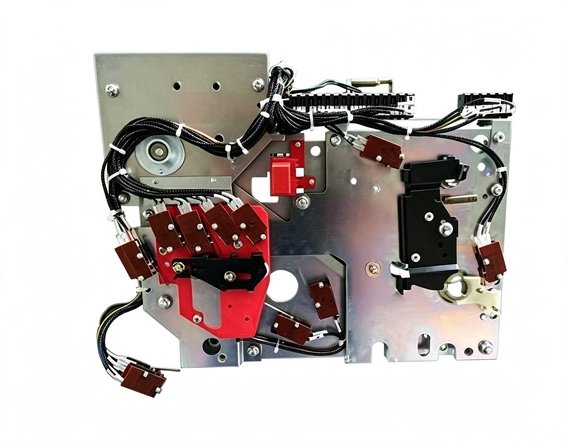
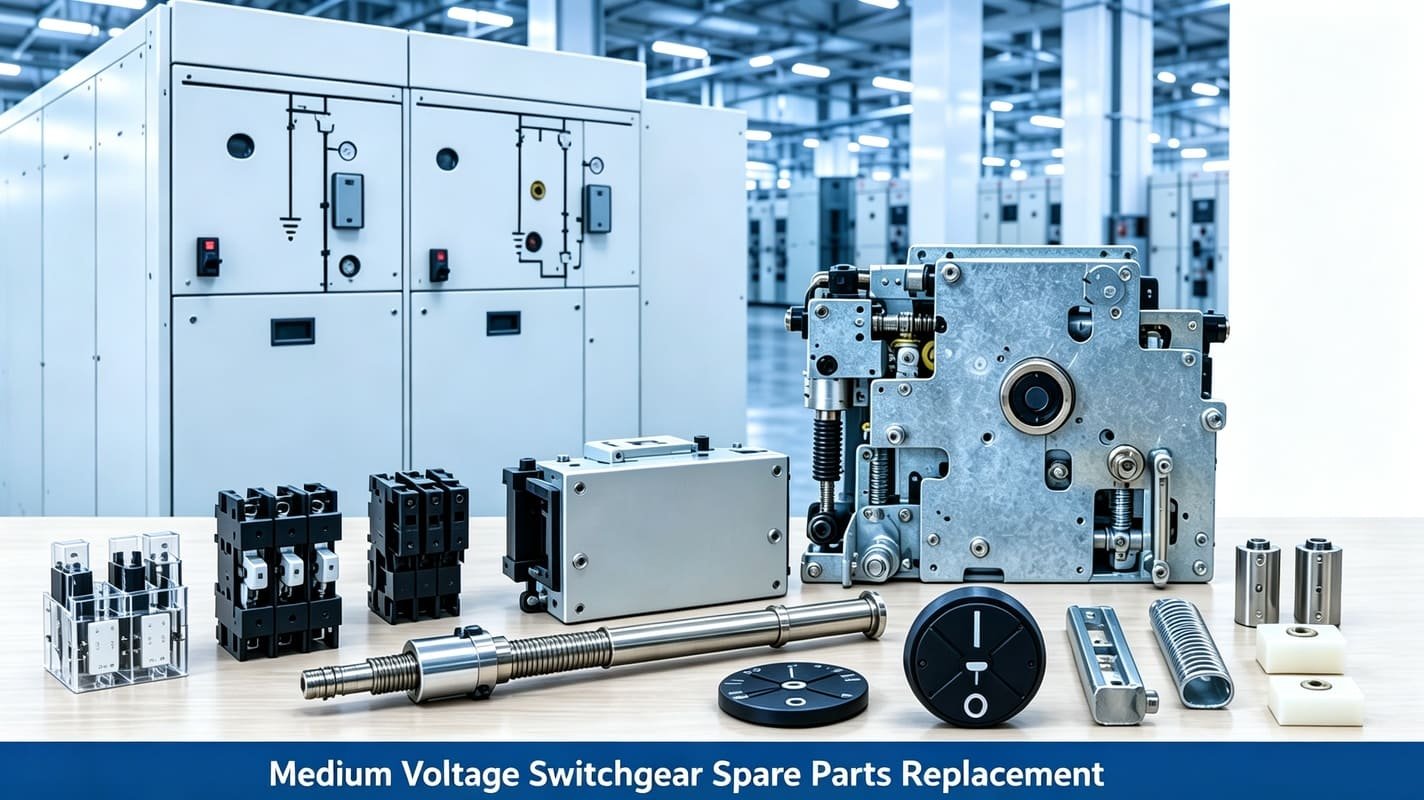
Many international contractors prefer to source complete assemblies rather than individual RM6 operating mechanism parts, as complete units reduce installation errors and site labour costs. For clients seeking component-level supplies, we also provide a full range of RM6 operating mechanism spare parts including springs, latches, motor assemblies and auxiliary contact blocks.
FAQ-Frequently ASked Questions About RM6 Opareting Mechanisms
Q1: Can I add motorisation to an existing manual RM6 operating mechanism?
A1: In most cases yes. An RM6 motorization kit can be retrofitted, provided the base mechanical frame is undamaged. You will need to confirm your RM6 unit’s production batch to ensure compatibility. Our engineering team can assist with dimensional verification before ordering.
Q2: Where can I find reliable suppliers for RM6 operating mechaninsm spare parts?
A2: When original OEM lead times are long, qualified aftermarket manufacturers supply tested RM6-compatible operating mechanism parts and complete assemblies. Ensure the supplier provides mechanical dimension drawings and cycle-test certification for MV distribution use.
Q3: What is the difference betweeen an RM6 motor operating machanism and electric operating mechanism?
A3: In industry terminology, both terms refer to motorised remote-control units. “Electric operating mechanism” is the general term, while “motor operating mechanism” specifically highlights the integrated DC motor drive used in RM6 motorisation upgrades.
Q4: How long does RM6 operating mechanism replacement take on-site?
A4: For experienced technicians, direct swap of a pre-tested compatible mechanism typically requires 2–4 hours of downtime, including isolation, mechanical fitting and secondary wiring testing.
Q5: Can a faulty RM6 operating mechanism lead to SF6 gas leakage risks?
A5: The operating mechanism is external to the sealed SF6 tank. Mechanical faults in the drive assembly do not directly cause gas leaks, though severe jamming can create unsafe operating conditions during switching operations.
Conclution
The RM6 operating mechanism is the vital control heart of every RM6 ring main unit. Whether your project requires understanding the working principle, planning RM6 motorization retrofits, carrying out routine maintenance, diagnosing faults or organising RM6 operating mechanism replacement, selecting properly engineered compatible hardware minimises network risk.
For operators building automation infrastructure, the 7S-RM-IM electric operating mechanism delivers a proven aftermarket solution for RM6 motorised upgrades. For sites maintaining existing manual switchgear, the 7S-RM-QM compatible manual operating mechanism offers a drop-in replacement when wear becomes unacceptable.
If you require individual RM6 operating mechanism spare parts or technical dimension data, contact our engineering team for detailed specifications and compatibility support.
Professional Medium & High Voltage Electrical Equipment Manufacturer