
In the entire chain of power generation, transmission, transformation, distribution, and consumption in electrical systems, transformers are indispensable core electrical equipment. A transformer is a stationary electrical device that uses the principle of electromagnetic induction to convert AC voltage levels while keeping the frequency constant. It solves the fundamental contradiction between efficient long-distance transmission of electrical energy and its safe local use.
Xizienergy has a professional technical team and rich industry experience, providing comprehensive transformer solutions for commercial, utility, and industrial applications, backed by complete equipment certifications and excellent engineering capabilities.
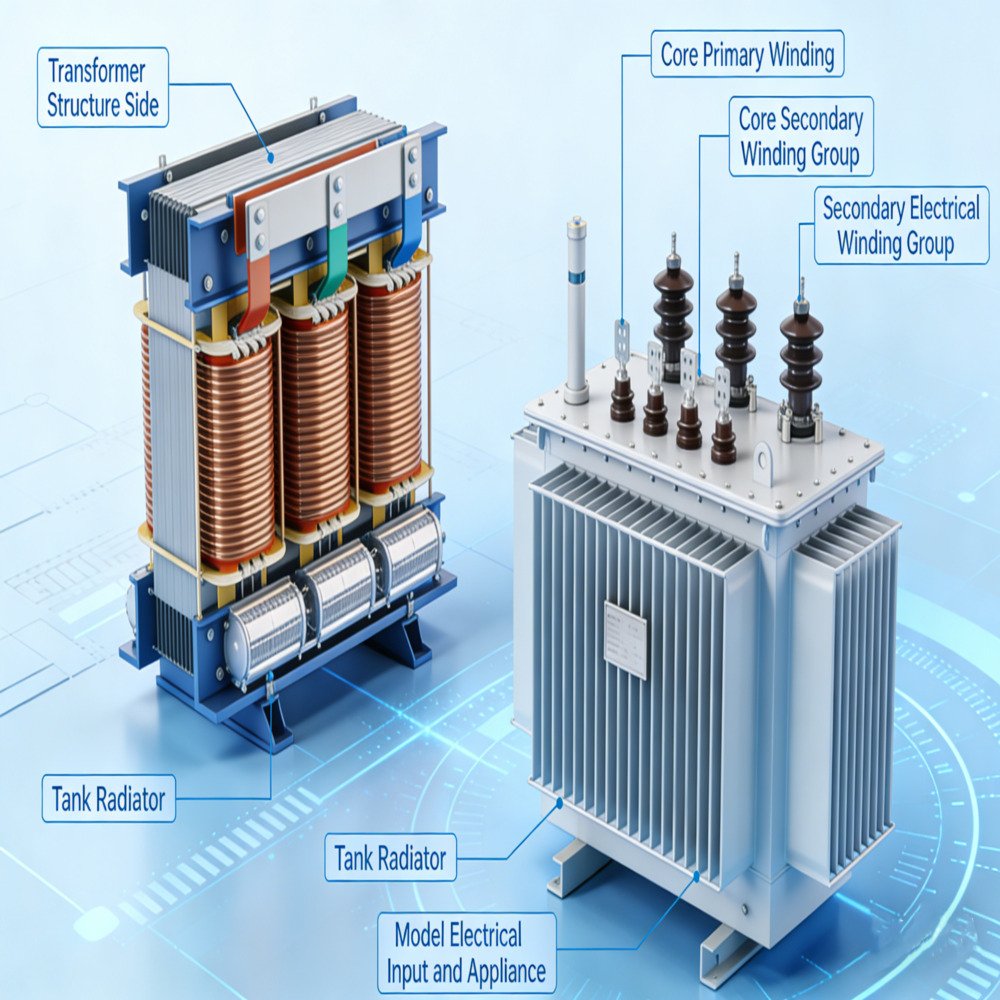
1.Transformer Structure
A transformer has two main parts: the iron core and the windings. It also has other parts to help with heat dissipation and insulation. All these parts help the transformer work safely and stably.
1.1 Iron Core
The iron core is made of many thin layers of silicon steel sheets. It lets magnetic flux flow through it. This reduces energy loss when the transformer works.
1.2 Windings
Windings are two separate coils. They are called the primary winding (input) and the secondary winding (output). They are usually made of insulated copper wire. This wire keeps electricity from leaking and helps energy move well.
1.3 Insulation and Cooling System
This system keeps the transformer safe. It stops the transformer from getting too hot. Small transformers use air to cool down. Large transformers use oil to cool down better.
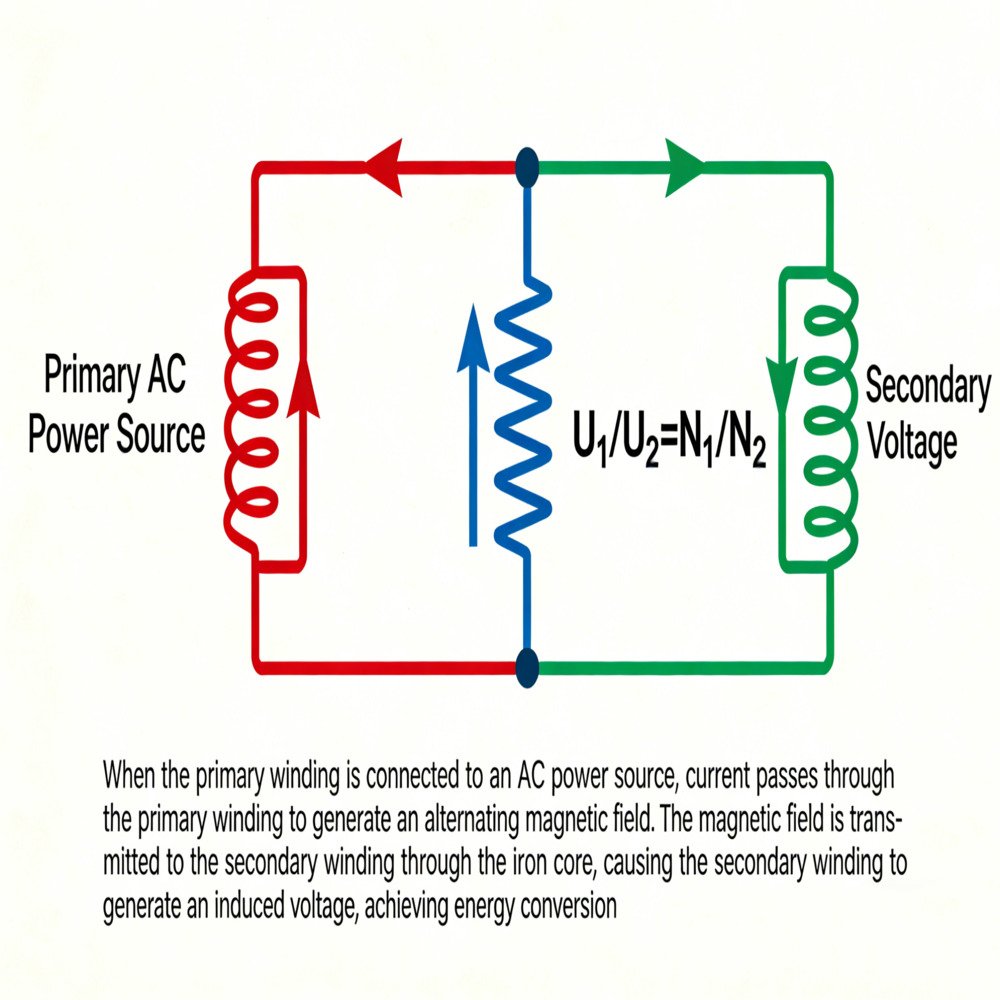
2. Transformer Working Principle
A transformer works by electromagnetic induction. Its voltage change process has 4 easy steps:
2.1 AC Input
When alternating current goes through the primary winding, it makes a changing magnetic field around the winding.
2.2 Magnetic Field Establishment
The iron core guides this changing magnetic field well. It forms a closed path for the magnetic field. This reduces magnetic energy loss.
2.3 Induced Voltage
The changing magnetic field passes through the secondary winding. It makes an alternating voltage in the secondary winding. This is called electromagnetic induction.
2.4 Voltage Transformation
The output voltage divided by the input voltage equals the number of turns of the secondary winding divided by the number of turns of the primary winding. Change the number of turns of the two windings, and the transformer can make the voltage higher or lower.
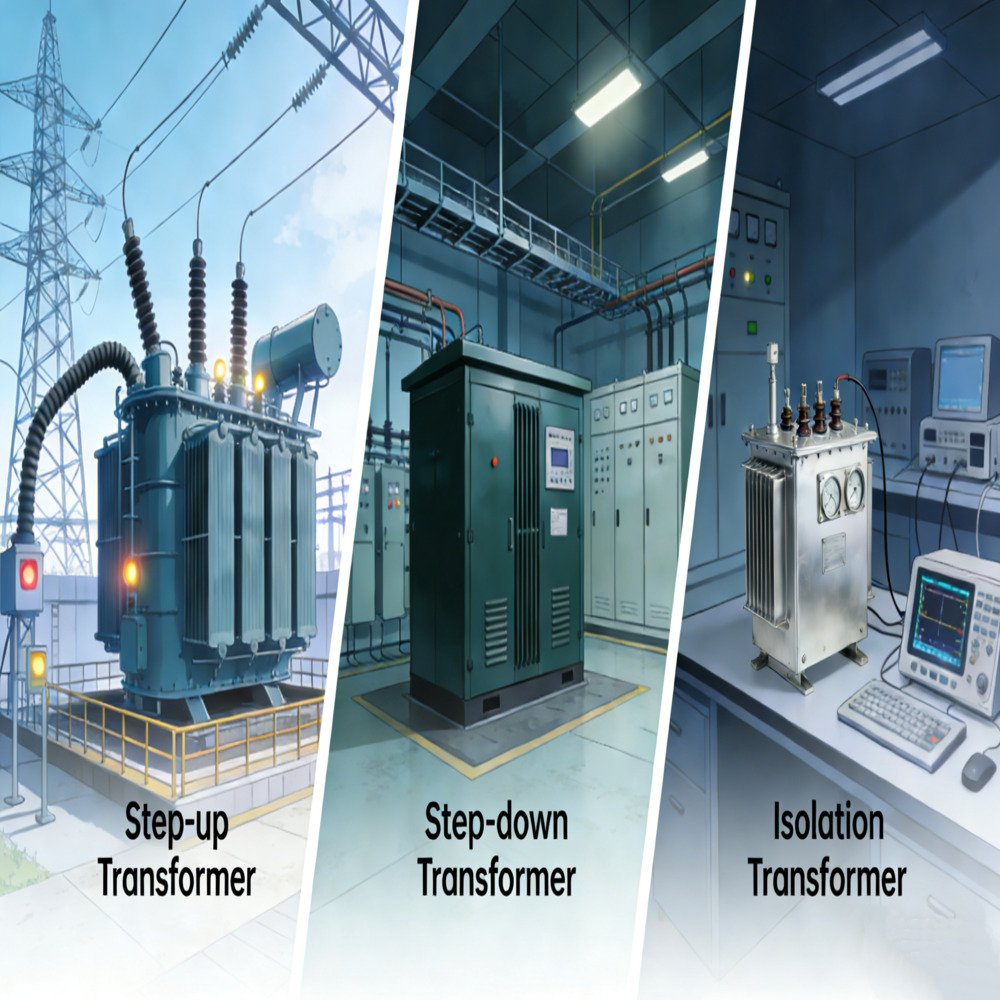
3.Types of Transformers
Transformers have different types. They are divided by their use and where they are used. The most common types are:
3.1 Step-up Transformer
It makes AC voltage higher. It is mainly used for sending electricity over long distances. Making the voltage higher reduces the current. This cuts down energy loss when sending electricity.
3.2 Step-down Transformer
It makes AC voltage lower. It is used for local power supply. For example, it turns high-voltage electricity from the grid into low-voltage electricity for homes and factories (like 220V/380V).
3.3 Isolation Transformer
Its primary and secondary windings are separate. This stops electric shock and protects electrical equipment. It is widely used in equipment that needs high safety, like medical equipment and precision tools.
4.Transformer Applications
Transformers are used in many fields related to electricity. Their main uses are:
4.1 Power systems: They are used to send, change and distribute electricity. They make sure cities, factories and rural areas get stable power.
4.2 Industrial production: They are used in many industrial machines (like motors, pumps). They provide the right voltage for the machines to work.
4.3 Commercial and residential areas: They turn high-voltage electricity into low-voltage electricity. This electricity is used for household appliances and commercial equipment.
4.4 Special fields: They are used in medical equipment, aerospace, precision electronics and other fields. They provide stable and safe power.
5. FAQs About Transformers
Q1: What does a transformer do? A: Its main job is to change AC voltage (make it higher or lower). It keeps the frequency the same. This helps electricity be sent efficiently and used safely.
Q2: Why is the iron core made of thin silicon steel sheets? A: Thin silicon steel sheets cut two types of power waste. They save energy and let the transformer run in good condition.
Q3: What is the difference between a step-up transformer and a step-down transformer? A: Step-up transformer has more turns on the output coil to raise voltage.Step-down transformer has fewer turns on the output coil to lower voltage.
Q4: How to keep a transformer working safely?
A: Make sure the insulation and cooling system work normally. Check the winding and iron core regularly. Do not let the transformer work with too much load.
Xizienergy tries to give customers high-quality transformers and professional solutions. We focus on safety and efficiency. We make sure your electrical equipment works stably and reliably.r electrical equipment operates stably and reliably.
Professional Medium & High Voltage Electrical Equipment Manufacturer