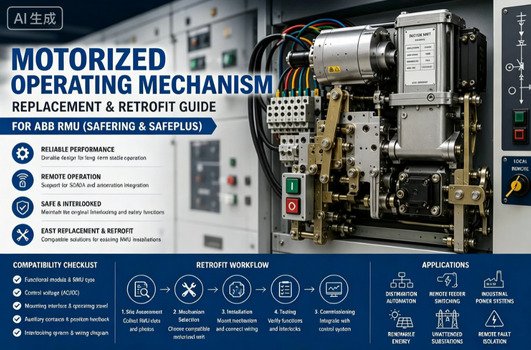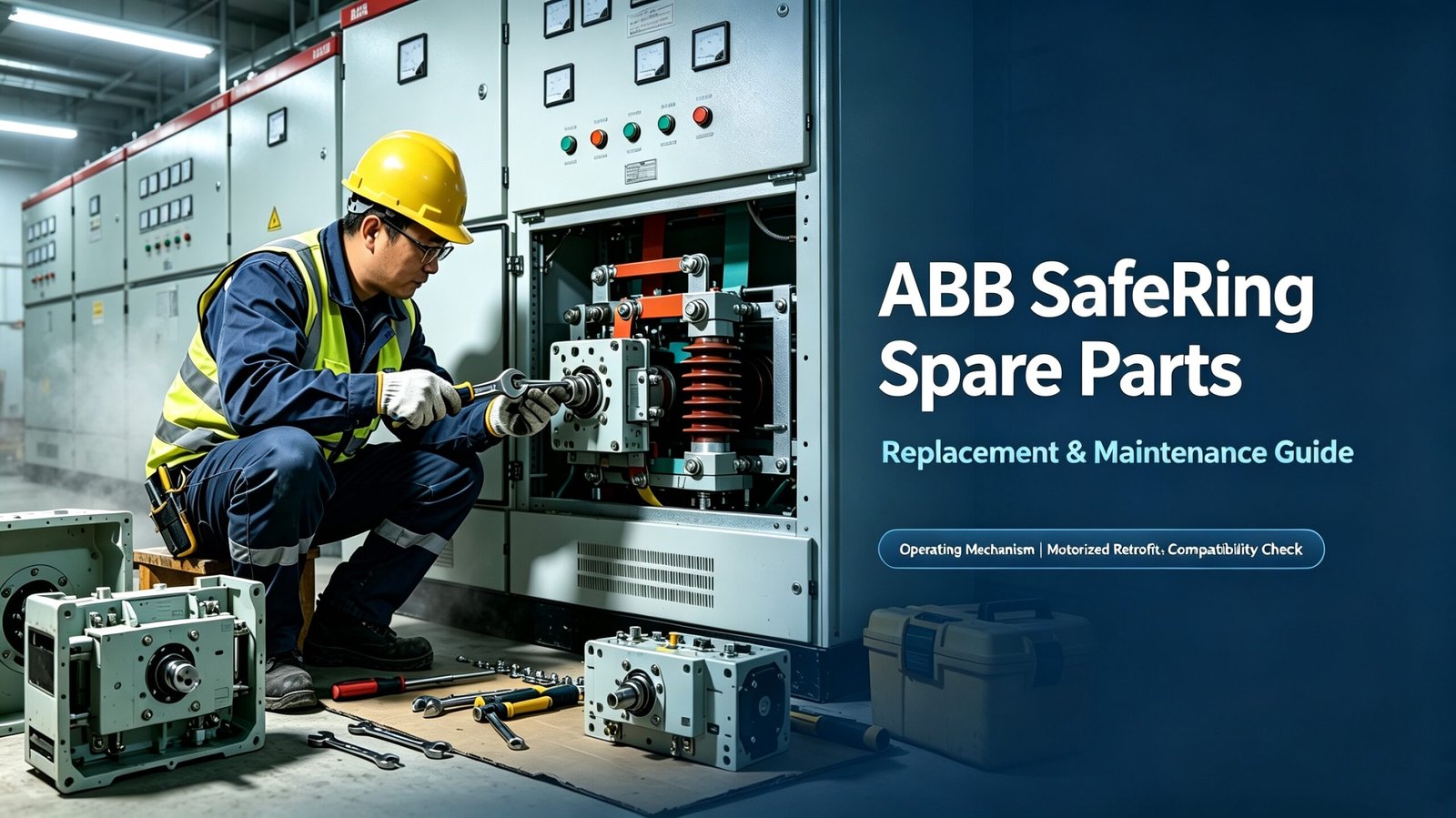

Motorized Operating Mechanism for ABB RMU: Replacement & Retrofit Guide
Trademark & Compatibility Notice: ABB, SafeRing and SafePlus are trademarks of ABB Group. References are for equipment‑identification and compatibility purposes only. Xizi Energy is an independent manufacturer of aftermarket‑compatible medium‑voltage switchgear components. We are not affiliated, authorized or endorsed by ABB. Always verify compatibility with your on‑site hardware prior to ordering or installation.
A motorized operating mechanism greatly improves the operational flexibility of medium‑voltage Ring Main Units (RMU). For on‑site existing assets, replacing worn‑out mechanisms or adding motor drive offers a cost‑effective alternative to full switchgear replacement.
When engineers look for ABB motorized operating mechanisms, their real‑world demands fall into three categories: compatible drop‑in replacement for existing RMUs, motorization retrofit for remote control, or spare units for maintenance purposes.
Important note: Never select a mechanism based purely on brand. Always verify functional module, mechanical interface, control voltage, auxiliary contacts, operating sequence and interlocking arrangement before purchasing.
This guide covers identification of replacement units, suitable scenarios for motorization retrofit, and critical pre‑installation checks.
What Is a Motorized Operating Mechanism?
It is an electromechanical assembly converting electrical control signals into mechanical movement for switchgear. Inside an RMU, it transfers motor rotation or linear force to switching modules to enable remote open/close and other electrically‑driven functions.
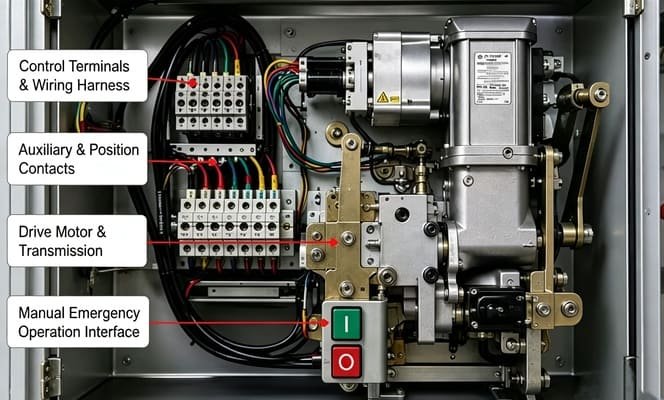
Standard components include:
- Drive motor & mechanical transmission
- Mounting bracket, operating shaft / linkage
- Auxiliary & position‑indication contacts
- Control terminals and wiring harness
- Manual emergency operation interface
- Mechanical interlocking parts
Exact configuration varies by RMU design and functional module. For certain SafeRing and SafePlus variants, ABB documents list motor operation as an available factory option and support field retrofit. The 7S‑SC motorized operating mechanism for C‑module RMU is designed as aftermarket‑compatible hardware for this type of field upgrade.
Why Motorized Operation Matters
Manual operation works well for traditional distribution networks. Modern grids, however, demand remote switching and real‑time status feedback.
Motor‑driven mechanisms support:
- Distribution automation & SCADA integration
- Remote feeder switching
- Unattended substations
- Industrial and renewable‑energy distribution
- Remote fault isolation
- Smart‑grid upgrade projects
Properly selected motor units form a core component of RMU modernization.
When to Replace an ABB Operating Mechanism
Replace the assembly when it loses reliable mechanical or electrical performance.
Replace the assembly when it loses reliable mechanical or electrical performance.
1. Higher operating force
Excessive force on the manual handle signals mechanical wear, contamination, misalignment or damaged transmission parts.
Do not fit a larger motor to compensate resistance. Resolve the root mechanical issue first.
2. Incomplete open / close cycles
Switches failing to reach full position can stem from worn components, misaligned linkages, interlock faults, position‑switch drift or debris contamination.
3. Remote operation failure (manual still works)
Common root causes: mismatched control voltage, motor damage, loose terminals, defective auxiliary switches, faulty control relays, incorrect position feedback or mechanical blockage.
Diagnose the full control circuit before replacing the motor.
4. Excessive mechanical play
Loose shafts, gears and mounting interfaces create unstable operation. Where multiple parts show heavy wear, full‑mechanism replacement delivers better reliability than single‑component repairs.
5. Corrosion & physical damage
Humidity, dust and harsh environments degrade mechanical and contact parts. Adjust inspection frequency according to site conditions and operating cycles.
Critical Parameters to Verify Before Purchase
Collect on‑site equipment data to avoid incompatible orders:
| Parameter | Purpose |
|---|---|
| RMU product family | Confirm equipment platform |
| Functional module | Match mechanism configuration |
| Rated voltage & current | Application validation |
| Existing mechanism assembly | Mechanical reference baseline |
| Control voltage | Match site control system |
| Auxiliary contacts | Position feedback & control logic |
| Mounting interface & operating travel | Physical fit with switchgear |
| Interlocking system | Preserve safety functions after swap |
| Nameplate & field photos | Confirm actual hardware build |
Control voltage is the most frequent ordering mistake. Confirm voltage from existing nameplates, schematics, terminal markings or motor labels. If data is unclear, submit photos to your supplier prior to order.
For F‑cabinet ring‑main‑unit hardware, the 7S‑SF motorized operating mechanism offers drop‑in retrofit capability subject to full on‑site interface validation.
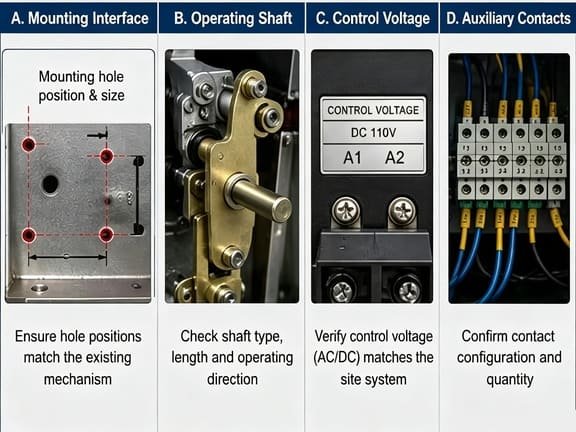
ABB SafeRing Mechanism & Motorization
SafeRing includes multiple switching modules, so mechanism requirements differ per unit.
Collect these details for retrofit or replacement:
- Functional module type
- Original mechanism assembly
- Mechanical mounting layout
- Motor interface and control voltage
- Auxiliary contacts & position indication
- Interlocking arrangement
While certain SafeRing versions support motor retrofit per ABB documentation, always reference installed hardware rather than generic product names.
Submit these materials for compatibility assessment: RMU nameplate photo, front panel shot, existing mechanism photos, motor label, control‑voltage data, terminal wiring images and functional module info. This drastically cuts the risk of wrong‑part delivery.
ABB SafePlus Mechanism Replacement Notes
SafePlus is a modular medium‑voltage platform; different functional modules require distinct mechanism setups. Prior to ordering, inspect operating shaft, motor, transmission parts, auxiliary contacts, position indicators, interlocks, mounting structure, control wiring and manual operation interface.
Some SafePlus configurations support motor‑drive retrofit. Always cross‑reference candidate replacement units against your actual on‑site hardware and technical documentation.
Retrofit vs Full‑Mechanism Replacement
Choose motorization retrofit if:
- Base switchgear remains serviceable
- Manual operation is mechanically sound
- Remote switching / SCADA integration is required
- Correct control voltage is available
- Mechanical interfaces and safety interlocks can be maintained
Retrofit is not plug‑and‑play. Validate mechanical, electrical, interlock and control‑system compatibility. Consult a qualified electrical engineer if any item cannot be verified.
Choose complete mechanism replacement if:
- Original unit is worn, corroded or physically damaged
- Abnormal switching force occurs
- Unreliable position feedback
- Repeated operational failures
Mixed‑solution projects are common: replace aged hardware first, then add motorization for automation, building a stable mechanical foundation for remote control.
The 7S‑SV V‑cabinet aftermarket replacement motorized operating mechanism is built for this kind of ageing‑asset renewal scenario.
Step‑by‑Step Replacement Workflow
- Identify RMU asset: Record product family, functional module, rated parameters and nameplate details.
- Capture clear photos: Front, side, mounting points, motor, terminals, operating shaft and nameplate.
- Lock in control voltage from existing labels and drawings.
- Audit auxiliary contacts: Confirm usage for open/close indication and remote‑control logic.
- Validate mechanical interface: Check mounting holes, shaft dimension, linkage layout, direction and travel.
- Check interlocking: Replacement must not impair built‑in safety interlocks.
- Confirm operating sequence: Smooth, consistent full cycle operation.
- Carry out on‑site commissioning tests: Verify manual operation, electrical operation, position indication, auxiliary signals, interlocks, remote commands, local/remote selector and SCADA feedback.
Typical Commissioning Issues After Replacement
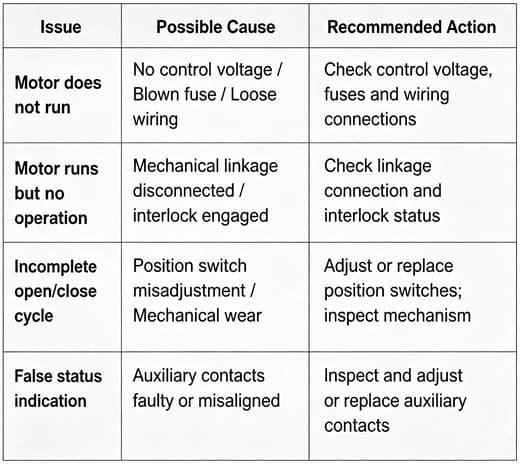
- Motor does not run: Check control voltage, wiring, terminals, protection devices, control commands and interlock status.
- Motor runs but switch fails full cycle: Inspect mechanical coupling, shaft alignment, travel range and mechanical resistance.
- Wrong position indication: Troubleshoot auxiliary‑switch adjustment, wiring, mechanical position and control‑system logic.
- Local works, remote fails: Trace full signal path: remote commands, local/remote switch, interlocks, feedback contacts, relays and motor power supply.
- Motor trips during operation: Look for excess mechanical load, supply‑voltage errors or wiring defects.
Treat the motorized unit as a complete electromechanical system, not just an independent motor component.
Spare‑Part Strategy for Ageing RMUs
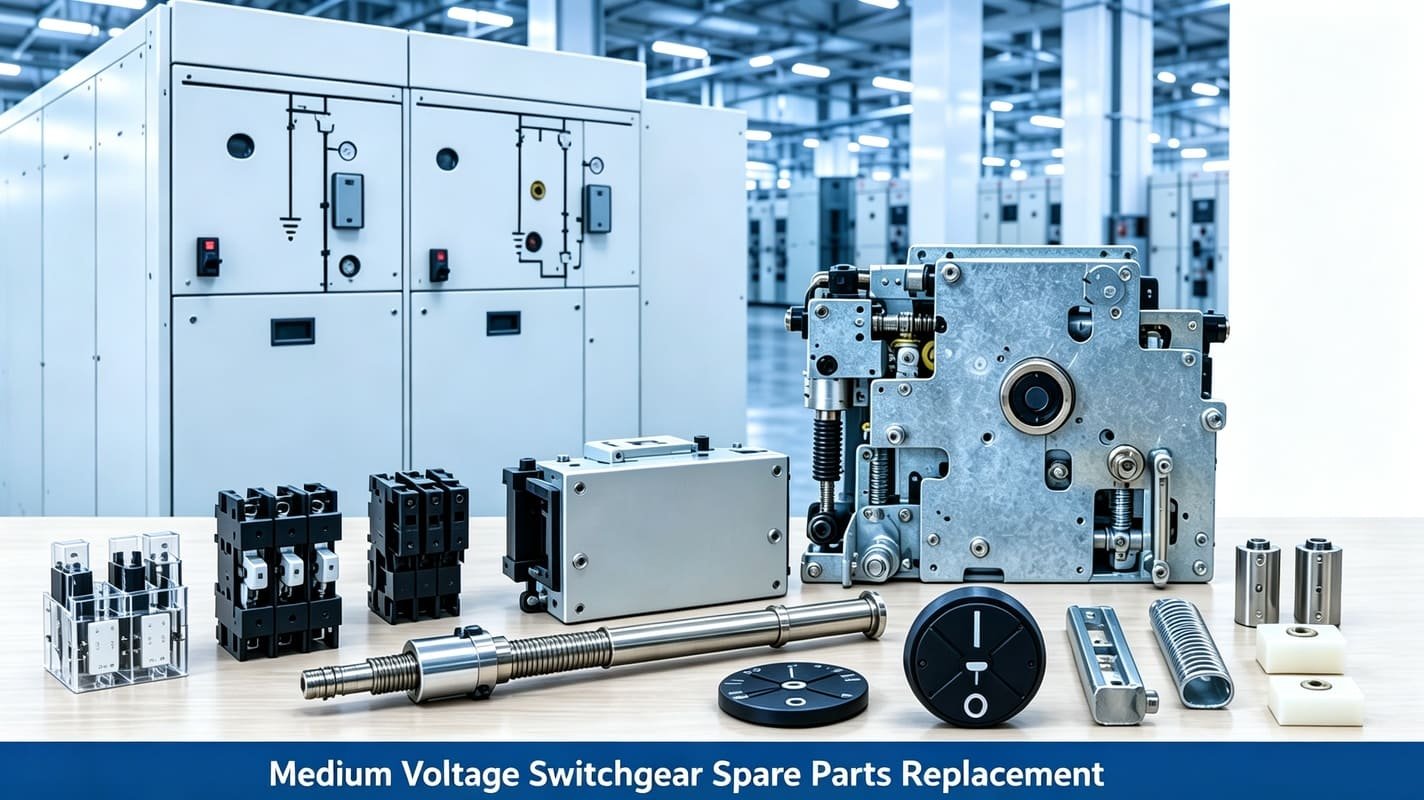
Build site‑specific spare‑part inventory for operating mechanisms, motor drives, auxiliary switches, interlock assemblies and manual‑operation parts. Generic spare lists often do not match real‑world module configurations. For broader guidance covering ring main unit aftermarket components, refer to our RMU Switchgear Compatible Spare Parts Guide.
For large distribution networks, maintain equipment inventory records: asset ID, functional module, install date, mechanism type, control voltage, spare‑part reference and maintenance history to speed future repairs.
Critical Safety Preconditions
Medium‑voltage switchgear work must be completed by authorized, trained technicians following local site safety procedures.
- Isolate equipment and lock‑out to prevent accidental re‑energization
- Carry out voltage verification
- Execute proper switching & earthing procedures
- Isolate auxiliary control circuits as required
- Follow OEM technical documentation and wear appropriate PPE
Online guidance cannot supersede official manuals, site rules and national electrical codes.
FAQ
Q: Can I replace an ABB RMU operating mechanism?
A: Yes for compatible configurations, after full mechanical, electrical and interlock compatibility validation. Compatibility depends on your installed functional module and hardware design.
Q: Is motorization possible for SafeRing / SafePlus?
A: Selected variants support motor‑drive retrofit per ABB published documentation. Always verify existing mechanical and electrical interfaces before procurement.
Q: What documents do I need for compatibility check?
A: RMU nameplate, functional module info, photos of existing mechanism, motor label, control‑voltage specifications and terminal layout.
Q: Does a motorized mechanism deliver SCADA control on its own?
A: No. It is one component of the automation stack. You also need control wiring, feedback signals, interlock logic and compatible SCADA hardware.
Q: Is mechanism replacement always better than full RMU replacement?
A: Not always. Partial upgrade makes economic sense when main switchgear remains fit‑for‑service. Evaluate asset condition, compatibility, reliability targets and project budget.
Conclusion
ABB‑compatible motorized operating mechanisms are key for RMU maintenance, upgrade and remote‑control projects. The golden rule is to match parts to your actual on‑site hardware configuration, rather than relying only on brand names.
Validate functional module, mechanical interface, control voltage, auxiliary contacts, operating travel, interlocking, position feedback and automation requirements before placing orders. While SafeRing and SafePlus offer documented motor‑retrofit options, every replacement needs independent hardware verification.
Xizi Energy provides aftermarket‑compatible medium‑voltage switchgear components for RMU replacement and modernization projects. Submit your nameplate information, mechanism photos, functional‑module details and control‑voltage data for a preliminary compatibility review. Request a compatibility check before ordering to avoid unsuitable deliveries.