
RMU Spare Parts: Complete Guide to Ring Main Unit Components, Replacement and Maintenance
Introduction
Ring Main Units (RMUs) are core medium-voltage switchgear for power distribution systems. They deliver stable switching, circuit isolation and fault protection for utilities, industrial sites, solar and wind power stations, and commercial buildings.
Although RMUs are built for long-term operation, key internal components wear out over time. Frequent switching cycles, outdoor humidity, temperature changes and aging will eventually cause operational faults.
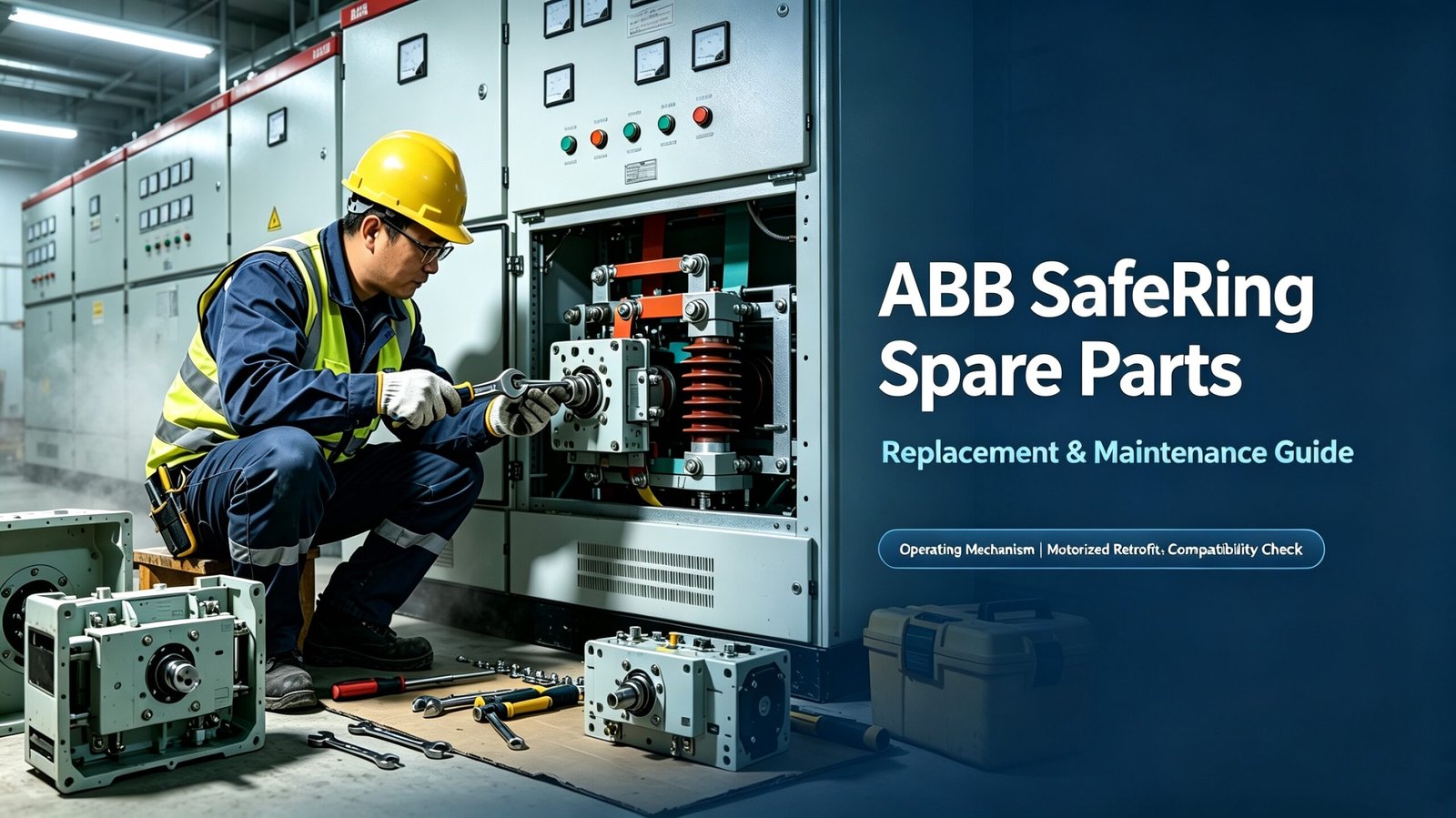
As field maintenance engineers know, proper replacement of RMU spare parts is the most effective way to cut downtime and extend switchgear lifespan. This guide shares practical field knowledge on common RMU components, failure signs, replacement rules and maintenance tips.
What Are RMU Spare Parts?
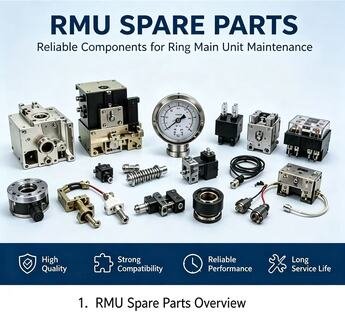
RMU spare parts are replaceable components used for routine maintenance and fault repair. Instead of replacing the entire RMU panel, technicians only change the faulty parts to restore normal operation.
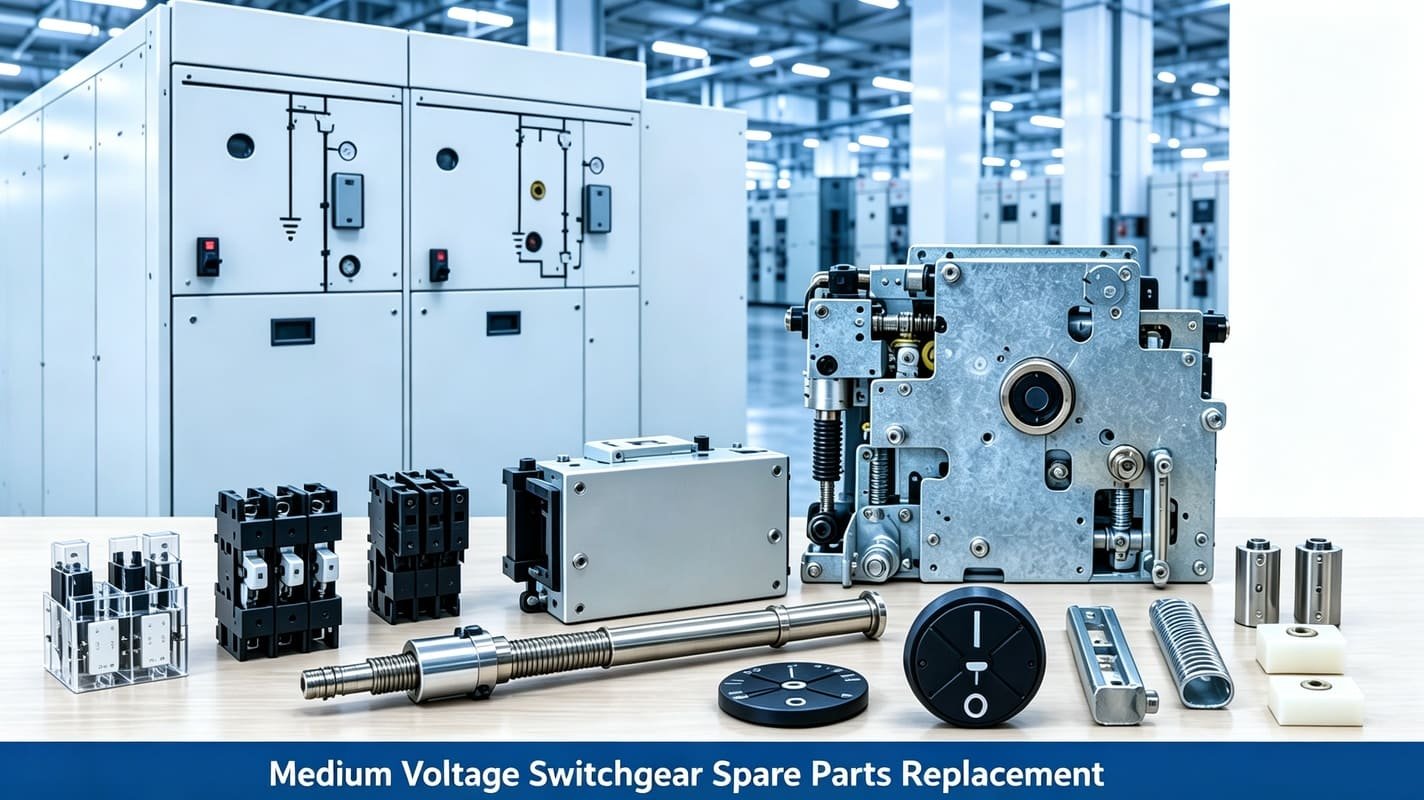
These spare parts cover electrical, mechanical and gas monitoring components. They fit most SF6-insulated ring main units from mainstream brands.
Common RMU replacement accessories include:
- SF6 Density Relay
- SF6 Density Gauge
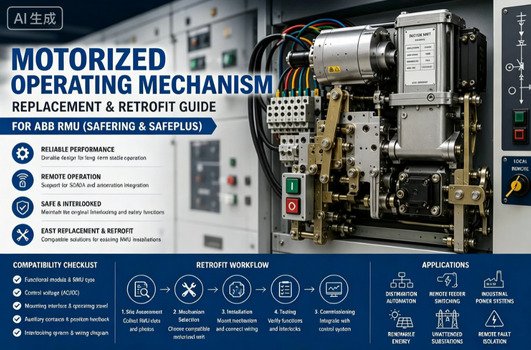
- Operating Mechanism
- Auxiliary Switch
- Load Break Switch Components
- Vacuum Interrupter
- Mechanical Interlocking Device
- Position Indicator
- Trip and Closing Coil
- Pressure Relief Device
Timely replacement of aging parts greatly reduces unexpected power outages and lowers long-term maintenance costs.
Why Are RMU Spare Parts Important?
From on-site maintenance experience, most RMU failures do not come from main cabinet damage. Over 80% of faults are caused by aging or damaged small accessories.
Replacing faulty spare parts on time is far more cost-effective than replacing the whole RMU unit. Quality RMU replacement parts bring obvious operational benefits:
- Improve overall switchgear reliability
- Avoid unplanned system downtime
- Extend the service life of RMU equipment
- Reduce repeated maintenance costs
- Ensure safe switching operations
- Meet utility standard maintenance requirements
For power stations and industrial facilities, stocking critical RMU spare parts is a standard preventive maintenance measure.
Main Components of Ring Main Unit Spare Parts
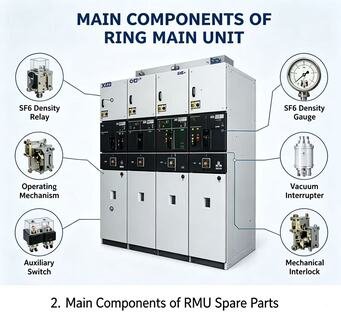
Understanding each component’s function helps engineering teams quickly locate faults and select correct replacement parts during on-site repairs.
SF6 Density Relay
The SF6 density relay is the core monitoring component of gas-insulated RMUs. It tracks real-time SF6 gas density and triggers alarm or lockout signals when density drops below the safe threshold.
In actual maintenance work, we often replace this part due to:
- Frequent false low-gas alarms
- Aging internal compensation structure
- Slow internal gas leakage
- Long-term calibration deviation
Persistent low-density alerts are usually the first signal of hidden gas loss, and you can dive deep into root causes, field detection methods and preventive measures in our dedicated article SF6 Gas Leakage in Switchgear: Root Causes, Alarm Indications, Field Detection & Preventive Maintenance.
Operating Mechanism
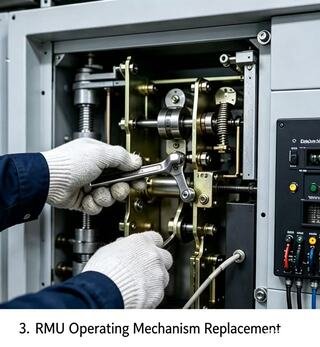
The operating mechanism controls all opening and closing actions of load break switches and circuit breakers. As the most frequently moving component, it has the highest replacement rate on-site.
Common mechanical failures include:
- Mechanical wear after repeated operation
- Spring fatigue and insufficient stroke
- Dry lubrication causing stiff movement
- Incomplete switch closing or tripping
Auxiliary Switch
Auxiliary switches transmit equipment status signals to SCADA systems and remote control terminals. They ensure real-time and accurate remote monitoring.
Common faults in field operation:
- Aging contact points causing poor conductivity
- Intermittent signal loss
- Mechanical deformation and damage
Replacing aging auxiliary switches avoids remote monitoring errors and system misjudgments.
Mechanical Interlocking Device
The interlocking device standardizes operating sequences and prevents misoperation. It is the key safety component for manual switching work. Once the interlock becomes stuck or damaged, operators must replace it immediately to avoid safety risks during operation.
Top 10 Most Frequently Replaced RMU Spare Parts
Based on our long-term RMU maintenance and project service experience, the following parts are the most commonly replaced RMU spare parts in actual engineering scenarios.
| Spare Part | Main Function | Typical Replacement Reason |
|---|---|---|
| SF6 Density Relay | Gas monitoring | False alarms, aging |
| SF6 Density Gauge | Pressure indication | Incorrect readings |
| Operating Mechanism | Switching operation | Mechanical wear |
| Auxiliary Switch | Status feedback | Contact failure |
| Vacuum Interrupter | Circuit interruption | End of service life |
| Load Break Switch Contacts | Load switching | Contact erosion |
| Trip Coil | Opening operation | Coil burnout |
| Closing Coil | Closing operation | Electrical failure |
| Mechanical Interlock | Safety protection | Mechanical damage |
| Position Indicator | Equipment status | Wear or breakage |
Common Failure Symptoms of RMU Spare Parts
Most RMU component failures show obvious early warning signs. Experienced engineers can quickly judge faulty parts through on-site symptoms to avoid sudden power failures.
| Failure Symptom | Possible Faulty Component |
|---|---|
| Frequent low gas alarm | SF6 Density Relay |
| Pressure indication abnormal | SF6 Density Gauge |
| Switch cannot close | Operating Mechanism |
| Remote status incorrect | Auxiliary Switch |
| Interlock not functioning | Mechanical Interlock |
| Position indicator stuck | Position Indicator |
| Circuit breaker cannot trip | Trip Coil |
| Excessive operating force | Operating Mechanism |
In actual maintenance, replacing a single defective component can almost always restore RMU normal operation, which saves huge costs compared with full equipment replacement.
How to Identify the Correct RMU Spare Parts
Many maintenance teams order incompatible parts due to incomplete information. RMU spare parts vary by brand, model, voltage level and production batch.
To get accurate Ring Main Unit spare parts quotes and avoid installation errors, prepare the following information:
- RMU brand and specific model
- Rated voltage (12kV / 24kV)
- Panel layout or single-line diagram
- Original factory part number (if available)
- Equipment nameplate photo
- Clear photos of damaged parts
- Required quantity
Complete technical information helps suppliers confirm compatibility quickly and shorten procurement cycles.
Original vs Compatible RMU Spare Parts
In daily RMU maintenance, many clients ask whether compatible spare parts can replace original factory components. Based on engineering practice, high-quality certified compatible parts are fully applicable for most maintenance scenarios.
| Item | Original Parts | High-Quality Compatible Parts |
|---|---|---|
| Performance | Excellent | Equivalent for most maintenance projects |
| Cost | Higher | More economical |
| Delivery Time | Usually longer | Faster availability |
| Customization | Limited | OEM & ODM supported |
| After-sales Support | Manufacturer only | Flexible technical support |
For EPC projects, utility stations and industrial users, standard compatible RMU spare parts provide the best balance of performance, cost and delivery speed.
Recommended Inspection & Replacement Schedule
As a standard preventive maintenance rule, regular inspection and scheduled replacement can effectively avoid sudden RMU failures. The following schedule is summarized from years of field operation data.
| Spare Part | Inspection Interval | Recommended Replacement |
|---|---|---|
| SF6 Density Relay | Every 12 months | 8–12 years |
| SF6 Density Gauge | Every 12 months | 8–10 years |
| Operating Mechanism | Every 12 months | 10–15 years |
| Auxiliary Switch | Every 24 months | Around 10 years |
| Mechanical Interlock | Every 12 months | Condition-based |
| Trip & Closing Coil | Every 24 months | As required |
| Vacuum Interrupter | Condition monitoring | According to switching operations |
Actual service life also depends on operation frequency, ambient temperature and on-site environmental conditions.
How to Choose a Reliable RMU Spare Parts Supplier
From engineering procurement experience, price is not the only consideration. A professional supplier ensures part compatibility, stable quality and timely technical support.
Product Compatibility
The supplier must confirm matching with your RMU model, voltage grade and structural parameters to avoid installation failure.
Quality Control
Qualified manufacturers complete full testing before shipment, including:
- Mechanical operation tests
- Insulation resistance tests
- Functional performance verification
- Strict visual inspection
Technical Support
Reliable suppliers can judge part compatibility through drawings, nameplate information or equipment photos, helping customers select accurate spare parts.
Delivery Capability
For emergency on-site maintenance, stable inventory and fast global shipping can effectively reduce power outage time.
Practical Engineering Experience
After serving a large number of medium-voltage switchgear maintenance projects, we conclude that three components cause most RMU replacement demands:
- SF6 Density Relays
- Operating Mechanisms
- Auxiliary Switches
Many field operators mistakenly judge the whole RMU as faulty when alarms or switching failures occur. In most cases, replacing one aging accessory can fully restore normal operation.
For RMU equipment running over 10 years, reserving key spare parts in advance is the most cost-effective maintenance strategy.
Why Preventive Spare Parts Management Matters
Most professional power utilities and industrial plants now include RMU maintenance parts in annual maintenance plans.
Stocking critical spare parts brings obvious on-site advantages:
- Shorten power outage duration
- Speed up equipment recovery
- Avoid high-cost emergency procurement
- Make maintenance plans more reasonable
- Improve overall power system stability
Preventive spare parts management is especially critical for substations, new energy power plants and factories that require uninterrupted power supply.
FAQ
1. What are RMU spare parts?
RMU spare parts are replaceable components for ring main unit maintenance and repair. Common items include density relays, operating mechanisms, auxiliary switches and other core accessories.
2. Which RMU spare parts fail most frequently?
SF6 density relays, operating mechanisms and auxiliary switches have the highest failure and replacement rates in actual engineering scenarios.
3. Can compatible RMU spare parts replace original components?
Yes. High-quality compatible parts that meet standard technical specifications can fully replace original parts for routine maintenance and equipment refurbishment.
4. How often should RMU spare parts be inspected?
Key components such as density relays and operating mechanisms require annual inspection. Auxiliary coils and auxiliary switches need checking every two years.
5. How can I identify the correct replacement part?
Provide RMU model, voltage grade, nameplate photos, part number or damaged component photos for accurate matching and quotation.
6. Are RMU spare parts interchangeable between different brands?
Not universally interchangeable. Compatibility depends on equipment structure, size parameters and technical standards of different brands.
7. Which industries use RMU spare parts most frequently?
Power utilities, industrial factories, renewable energy stations, commercial buildings, mining and transportation power systems.
8. Can OEM or customized RMU spare parts be supplied?
Yes. Professional manufacturers support OEM and ODM customized production for special RMU spare parts.
Before selecting and purchasing RMU replacement parts, you can first confirm the application field of your equipment via our dedicated RMU application guide.
OEM & ODM Services
OEM & ODM Manufacturing for RMU Spare Parts
XIZI Energy provides a full range of RMU spare parts for medium-voltage switchgear maintenance and refurbishment worldwide.
Our customizable manufacturing services cover:
- Schneider-compatible RMU spare parts
- Custom mechanical structural components
- SF6 Density Relays
- SF6 Density Gauges
- Operating Mechanisms
- Auxiliary Switches
- Mechanical Interlocks
- Custom labels and packaging
We serve global distributors, EPC contractors, power utilities and switchgear manufacturers.
Contact us today with your RMU model or equipment nameplate. Our engineers will help you confirm compatible spare parts and provide an accurate quotation quickly.