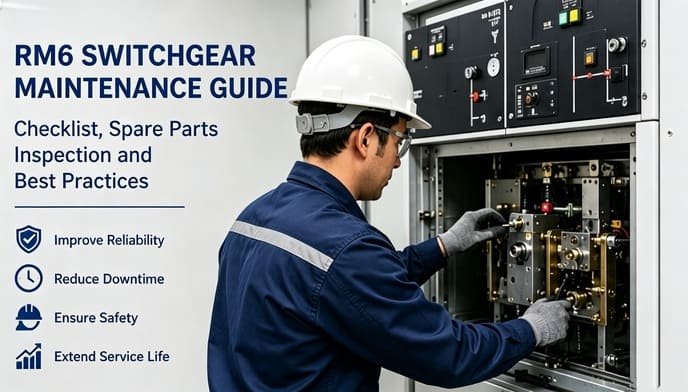

RM6 Switchgear Maintenance Guide: Checklist & Spare Parts
Introduction
RM6 gas-insulated ring main units are widely adopted globally thanks to compact layout, stable insulation and great adaptability for medium voltage distribution scenarios. Yet even premium equipment suffers unexpected breakdowns mainly from gradual mechanical wear, aged auxiliary fittings, irregular operation and delayed replacement of consumable parts, rather than severe electrical faults.
With 10 years of on-site MV switchgear maintenance experience, We confirm a structured RM6 Switchgear Maintenance plan is the most efficient way to lift equipment reliability. A complete maintenance scheme is not limited to electrical parameter tests; it covers mechanical checks, RM6 Operating Mechanism Inspection, SF6 gas system calibration, spare parts evaluation and historical maintenance data analysis.
A detailed RM6 Maintenance Checklist enables field technicians to spot hidden defects ahead of costly power outages. This guide elaborates on standard RM6 Preventive Maintenance workflows, sorts out a practical RM6 Spare Parts List, explains component replacement criteria, and teaches how to pick durable RM6 Compatible Spare Parts.
Technical Note: RM6 and Schneider Electric are registered trademarks. All compatible spare parts mentioned are independently manufactured, with no official affiliation or endorsement from Schneider Electric.
Why RM6 Switchgear Maintenance Is Indispensable
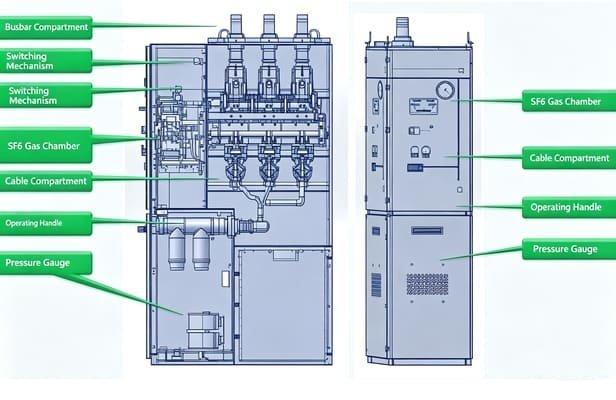
Many field operators mistakenly believe fully sealed gas-insulated RMUs need minimal upkeep. SF6 insulation shields internal components from dust and moisture, but it cannot stop long-term mechanical fatigue and auxiliary device aging.
Multiple daily factors damage RM6 performance over time: frequent switching cycles, high humidity, industrial pollution, drastic temperature swings, sustained mechanical stress and natural electrical component ageing.
For instance, the operating mechanism slowly gains extra operating resistance year by year. Without routine inspections, this tiny flaw will lead to incomplete switching or failure during emergency protection. Similarly, ageing SF6 density relays often send false alarms and interfere with fault judgment.
A scientific preventive maintenance plan brings four tangible benefits:
1. Cut unplanned downtime: Replace worn components in advance to avoid production halts and expensive emergency repairs.
2. Guarantee operational safety: Ensure accurate switching, reliable earthing, correct position indication and coordinated protection logic.
3. Prolong equipment lifespan: Prevent premature scrapping caused by accumulated minor faults.
4. Streamline spare parts management: A predefined RM6 Spare Parts List avoids urgent procurement delays after sudden failures.
How to Execute the RM6 Maintenance Checklist
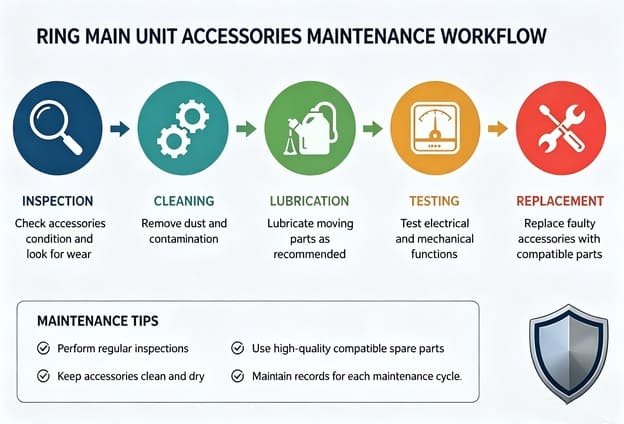
4 Core Modules Inside Standard RM6 Maintenance Checklist
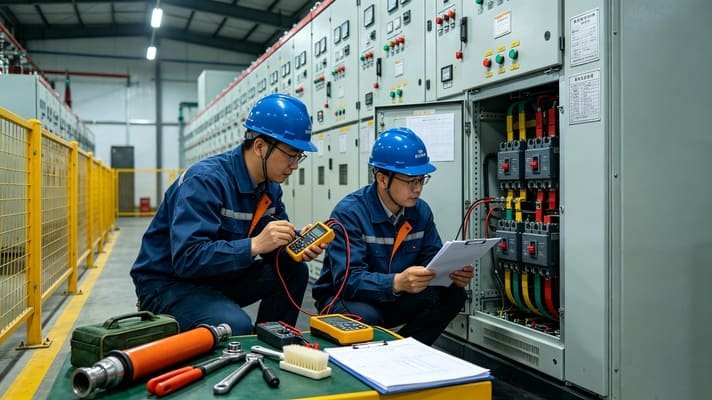
A standard RM6 Maintenance Checklist includes four core inspection modules covering all equipment conditions:
1. Visual Inspection
The initial step for routine maintenance, to spot visible damage rapidly:
- Cabinet enclosure: Check corrosion, dust buildup, moisture stains, damaged labels and missing fasteners (critical for outdoor & industrial installations).
- Cable terminals: Look for overheating discoloration, loose joints and cracked insulation; loose contacts raise resistance and trigger persistent heating risks.
- External fittings: Verify intact position indicators, operating handles, locks, warning stickers and access panels.
2. Key Points for RM6 Operating Mechanism Inspection
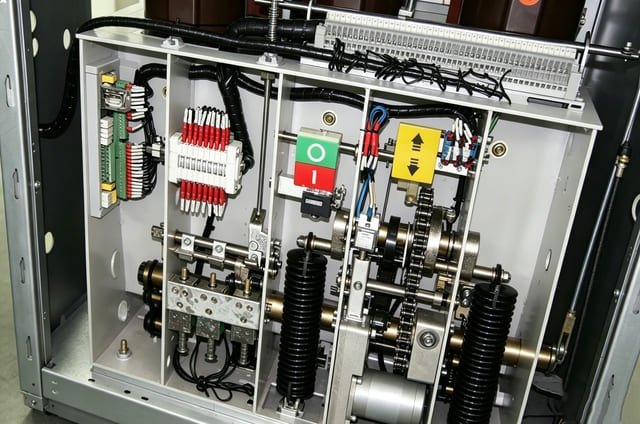
Mechanical defects account for most hidden RM6 faults, which cannot be detected solely via electrical testing.
RM6 Operating Mechanism Inspection
Test opening/closing smoothness, spring charging status, mechanical locking performance, internal lubrication and overall operating force; listen for abnormal friction noise. Warning signs requiring immediate overhaul: slow switching, stiff manual operation, inaccurate position feedback and weird mechanical sounds.
Mechanical Interlock Check
Interlocks are vital safety parts preventing misoperation. Confirm locking function, component alignment and flexible movement. Never bypass interlock devices for operational convenience.
3. Electrical Testing
Measure contact resistance, tighten all terminals, test auxiliary switch performance and verify control circuit stability to ensure precise signal transmission.
4. SF6 Gas System Inspection
Calibrate SF6 density relays and pressure gauges, check for gas leakage, and validate the whole gas monitoring system.
Essential RM6 Spare Parts List for Preventive Maintenance
Most power outages stem from unavailable replacement parts instead of complex repair work. Below are mandatory spare parts categorized by failure frequency:
1. Operating Mechanism
The core power unit controlling load switches and earthing switches. Our modular DC48V motorized operating mechanism for RM6/SM6 supports separate component replacement to cut overhaul downtime. Key inspection points during RM6 Operating Mechanism Inspection: movement smoothness, spring elasticity, latching condition and lubrication. Common faults: increased operating force, incomplete switching, wrong position indication. Dust, humidity and insufficient grease greatly accelerate wear.
2. SF6 Density Relay
The core gas monitoring component with temperature compensation that ordinary pressure gauges lack. During inspection and RM6 Density Relay Replacement, check alarm accuracy, contact sensitivity, temperature compensation function and calibration status.
A low-density alarm does not always mean SF6 leakage; ambient temperature fluctuation, sensor ageing and calibration drift all trigger false alerts. Intermittent unstable signals can be fixed by installing qualified RM6 Compatible Spare Parts.
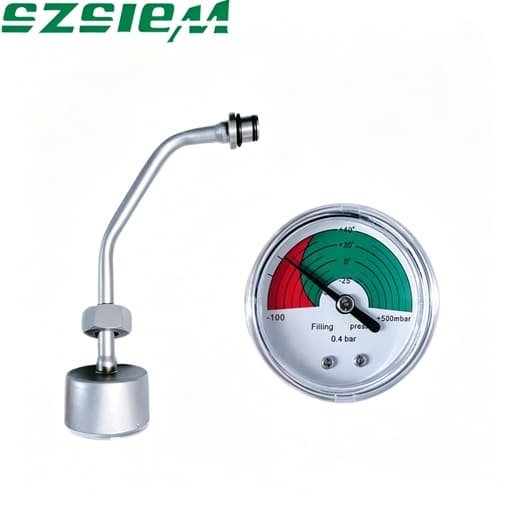
3. Pressure Gauge
Used for intuitive visual pressure observation. Inspect pointer flexibility, glass integrity and mounting tightness. Remember low readings in cold weather do not equal gas leakage.
4. Auxiliary Switch
Transmits equipment status to protection, remote monitoring and interlock circuits. Minor failures cause signal chaos; regularly check contact wear and terminal tightness.
5. Mechanical Interlock Components
Safeguard against wrong operation sequences. Replace springs, linkages and guide parts once gaps or jamming appear.
6. Earthing Switch Components
The key guarantee for maintenance personnel safety. Confirm complete closing strokes and corrosion-free contact surfaces during each check.
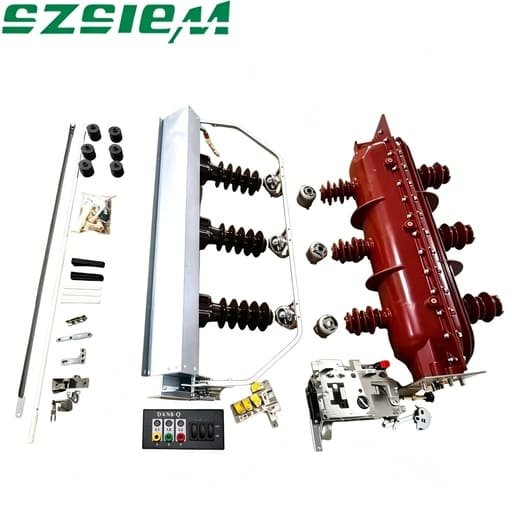
7. Fuse Holders & Protection Parts
Check for heat discoloration and shell cracks regularly. Damaged holders must be replaced immediately to avoid protection failure during short-circuit faults.
8. Sealing Kits & Fastening Hardware
Cabinet door gaskets, O-rings, bolts and washers block moisture and dust from entering the sealed chamber. Aged seals will accelerate internal insulation aging.
RM6 Preventive Maintenance Schedule
The following cycle is widely adopted across the industry for standard RM6 Annual Maintenance, which can be adjusted according to switching frequency, installation environment and local electrical regulatory requirements.
| Maintenance Content | Recommended Frequency |
|---|---|
| Overall visual inspection | Every 6 months |
| Operating mechanism & interlock comprehensive check | Every 12 months |
| Auxiliary switch + density relay functional test | Every 12 months |
| Pressure gauge calibration verification | Every 12 months |
| Full equipment disassembly and comprehensive overhaul | Every 3–5 years |
Necessary Tools for RM6 On-Site Maintenance
- Insulation Resistance Tester: Detect insulation aging and hidden breakdown risks
- Contact Resistance Tester: Locate poor contact points and overheating faults
- Thermal Imaging Camera: Discover early-stage overheating without power cut-off
- SF6 Density Calibration Device: Rectify relay deviation and eliminate false alarms
- Torque Wrench: Standardize terminal tightening torque to prevent loose connections
How to Judge Worn Components Before Complete Failure
Good preventive maintenance focuses on actual equipment status rather than rigid fixed-year replacement cycles. Many parts work fine under regular running conditions but fail abruptly during emergency switching. Watch for these four typical warning signs:
1. Abnormal mechanical operation: Stiff switching actions, slow strokes and unusual noise, caused by worn springs, gears and bearings.
2. Repeated SF6 density alarms: Check ambient temperature influence, potential leakage points and relay calibration status thoroughly before arranging RM6 Density Relay Replacement.
3. Electrical contact defects: Intermittent remote feedback signals and gradually rising contact resistance.
4. Environmental aging damage: Metal corrosion, cracked sealing parts and internal condensation, commonly seen in coastal, humid and industrial pollution zones.
Selection Guidelines for RM6 Replacement Parts
Choosing reliable RM6 Replacement Parts cannot rely merely on identical appearance. Medium voltage equipment demands full matching in installation dimensions, electrical rated parameters, structural interfaces and material performance.
1. Confirm accurate technical specifications: Providing original part numbers, equipment photos or design drawings greatly improves matching accuracy.
2. Verify production quality: Trustworthy suppliers can offer factory test reports and material qualification certificates suitable for medium voltage working conditions.
3. Obtain professional technical support: For core components such as operating mechanisms and density relays, professional suppliers will assist in compatibility confirmation, instead of only selling finished goods.
Original OEM Parts VS Compatible Spare Parts
Original manufacturer parts achieve 100% parameter matching with official certification, yet they come with high prices, long delivery cycles, and many old model components have been discontinued. Qualified RM6 Compatible Spare Parts deliver equivalent service performance, shorter lead times and lower whole-life costs, perfectly fitting daily maintenance and equipment renovation projects. The core selection standard is product quality and parameter compliance, not whether parts are original.
On-Site Maintenance Practical Case: Troubleshooting Excessive Operating Force
A local distribution station reported one RM6 feeder required far more force to switch on and off compared with other units on the same busbar. The maintenance team followed the complete RM6 Maintenance Checklist for systematic troubleshooting:
1. Comparative operation tests confirmed obvious increased mechanical resistance;
2. Disassembly inspection found dried lubricating grease and accumulated dust on linkage components, raising internal friction;
3. No severe structural damage was found, only early-stage wear on small movable parts;
4. After full component cleaning, worn part replacement and professional re-lubrication, switching force returned to the standard range.
This real case proves standardized step-by-step inspection is more economical and accurate than blind component replacement based only on surface symptoms.
Common RM6 Maintenance Mistakes Worth Avoiding
1. Over-relying on electrical test data while ignoring hidden mechanical wear inside the equipment;
2. Discarding maintenance records, making it impossible to track equipment aging trends year by year;
3. Adopting passive breakdown repair instead of proactive RM6 Preventive Maintenance;
4. Picking spare parts purely based on low prices, leading to recurring faults and potential safety hazards.
RM6 Switchgear Maintenance Best Practices Summary
1. Always implement a unified RM6 Maintenance Checklist to avoid missing inspection items across different engineers;
2. Adopt condition-based maintenance instead of fixed-time cycle replacement to cut unnecessary costs;
3. Record all maintenance data completely to predict future failure risks in advance;
4. Reserve critical spare parts in warehouse to drastically shorten power outage duration once faults emerge.
Frequently Asked Questions
1. What items are included in an RM6 maintenance checklist?
It covers visual appearance, mechanical operation, electrical testing and SF6 gas system inspection for all core components.
2. How frequently should RM6 switchgear be maintained?
Semi-annual visual inspection, annual RM6 Annual Maintenance functional test, and full overhaul every 3 to 5 years.
3. What should be listed on an RM6 spare parts list?
Operating mechanism, SF6 density relay, pressure gauge, auxiliary switch, interlock components and sealing kits are core priorities.
4. When does an RM6 operating mechanism need replacement?
Stiff operation, slow switching, abnormal noise and incomplete opening/closing strokes are obvious replacement signals.
5. Does a low SF6 density alarm always mean gas leakage inside the cabinet?
No. Ambient temperature changes and relay aging are the leading causes of false alarms.
6. Are RM6 compatible spare parts reliable enough for long-term use?
Components produced in line with medium voltage standards and with complete test certification are fully reliable for routine replacement.
7. What is the difference between general RM6 maintenance and preventive maintenance?
General maintenance repairs existing faults after breakdowns; RM6 Preventive Maintenance eliminates potential risks beforehand to avoid unplanned outages.
Conclusion
Building a complete RM6 Switchgear Maintenance system is the core guarantee for stable operation of medium voltage distribution networks. By adhering to standardized inspection checklists, carrying out scientific spare parts planning, and selecting qualified RM6 Replacement Parts, power operators can effectively reduce equipment failure rates, elevate workplace safety, extend the service life of switchgear assets, and lower overall grid operation costs.
Looking for RM6 Compatible Spare Parts or Professional Technical Support?
Xizi Energy supplies a full range of certified RM6 Compatible Spare Parts, including operating mechanisms, SF6 density relays, pressure gauges, auxiliary switches and mechanical interlock assemblies. Our professional engineering team offers parameter matching verification, technical consultation and customized quotations according to your on-site equipment demands.