
Selecting a 36kV load break switch (LBS) for medium voltage distribution projects goes far beyond checking just the rated voltage.
Field engineers need to consider continuous current rating, insulation performance, short-circuit withstand capability, switching requirements, earthing design, actuator type and how well the unit fits into ring main units or existing switchgear panels.
Most common 36kV three-position LBS comes with 630A rated current, with 800A as an upgrade option. Many versions use SF6 insulation and comply fully with IEC 62271‑103. These switches are widely deployed for feeder sectionalizing, transformer switching and safe circuit isolation inside urban distribution grids, secondary substations and automated power networks.
This practical guide covers key definitions, technical specs, RMU integration notes, comparisons between LBS and VCB, relevant international standards, plus a usable procurement checklist to help you pick the right medium voltage load break switch for your project.
1. What Is a 36kV Load Break Switch (LBS)?
A 36kV load break switch is medium voltage equipment designed for operation on 36kV class networks. It safely closes, carries continuous load and interrupts normal operating currents under standard site conditions.
Unlike circuit breakers, standard LBS cannot independently clear short-circuit faults. Its primary purpose lies in operational switching and network segmentation rather than fault protection. For this reason, designers must carefully coordinate LBS setups with upstream and downstream protection schemes to guarantee system safety.
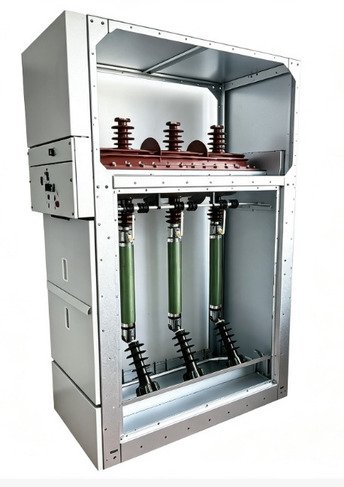
1.1 Three-Position Switch Layout (Standard RMU Design)
Virtually all modern 36kV LBS built for ring main units use an interlocked three-position mechanism to meet international safety rules:
- Closed: Normal energised status, carrying continuous feeder load
- Open: Full galvanic isolation of the circuit for maintenance and fault troubleshooting
- Earth: Circuit grounding to remove residual voltage and protect field workers
This three-position layout is standard for SF6 RMUs, cable branch cabinets and outdoor distribution switchgear used globally.
2. Why Deploy 36kV LBS in Medium Voltage Networks?
Medium voltage distribution systems demand flexible, reliable switching solutions for day-to-day operation. The 36kV LBS serves as a core component for network sectionalising and routine circuit control.
A properly specified unit supports these critical distribution tasks:
- Isolate faulty or standby feeders to carry out offline maintenance
- Split large distribution networks to limit outage ranges during faults
- Switch distribution transformers and cable feeders within defined switching duty
- Offer compact integrated switching for standard RMU enclosures
- Support both local manual operation and optional remote motorised control
- Enable smart distribution automation when paired with motor drives and control terminals
Quick practical tip: Do not select a 36kV LBS based purely on voltage rating. Always match parameters to real site switching duty and available system fault levels.
3. Core 36kV LBS Technical Specifications (Key Parameters to Verify)
When reviewing manufacturer datasheets, prioritise electrical performance over physical dimensions. All ratings must comply with IEC 62271‑103: High‑voltage switchgear and controlgear – Part 103: Switches for rated voltages above 1 kV up to 52 kV.
| Parameter | Practical Selection Guidance |
|---|---|
| Rated Voltage | 36kV, compatible with 33kV / 36kV medium voltage grids |
| Rated Current | 630A standard; 800A optional for heavy load expansion |
| Frequency | 50Hz / 60Hz suitable for worldwide projects |
| Power-Frequency Withstand Voltage | Match your project insulation requirements |
| Lightning Impulse Withstand Voltage | Align with grid lightning protection class |
| Load Breaking Current | Must satisfy actual cable and transformer switching duty |
| Short-Time Withstand Current | Cross-check against system fault current and duration |
| Short-Circuit Making Current | Conform to network short-circuit impact requirements |
| Mechanical & Electrical Endurance | Ensure stable performance under frequent switching cycles |
| Earthing Function | Required feature for standard three-position RMU setups |
| Operating Mechanism | Manual basic actuation or motorised version for automation |
| Insulation Medium | SF6 gas insulation or eco-friendly air insulated type |
Important note: Always validate performance from official type test reports instead of generic catalogue data.
4. 630A vs 800A: How To Pick The Right Current Rating
630A remains the widely accepted standard for most 36kV medium voltage distribution applications. It covers typical residential, commercial and light industrial load conditions.
That said, current rating selection should never rely only on existing operating load. Designers need to reserve capacity for medium and long-term load growth.
Factors to weigh up: future power demand, transformer capacity, feeder layout, ambient temperature, installation altitude and overall switchgear assembly limits.
Choose 800A 36kV LBS if your project covers heavy industrial zones, data centre power supply or has confirmed plans for capacity expansion.
Standard selection sequence: System voltage → maximum continuous current → switching duty → fault level → cabinet layout → operation mode.
5. 36kV SF6 Load Break Switch: Features & Common Applications
SF6‑type 36kV LBS uses sulphur hexafluoride gas for insulation and arc extinction. The design delivers compact dimensions, strong dielectric strength and consistent arc quenching performance. This explains why it is the dominant choice for compact modern medium voltage switchgear and ring main unit (RMU).
5.1 Typical Application Scenarios
- Fully insulated SF6 ring main units (RMU)
- Compact indoor medium voltage distribution panels
- Cable feeder switching and branch distribution cabinets
- Control and switching for distribution transformer feeders
- Space-restricted secondary substations and urban power stations
5.2 Practical Selection Reminder
Do not choose SF6 LBS only for its small footprint. Take gas tightness, F-gas environmental compliance rules, maintenance intervals and end-user environmental requirements into account to avoid long-term operational risks.
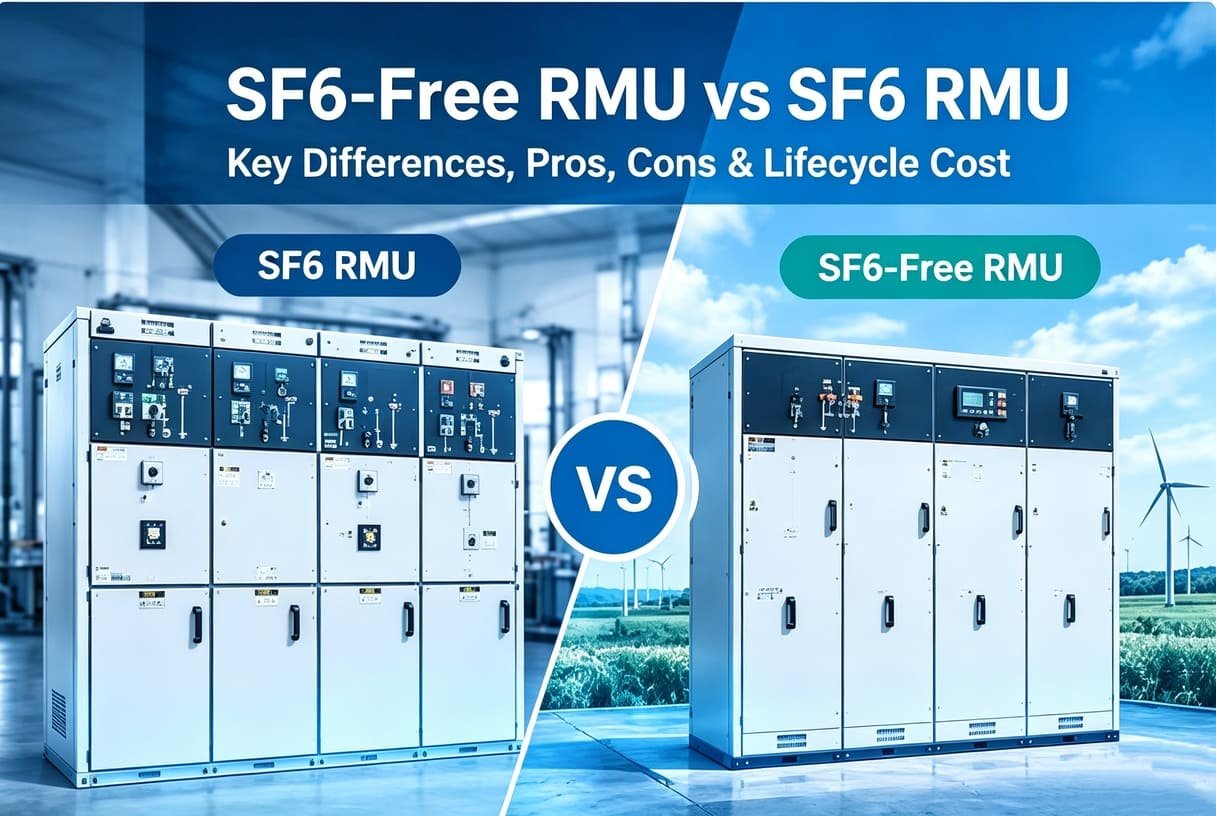
6. How 36kV LBS Operates Within Ring Main Units
In standard RMU cabinets, the three-position 36kV LBS acts as the main switching element for incoming lines, outgoing feeders and ring network loops. It handles regular power supply adjustments and circuit isolation for maintenance work.
6.1 Basic Working Sequence
Closed (normal running) → Open (circuit isolation) → Earth (maintenance grounding)
- Normal running: LBS stays closed to carry continuous load current
- Maintenance mode: Open the switch to isolate faulty or standby network sections
- Safety grounding: Move to earth position to release residual voltage before field work
6.2 RMU Integration Points To Confirm
Most modern RMUs combine LBS, earthing switches, voltage sensors and auxiliary contacts. Motorised drive kits can be added later for automation upgrades.
During procurement, treat the LBS as part of the full RMU system. Check installation dimensions, drive shaft compatibility, cable termination space, mechanical interlocks and consistent position indication signals.
7. 36kV LBS vs VCB: Key Differences & Proper Application
Confusing LBS and VCB functions is one of the most frequent design errors seen on medium voltage projects. These two devices serve entirely different roles within power distribution networks.
| Feature | 36kV Load Break Switch (LBS) | 36kV Vacuum Circuit Breaker (VCB) |
|---|---|---|
| Normal Load Switching | Supported | Supported |
| Short-Circuit Fault Interruption | Not designed for fault breaking | Core built-in function |
| Protection Relay Coordination | Indirect coordination required | Direct precise coordination |
| RMU Usage | General feeder switching & sectionalising | Critical feeders needing fault protection |
| Cost & Complexity | Lower cost, simple reliable structure | Higher cost, complex control circuit |
| Operation Mode | Manual / Motorised | Manual / Motorised / Auto-tripping |
Field advice: Do not replace VCB with LBS just because both carry 36kV voltage ratings.
Many high-spec RMU projects use mixed configurations: LBS for ordinary feeders and VCB for key protected circuits.
8. Manual vs Motorised 36kV LBS: Choose The Right Actuator
8.1 Manual Operation
Manual 36kV LBS suits traditional distribution networks, basic unattended substations and non-automated zones. The mechanism is straightforward and keeps ongoing maintenance costs low.
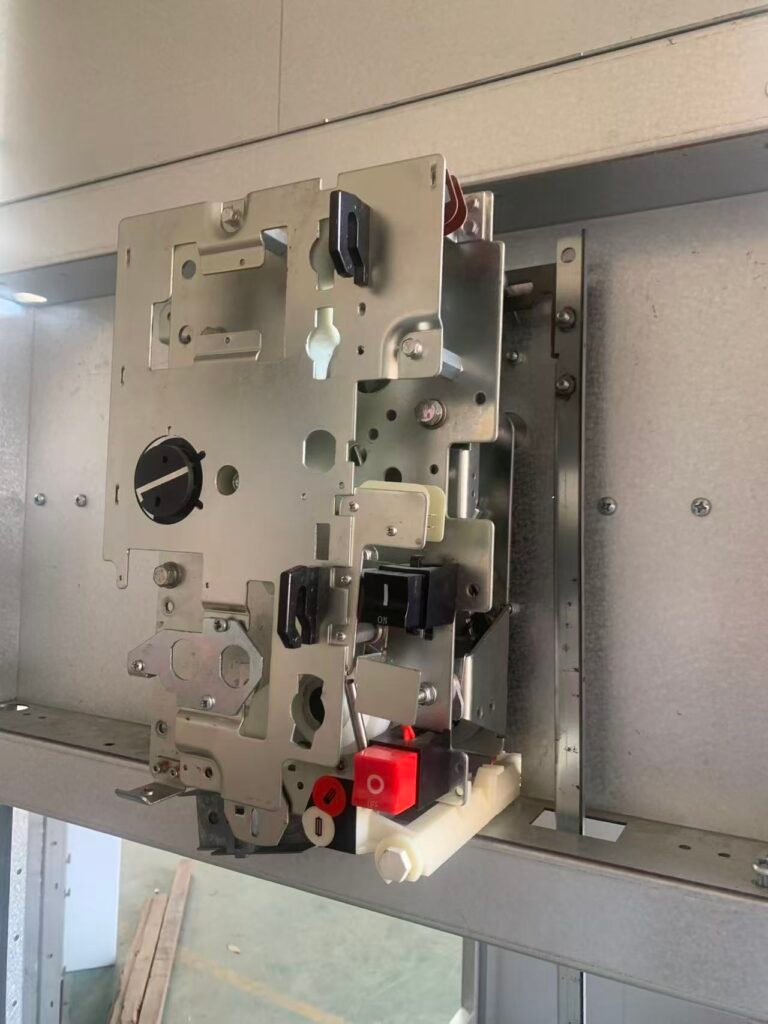
8.2 Motorised Operation (Smart Grid Solution)
Motorised LBS targets smart substations, remotely managed networks and distribution automation schemes. It enables intelligent control functions including:
- Remote open and close control
- Simple integration with RTU and FTU site terminals
- Centralised monitoring and control via SCADA platforms
- Less requirement for site-based manual switching
- Faster fault isolation and network sectionalising
- Full support for end-to-end distribution automation
Procurement tip: Avoid vague requirements for “motorised version”. Clearly specify motor operating voltage, solenoid parameters, local/remote selector switch and interlock logic within technical specifications.
9. Relevant International Standards for 36kV LBS
The primary standard governing all 36kV load break switches is IEC 62271‑103. This international standard defines design criteria, test procedures and performance requirements for high voltage switches up to 52kV.
Full RMU assemblies, metal enclosures and auxiliary hardware may require additional supporting IEC standards.
When requesting supplier quotations, always ask for these supporting documents:
- Full list of applicable IEC standards
- Valid official type test reports
- Factory routine test records
- Confirmed switching duty and insulation level data
- Short-circuit withstand and mechanical endurance parameters
Avoid accepting generic claims of “IEC certified” without complete supporting test documentation.
10. Core Technical Points To Confirm With Manufacturers
Clarify these items directly with suppliers before finalising quotations, to prevent specification mistakes and costly project rework.
- Complete technical datasheet, confirming voltage, current, insulation, switching and fault withstand ratings
- Confirm installation setup: RMU integrated, indoor standalone or outdoor cabinet design
- Mechanical interface dimensions: mounting layout, phase spacing and drive shaft position (critical for replacement retrofits)
- Operating mechanism type: manual or motorised plus control voltage requirements
- Authentic type test reports and routine factory test records
- Environmental adaptability: operating temperature range, altitude and humidity limits
11. Standard 7-Step Process For Selecting 36kV LBS
Stick to this workflow to avoid the common mistake of selecting equipment based only on voltage and current figures.
- Confirm system voltage class – ensure 36kV rating matches grid design parameters
- Calculate continuous operating current – select 630A or 800A considering load growth
- Clarify switching duty requirements – transformer switching, cable charging or ring loop transfer
- Verify system fault level – match short-time withstand current ratings
- Select insulation type: SF6 gas insulated or air insulated design
- Decide operation mode: manual or motorised remote control
- Check system compatibility: RMU mounting dimensions, interlocks, earthing and auxiliary contacts
12. Procurement Checklist For Final Order Confirmation
Run through this checklist before issuing purchase orders:
- Rated voltage: 36kV
- Rated current: 630A or specified 800A variant
- Frequency: 50Hz / 60Hz
- Agreed power-frequency and lightning impulse insulation level
- Verified load breaking current capability
- Short-time withstand current and duration rating
- Compliant short-circuit making current
- Three-position interlocked earthing mechanism
- Manual or motorised actuator with defined control voltage
- Compatibility with target RMU or switchgear cabinet
- Compliance with IEC 62271‑103
- Complete set of type test and factory test documentation
- Suitability for site ambient environmental conditions
- List of required accessories and spare parts
Retrofit project note: Share original equipment nameplate data, model reference and installation drawings with suppliers for accurate compatibility checks.
About the Author
Hui Deng, Application Engineer
Specialized in medium‑voltage switchgear, RMU and load break switch solutions for utility, industrial and EPC projects. With hands‑on experience in MV project specification review and technical support for global customers.
FAQ – Frequently Asked Questions
These frequent industry queries match common Google search questions from contractors and design engineers.
1. What is a 36kV load break switch used for? A 36kV load break switch is medium voltage switching equipment built to make, carry and cut normal load currents. It is mostly used for network segmentation, feeder isolation and daily operational switching within RMU distribution systems.
2. What current rating should I choose for a 36kV LBS? 630A remains the standard rating for general distribution work. Choose 800A variants if you handle heavy load zones or expect future power demand growth.
3. Can a 36kV LBS be fitted inside an RMU? Absolutely. Three-position 36kV LBS acts as the core switching module for SF6 insulated ring main units, cable branch cabinets and medium voltage switching stations.
4. What is the practical difference between a 36kV LBS and VCB? Load break switches only manage normal load switching tasks. A vacuum circuit breaker (VCB) can interrupt short-circuit faults and works alongside protection relays for critical feeders. Never substitute one for the other without system review.
5. Does 36kV LBS support remote control for smart grids? Yes. Motorised 36kV LBS connects easily with RTU and FTU hardware, supporting SCADA monitoring, remote open/close actions required for modern distribution automation.
6. Can a 36kV switch operate within a 33kV network? It works on 33kV grids provided insulation levels, fault withstand capacity and switching performance satisfy your project’s technical requirements.
13. Conclusion
Choosing a reliable 36kV load break switch needs systematic technical evaluation, rather than simple matching of voltage and current values.
For medium voltage distribution upgrades, RMU integration and equipment replacement projects, engineers must carefully evaluate switching duty, insulation performance, fault resistance, operation mode and standard compliance.
The goal of proper equipment selection is to ensure the complete LBS package satisfies all electrical, mechanical, operational and safety demands for stable, long-term distribution network operation.
Need technical support or quotation for 36 kV load‑break switches for your RMU or distribution project? Our electrical engineering team can review your system parameters and provide a custom proposal. Contact us today.