
What is Gas Insulated Switchgear (GIS)?
In modern power distribution and grid upgrades, Gas Insulated Switchgear (GIS) is a critical solution for projects with limited space and high reliability. For anyone planning a substation, evaluating medium or high-voltage equipment, or comparing switchgear options, understanding GIS is key to making informed technology and budget decisions.
If you want to learn what a gas-insulated switchgear actually does in real power systems, check our complete practical guide: What Does a Gas Insulated Switchgear (GIS) Do? A Practical Guide.
This post explains GIS’s definition, working principle, core advantages, applications, and differences from conventional equipment—helping you quickly determine if it suits your next power project.
What is Gas Insulated Switchgear (GIS)?
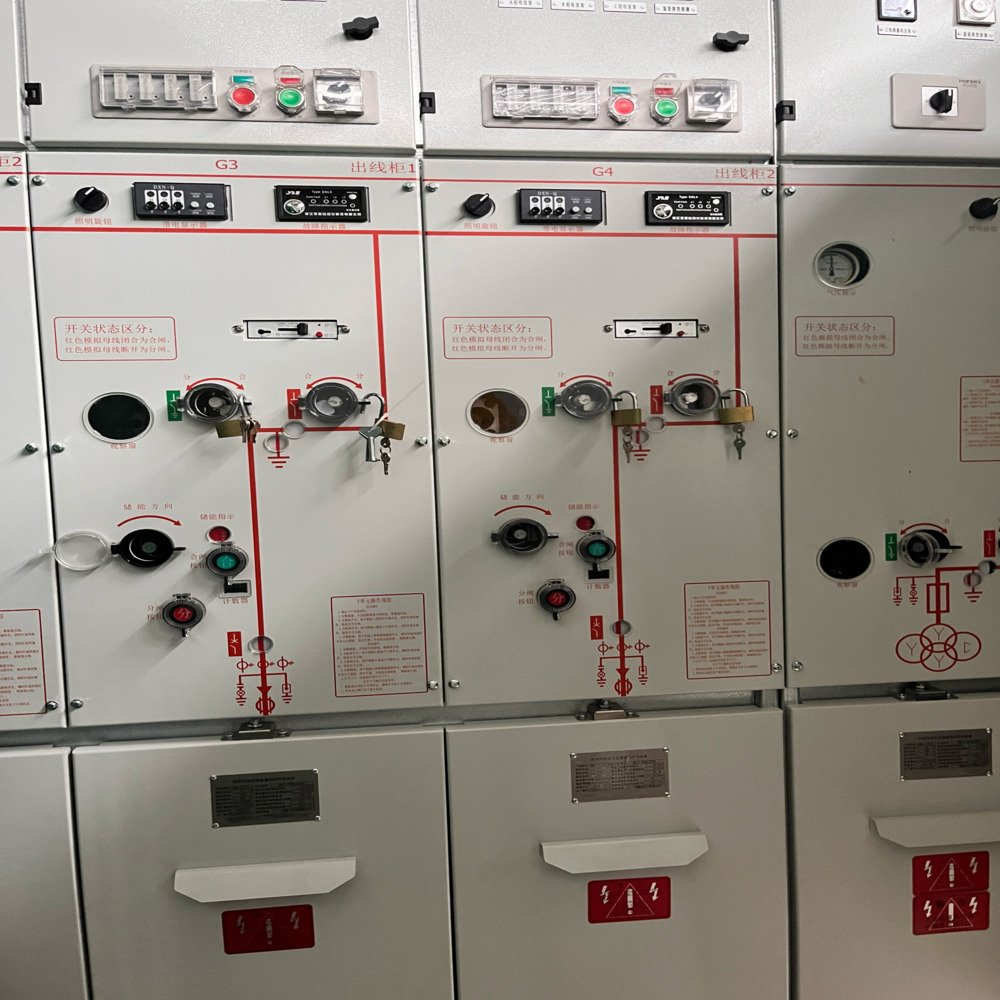
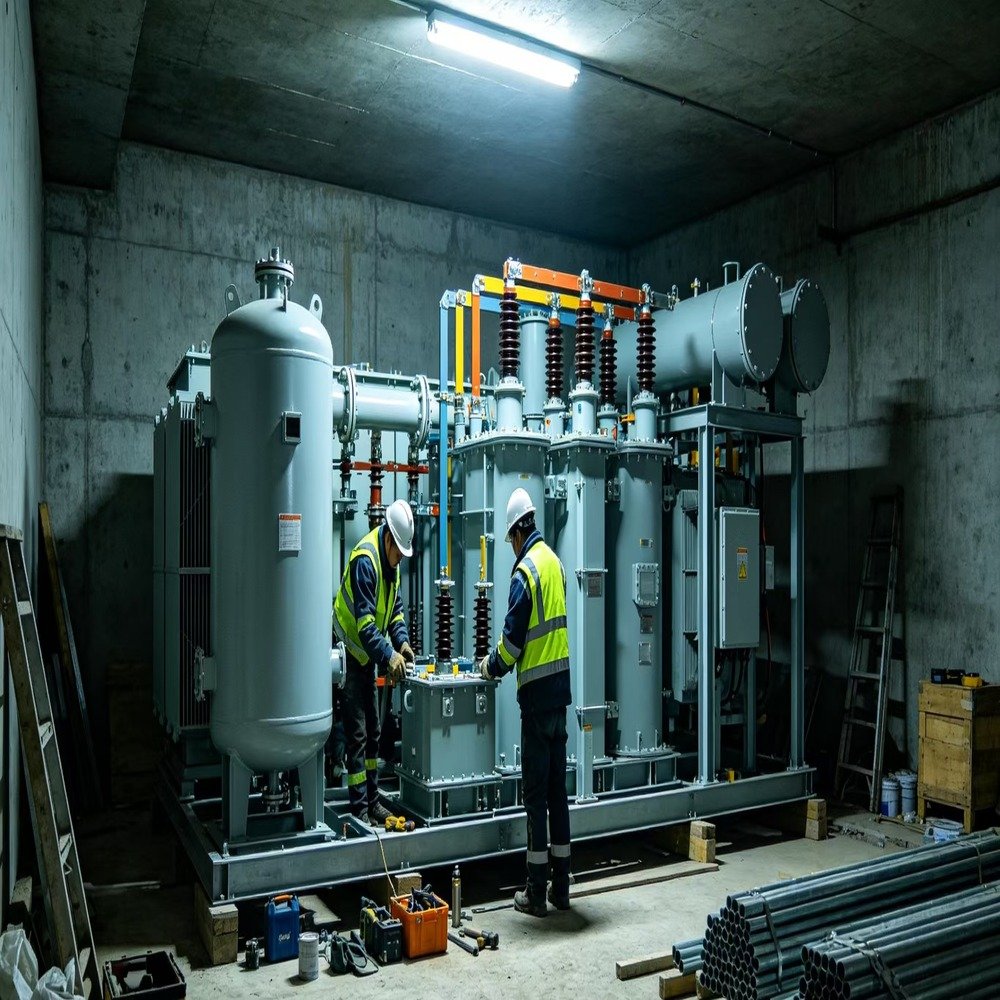
Gas Insulated Switchgear (GIS) is a fully closed, modular power device. It holds key parts—like circuit breakers, disconnectors, earthing switches, instrument transformers, and busbars—inside a metal case that is connected to the ground. The system uses pressurized insulating gas, usually sulfur hexafluoride (SF₆), to provide strong insulation and quickly put out electric arcs. Unlike air-insulated equipment, GIS puts all the functions of a transmission and distribution station into a much smaller space. This makes it good for cities and places with little room. Its closed structure also keeps out dust, moisture, salt, and chemicals. This makes it more stable in bad environments.
How Does Gas Insulated Switchgear (GIS) Work?
How does GIS work well? When the power system is working normally, the insulating gas keeps a stable barrier between the live parts and the metal case. When there is a problem, the circuit breaker works and creates an electric arc. The gas quickly soaks up free electrons, stops ionization, and puts out the arc much faster than air. This quick stop reduces wear on the parts and lowers the chance of long blackouts. Because SF₆ has much better insulation than air, the space between parts can be much smaller. This makes the whole station small without losing safety or performance.
The Small Size Benefit of Gas Insulated Switchgear (GIS)
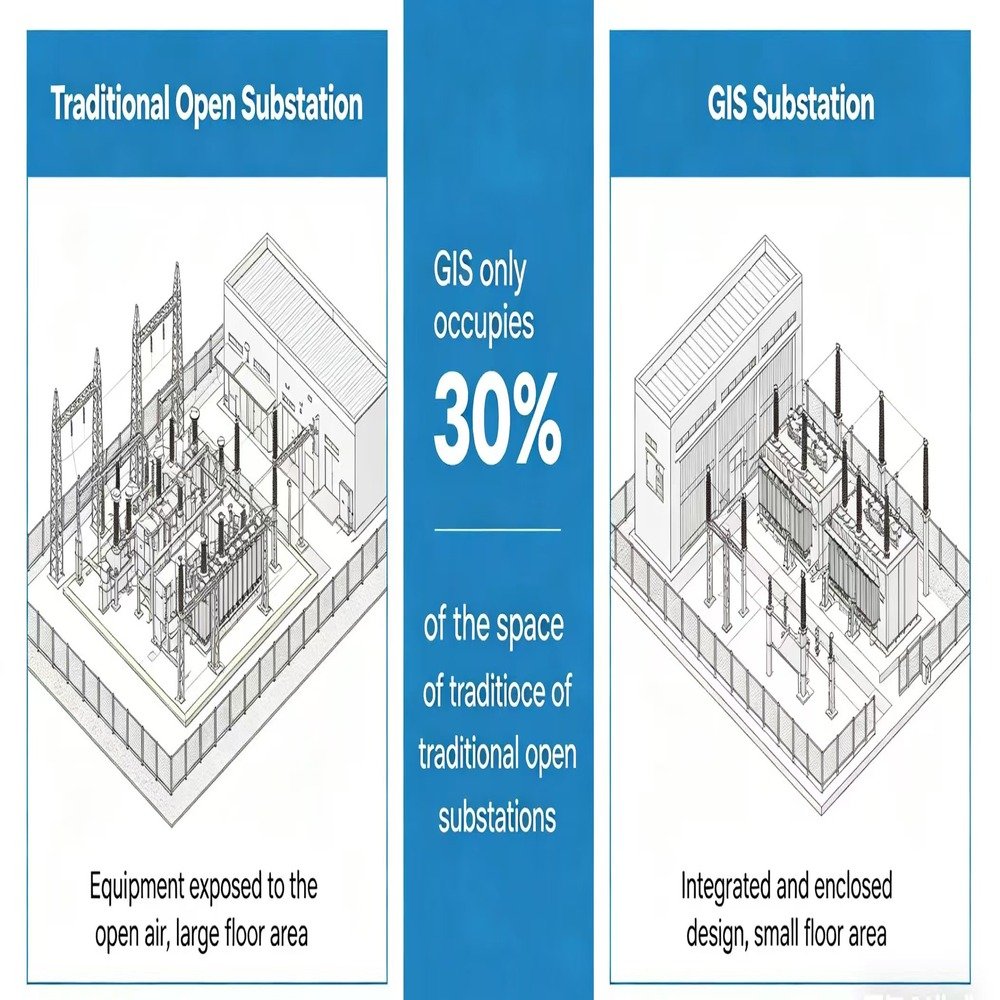
One big benefit of Gas Insulated Switchgear (GIS) is its small size. Usually, GIS takes up only 10% to 30% of the space needed for a common air-insulated substation. This saves money in city centers, industrial areas, underground buildings, rooftop stations, and offshore platforms—places where land is hard to get or expensive. GIS also makes work sites safer: live parts are fully covered by grounded metal. This greatly reduces the risk of arc flashes and protects maintenance workers.
Long-Term Use Advantages of Gas Insulated Switchgear (GIS)
GIS is also good for long-term use. Its closed, easy-to-maintain design reduces pollution and makes service intervals longer. Routine checks only need to monitor gas density, check mechanical operation, and look at the outside. You don’t need to do frequent overhauls. GIS costs more at first than air-insulated switchgear. But it costs less to maintain, needs less land, and lasts longer. This often makes it cheaper over many years.
Applications of Gas Insulated Switchgear (GIS)
GIS is used in many medium and high-voltage projects. These projects need small and high-performance equipment. Examples include urban and underground substations, industrial microgrids, hydropower plants, renewable energy connections, offshore facilities, and rail transit power systems. GIS works well in tough environments. These places include deserts, coastal areas, high places, and very polluted sites. Conventional equipment needs more frequent maintenance in these places.
As essential conductive connection parts for GIS and medium-voltage power distribution facilities, insulated flexible copper busbar provides high-current carrying capacity, vibration compensation and reliable insulation performance for long-term substation operation.
Gas Insulated Switchgear (GIS) vs. Ring Main Units (RMU)
If you are choosing different types of switchgear, you may also want to compare GIS and ring main units (RMU) to choose the best one. If you want a clear explanation of how to use them, their voltage ranges, and how to choose, you can read our detailed guide: Why is the difference between GIS and RMU?
Environmental Alternatives for Gas Insulated Switchgear (GIS). SF₆ works very well, but it is bad for the environment. This makes the industry move to eco-friendly alternatives. New solutions include clean air, fluoronitrile-based gas mixtures, and SF₆-free designs. These reduce environmental impact but still work well for insulation.
Digitalization Trend for Gas Insulated Switchgear (GIS). Digitalization is another important trend. IoT monitoring, gas leak detection, and predictive checks are being added to GIS to support smart grids and digital substations.
Summary of Gas Insulated Switchgear (GIS)
To put it simply, Gas Insulated Switchgear (GIS) is a small, safe, and very reliable switchgear solution. It helps deliver stable power in places with little space and bad environments. It has strong arc-quenching ability, closed protection, low maintenance needs, and a long service life.
The insulating gas inside GIS directly determines its safety and performance. For more details about the gas used in GIS, please visit: What Type of Gas Is Used in GIS Switchgear?
It works for modern power grids and industries. If you are designing a city substation, connecting renewable energy, or upgrading an industrial power system, knowing about Gas Insulated Switchgear (GIS) helps you choose equipment that balances performance, cost, and sustainability.
FAQ About Gas Insulated Switchgear
Q: What is GIS used for?
A: Gas Insulated Switchgear is widely used in urban substations, underground power stations, renewable energy projects, rail transit and coastal industrial power systems.
Q: What is the advantage of GIS over traditional switchgear?
A: GIS occupies only 10%–30% of the space, fully enclosed design, low maintenance and strong adaptability to harsh environments.
Q: What insulating gas is used in GIS?
A: Most GIS systems adopt SF6 gas for excellent insulation and arc extinguishing performance.
Ask for Your Needs About Gas Insulated Switchgear (GIS)
Do you have any problems with substation space, reliability, or maintenance? Share your project needs in the comments—we can help you.
All GIS design and application comply with international IEC power distribution standards.
Professional Medium & High Voltage Electrical Equipment Manufacturer