
SF6 Density Gauge Calibration: Step-by-Step Procedure, Testing Methods and Common Errors
SF6 insulated switchgear needs stable gas density to work safely and reliably. SF6 density gauges are fitted on GIS substations, RMUs and circuit breakers. They help workers check gas status and get early warnings when gas density drops to unsafe levels.
Like all measuring tools, SF6 density gauges will slowly lose accurate settings over time. If you do not calibrate them regularly, the gauge may show wrong data. Regular SF6 density gauge calibration fixes sensor drift that triggers SF6 density gauge false alarms caused by temperature fluctuations. This can cause false warnings, extra maintenance work and even equipment damage.
This guide tells you how to calibrate an SF6 density gauge, when you need calibration, and the right ways to keep SF6 density relays working correctly.
What Is an SF6 Density Gauge?
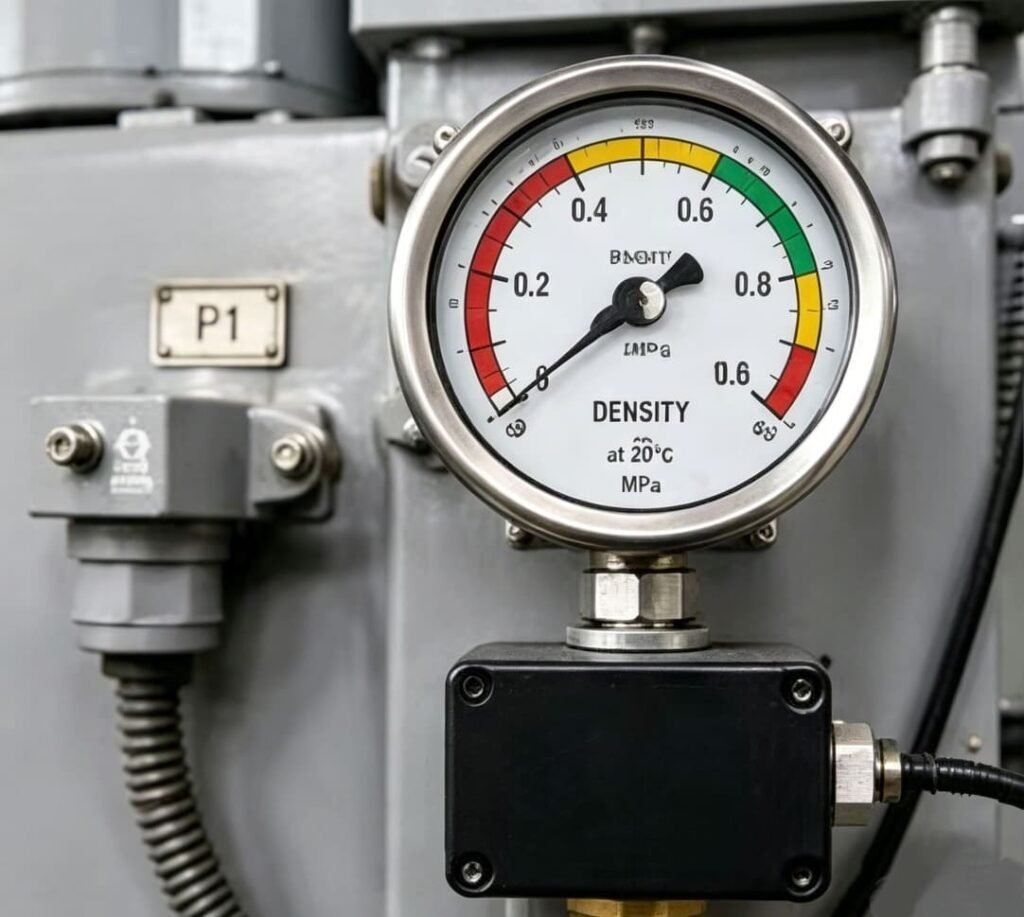
An SF6 density gauge is a device that measures gas density inside sealed electrical equipment. Normal pressure gauges cannot offset temperature changes, but density gauges can fix temperature errors and show real gas conditions more correctly. Read our full comparison between both monitoring devices in SF6 Density Relay vs Pressure Gauge.
Most new density gauges connect to density relays. These relays send alarm or stop signals once gas density is lower than the set safe value.
They are widely used on:
- Gas Insulated Switchgear (GIS)
- Ring Main Units (RMU)
- SF6 Circuit Breakers
- Gas-insulated transformers
Signs That Your SF6 Density Gauge Needs Calibration
You do not need to calibrate the gauge right away for small problems. But the following signs mean you need to test and calibrate it soon.
Inconsistent Readings
If the gauge data is very different from standard test data, you need to check and calibrate the gauge.
Frequent False Alarms
If the alarm keeps going off while the gas is in normal condition, the gauge settings may have errors. If calibration cannot resolve persistent drift and aging damage, you will need to replace the unit, and we share full operational steps for replacing SF6 density gauges for Schneider RM6 switchgear.
Contact Operation Problems
If alarm or stop contacts start working at wrong density levels, you must test and calibrate the density relay.
Scheduled Maintenance Intervals
Most power companies check SF6 density devices every 3 to 5 years. The exact time depends on working conditions and manufacturer rules.
Equipment Required for Calibration
You need to prepare standard testing tools before you start calibrating an SF6 density gauge.
Common tools you need:
- Calibration test bench
- High-precision pressure calibrator
- Standard gas pressure source
- Temperature compensation simulator
- Density relay testing device
- Multimeter for contact check
Always use certified calibration tools to get correct and traceable test results.
Step-by-Step SF6 Density Gauge Calibration Procedure
Step 1: Isolate the Device
Disconnect the density gauge or relay from the switchgear. Follow the manufacturer’s maintenance rules. Make sure you finish all safety steps and equipment lockout work.
Step 2: Perform a Visual Inspection
Check the device for:
- Broken mechanical parts
- Rust and corrosion
- Loose electric wires and connections
- Broken contact terminals
Fix all visible faults before you start calibration.
Step 3: Connect Calibration Equipment
Link the gauge to a calibrated pressure source or a special SF6 density relay test machine. Check all connections to make sure no gas leaks happen.
Step 4: Apply Reference Pressure Points
Slowly raise and lower pressure within the gauge’s test range. Write down all data shown on the gauge at different test points.
Step 5: Compare Readings
Match the gauge’s shown data with standard reference data. If the difference is over the allowed range, you need to adjust the gauge.
Typical Calibration Tolerances for SF6 Density Gauges
The acceptable calibration error depends on the device design and manufacturer specifications.
| Device Type | Typical Accuracy |
|---|---|
| Mechanical Density Gauge | ±1.5% FS |
| Density Relay | ±1.0% FS |
| Electronic Density Monitor | ±0.5% FS |
If measured values exceed the manufacturer’s specified tolerance, recalibration or replacement may be necessary.
Step 6: Adjust Calibration Settings
You can adjust the gauge in different ways based on its type:
- Turn mechanical calibration screws
- Use electronic software to correct data
- Reset relay working points
Always follow the manufacturer’s guide when you make changes.
Step 7: Verify Alarm and Lockout Contacts
Checking relay contact working points is the most important part of calibration. You need to confirm:
- Alarm contacts work at the correct density level
- Stop contacts start working when density reaches the safety limit
- Contact signals are stable and work every time
Step 8: Document Results
Write down the following information:
- Calibration date
- Tools used for testing
- All test data
- Details of all adjustments
- Worker’s information
Complete records make future maintenance and safety checks easier.
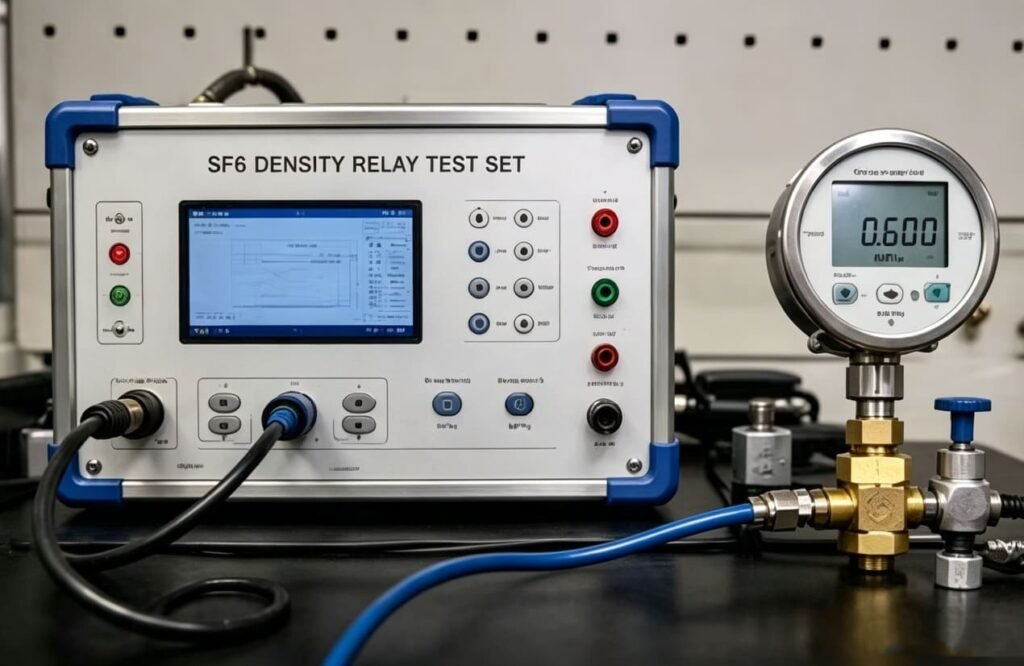
Testing Alarm and Lockout Pressure Settings
Most SF6 density relays have two key working limits.
Alarm Level
The alarm point tells workers that gas density is getting close to the unsafe level. The equipment can still run normally at this stage.
Lockout Level
The lockout point is set to stop equipment operation. It works when gas density is too low to keep safe insulation and arc extinction.
Workers need to test both limits many times to make sure the relay works stably.
Common Calibration Mistakes
Even experienced workers may make mistakes during calibration. The most common errors are listed below.
Ignoring Temperature Compensation
SF6 density gauges are made to fix temperature changes. If you ignore temperature effects during testing, you will get wrong test results.
Using Unverified Reference Equipment
Low-quality or untested reference tools will cause calibration errors.
Overlooking Minor Leaks
Small leaks at test connections will affect pressure stability and make test data inaccurate.
Failing to Test Contacts
Some workers only check gauge readings and skip contact tests. This will leave hidden safety risks for equipment operation.
Troubleshooting Calibration Problems
Reading Drift After Adjustment
This problem is usually caused by worn mechanical parts, aging components or internal device damage.
Alarm Contact Does Not Operate
Check microswitches, wires and contact parts for faults.
Repeated False Alarms
Check the temperature compensation system and confirm relay settings match equipment standards.
Unstable Test Results
Tighten all test connections and make sure calibration tools work normally.
Relevant IEC Standards for SF6 Density Gauge Calibration
Proper calibration should follow internationally recognized standards whenever possible.
The most commonly referenced standards include:
| Standard | Description |
|---|---|
| IEC 62271-1 | Common specifications for high-voltage switchgear and controlgear |
| IEC 62271-203 | Requirements for gas-insulated metal-enclosed switchgear |
| IEC 60376 | Specification of technical-grade SF6 gas |
| IEC 60480 | Guidelines for reuse and handling of SF6 gas |
Following these standards helps utilities maintain reliable gas monitoring performance and meet regulatory maintenance requirements.
Calibration Standards and Recommended Intervals
Calibration frequency changes with equipment working conditions and maintenance rules. The standard cycle is as follows:
- Visual check: once a year
- Function test: every 2 to 3 years
- Full calibration: every 3 to 5 years
Key power transmission equipment needs more frequent testing. Follow IEC standards and manufacturer rules to keep the system stable for a long time.
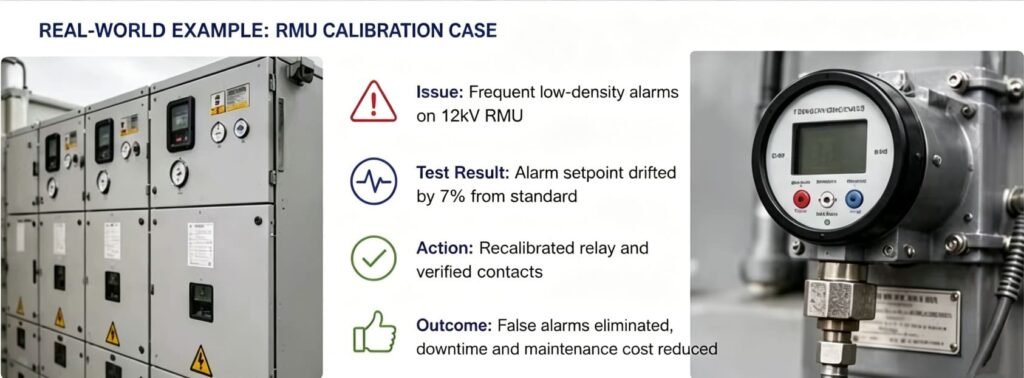
Real-World Example: Eliminating False SF6 Density Alarms in an RMU
During a routine maintenance project for a 12kV RMU installed in a coastal industrial facility, technicians noticed repeated low-density alarms despite stable gas pressure and no detectable leakage.
A detailed SF6 density relay test revealed that the alarm setpoint had drifted by approximately 7% from its original factory calibration. Temperature compensation remained functional, but the relay was triggering prematurely.
After recalibration and verification of the alarm and lockout contacts, the nuisance alarms disappeared completely. The maintenance team avoided unnecessary gas refilling and reduced equipment downtime.
This case highlights why periodic SF6 density gauge calibration is essential even when no gas leak is present.
Best Practices for Maintaining SF6 Density Gauges
Follow these rules to keep gauges accurate and extend their service life:
- Check gauges during daily maintenance
- Test alarm and stop functions regularly
- Update calibration records in time
- Only use certified test tools
- Check and fix repeated false alarms right away
- Replace old or broken monitoring devices when needed
Preventive maintenance costs far less than emergency repairs caused by undetected monitoring errors.
Frequently Asked Questions
How often should an SF6 density gauge be calibrated?
Most manufacturers suggest full calibration every 3 to 5 years. Key equipment needs more frequent testing.
Can an SF6 density gauge be calibrated on-site?
Yes. Most new calibration tools support on-site testing and do not need long equipment shutdowns.
What causes false SF6 density alarms?
Main reasons include calibration drift, temperature compensation faults, broken relay contacts and wire problems.
What is the difference between pressure and density measurement?
Pressure changes with temperature. Density measurement fixes temperature errors and shows the real gas condition more correctly.
Why is density relay testing important?
Testing makes sure alarm and stop contacts work at correct limits. This avoids equipment damage and safety risks.
What Is the Acceptable Error Range for SF6 Density Gauge Calibration?
Most manufacturers specify an accuracy range between ±1% and ±1.5% depending on device design.
What Happens When SF6 Density Falls Below the Lockout Level?
The switchgear may automatically block operation to prevent insulation failure or interruption performance issues.
How Do You Test SF6 Density Relay Contacts?
Relay contacts are tested by gradually changing the simulated gas density and verifying that alarm and lockout contacts switch at the correct setpoints.
Choosing the Right SF6 Density Gauge and Relay
When replacing or upgrading monitoring devices, engineers should consider:
- Compatibility with GIS and RMU switchgear
- Temperature compensation accuracy
- Alarm and lockout contact configuration
- Long-term calibration stability
- IEC compliance requirements
High-quality SF6 density relays can significantly reduce false alarms and improve switchgear reliability over the equipment’s service life.
Conclusion
Correct calibration of SF6 density gauges is key to safe and stable switchgear operation. Regular testing ensures accurate gas density monitoring. It also stops false alarms, cuts extra maintenance costs and avoids sudden equipment shutdowns.
Follow the standard calibration steps and check relay contact performance carefully. Power companies and equipment users can improve system stability and extend the service life of SF6 insulated equipment.
Professional Medium & High Voltage Electrical Equipment Manufacturer