
Where Are RMUs Commonly Used? RMU Application Guide
Introduction to Ring Main Unit (RMU)
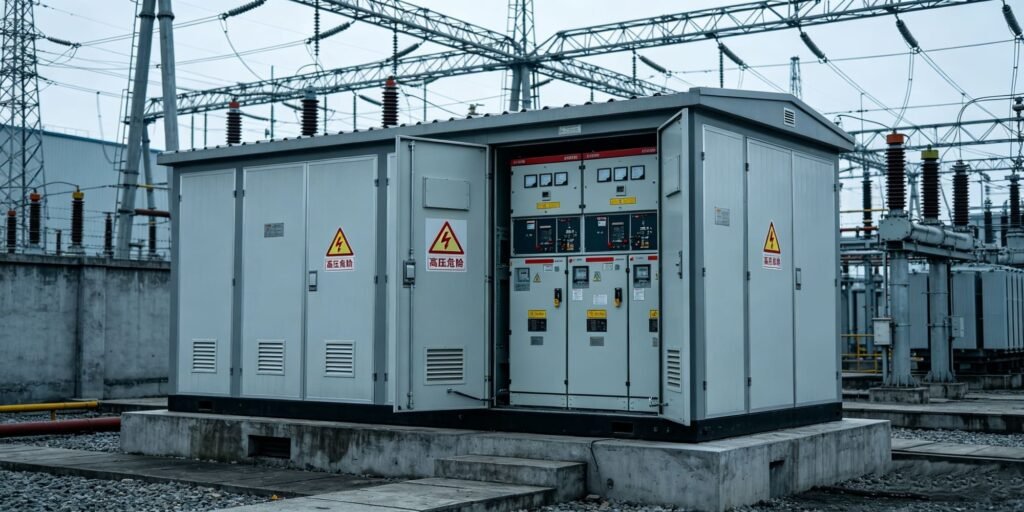
A ring main unit, or RMU, is a small metal power box for medium voltage electricity supply. It is made for modern power supply lines.Most RMUs work in 11kV to 33kV power systems. Inside one closed metal box, it has switch parts, cut-off parts and safety earthing parts all together.
Thanks to their small footprint, high safety level, and minimal maintenance requirements, RMUs have become standard equipment for ring network power supply. Unlike traditional open-type switchgear, enclosed RMUs adapt well to limited space, harsh weather, and high-reliability scenarios. This article breaks down where RMUs are most commonly used and explains why they are preferred in each application field.
Core Application Scenarios of RMUs
Urban Power Distribution and Underground Substations
Urban grid construction faces tight land resources, dense population, and strict power continuity demands—making RMUs the ideal solution. City distribution networks widely adopt ring topology, and RMUs serve as key junction units for cable loops.
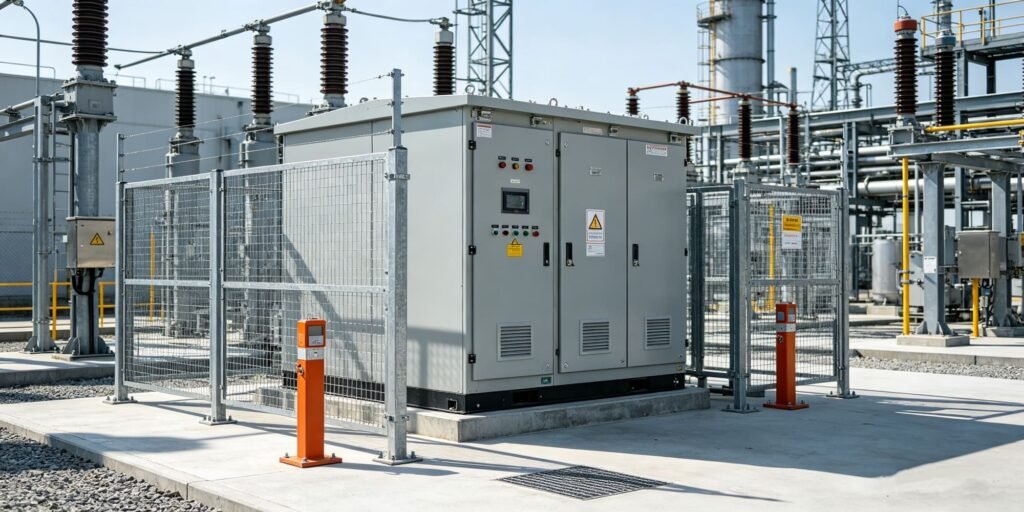
Most downtown underground substations, roadside kiosk substations, and community power distribution rooms choose RMUs for installation. Its whole body is fully closed. It can keep out dust, wet air and big temperature changes. It works steadily and can be used outdoors or underground for a long time.
If there is a problem with the power cable, the RMU can quickly cut off the bad part. It can also send power from another power line by itself. This stops wide power cuts in living areas and business areas.
Commercial Buildings and Public Infrastructure
Big shopping centers, tall buildings, hospitals, airports and subway stations need power all the time for daily use and public safety.These places often put RMUs in the power rooms of their basement. The RMUs take charge of medium voltage power supply and protect the power load. The modular design of RMUs allows flexible expansion according to building load growth.
Its case is fully closed. No live electric parts are left outside. This makes workers safer when checking and repairing the machine. It lowers the danger of electric shock and electric arc harm. Some data rooms and medical buildings cannot stop working at any time. RMUs can be checked from far away and switch power automatically. It fits the power use needs of modern smart buildings very well.
Industrial Parks and Manufacturing Plants
Factory production lines, chemical factories and large industrial parks need steady power and safe equipment.
If power cuts happen suddenly, production will stop. It will waste raw materials and even cause safety accidents. Therefore, most industrial internal medium-voltage distribution networks adopt RMU ring power supply mode.
RMUs adapt to complex electromagnetic environments inside factories and provide reliable short-circuit protection and overload isolation. Gas-insulated RMUs occupy only a small area, saving valuable factory land. Additionally, low-maintenance sealed design reduces regular inspection frequency and cuts long-term operational costs for enterprises.
Renewable Energy Power Projects
Wind farms, solar power stations, and energy storage microgrids are important emerging application scenarios for RMUs. Renewable energy generation has obvious volatility and intermittency, requiring flexible and reliable switchgear to complete grid connection, power scheduling, and fault protection.
RMUs are installed at photovoltaic combiner boxes and wind turbine grid connection nodes, collecting decentralized power and feeding it into the main distribution network. In remote desert and coastal new energy bases, RMUs withstand high temperature, salt fog, and sand erosion, maintaining stable operation year-round. With the boom of global clean energy construction, the demand for RMUs in new energy projects continues to rise.
Rural and Remote Area Power Renovation
Rural power networks, mountain scenic spots, and remote mining areas have scattered loads and long distribution lines. Traditional switchgear is bulky and difficult to deploy, while RMUs feature simple installation, strong environmental adaptability, and low later maintenance costs.
In rural grid upgrading, RMUs are widely used in pole-mounted box substations and village centralized distribution points. They optimize radial networks into ring networks, improving power supply reliability in remote areas and reducing line failure outage time.
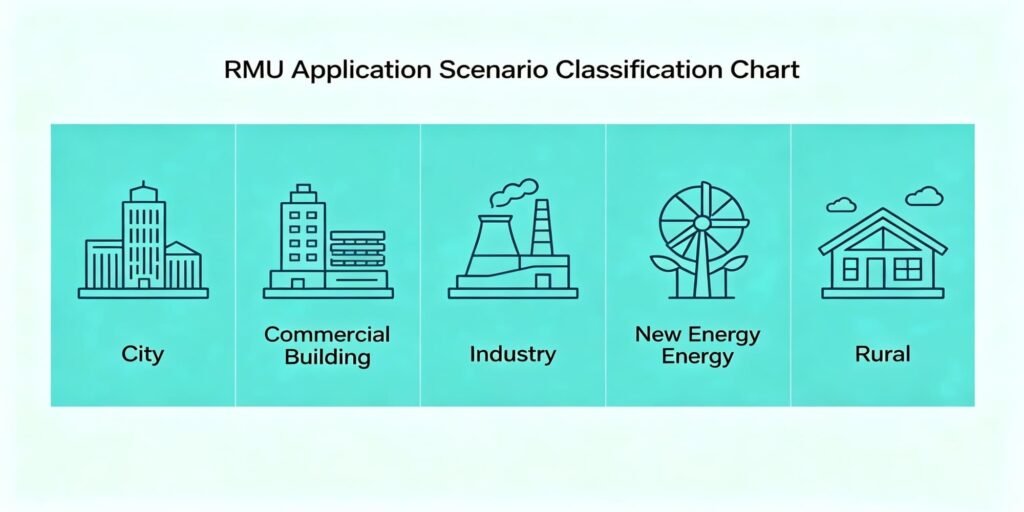
RMU Application Technical Specifications Table
| Application Scenario | Voltage Level | RMU Type (Most Suitable) | Key Technical Requirements | Typical Installation Location |
|---|---|---|---|---|
| Urban Power Distribution | 11kV-24kV | Gas-Insulated RMU (GIS RMU) | Compact, dust/moisture-proof, fast fault isolation | Underground substations, roadside kiosks |
| Commercial Buildings | 11kV-17.5kV | Gas/ Solid-Insulated RMU | Low noise, remote monitoring, modular expansion | Basement distribution rooms |
| Industrial Parks | 11kV-33kV | Gas-Insulated RMU | Anti-electromagnetic interference, high durability | Factory distribution centers |
| Renewable Energy Projects | 24kV-33kV | Solid/ Gas-Insulated RMU | High temperature/salt fog resistance, stable grid connection | Wind/solar farm grid nodes |
| Rural Power Networks | 11kV | Air-Insulated RMU | Easy installation, low maintenance, cost-effective | Pole-mounted box substations, village distribution points |
Why RMUs Are Widely Adopted in These Scenarios
Compact Size and Space-Saving Advantage
The integrated design of RMUs integrates multiple protection and switching functions into one cabinet. Compared with conventional discrete switchgear, it saves over 60% installation space, perfectly fitting urban narrow corridors, underground pipe galleries, and compact factory distribution rooms.
High Safety and Low Maintenance
Most mainstream RMUs adopt fully metal-enclosed and sealed insulation structures. Internal live parts are completely isolated from the external environment, effectively preventing accidental contact and external environmental interference. Sealed-for-life gas-insulated RMUs require no frequent replacement of insulating media, only regular status inspection, lowering manual maintenance pressure.
For reliable sealing and safety components that enhance RMU performance, consider Xizi Energy’s Distribution Switchgear Accessories, which are engineered to work seamlessly with various RMU types.
Smart Grid Compatibility
Modern RMUs support intelligent modules such as remote monitoring, electric operation, and fault signal upload. They can connect with distribution automation systems to realize automatic fault location, isolation, and power recovery, laying a hardware foundation for the construction of smart power grids.
Frequently Asked Questions
What voltage levels are RMUs commonly used for?
RMUs mostly work at 11kV, 24kV and 33kV. These are middle voltage power lines for cities, factories and new energy power systems.
What is the usage difference between gas type and air type RMUs?
Gas type RMUs take less space and work more steadily. They fit crowded cities and bad weather places.Air type RMUs cost less and are better for the environment. They are good for countryside areas and places with enough room to set up the equipment.
Conclusion
RMUs are most commonly used in urban distribution networks, commercial public facilities, industrial parks, renewable energy projects, and rural power renovation. Their compact structure, high safety, low maintenance, and smart compatibility make them indispensable core equipment for modern medium voltage power systems.
Whether for new substation construction, old grid renovation, or industrial and commercial project supporting power distribution, selecting a suitable RMU model can significantly improve power supply reliability and reduce long-term operation and maintenance costs.
Explore our related products to enhance your power system performance: our RMU components SM6/SC6 are perfectly compatible with various RMU types mentioned in this article, If you’re ready to upgrade your power system with reliable, cost-effective RMU and supporting equipment, contact Xizi Energy today for tailored solutions.
If you want to learn about replaceable spare parts and routine maintenance of ring main units after deployment, please browse our dedicated ring main unit spare parts complete guide.
Professional Medium & High Voltage Electrical Equipment Manufacturer