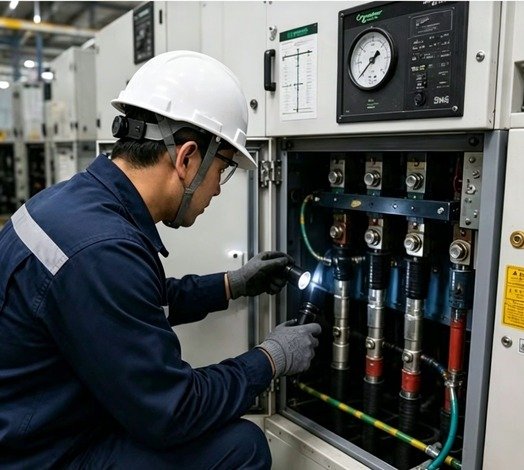

RMU maintenance is when you check, clean, test, and adjust Ring Main Units (RMU) regularly. It keeps medium-voltage power distribution safe and steady. This blog tells you simple, useful things about RMU maintenance. It covers main tasks, safety rules, and how often to do maintenance. It helps you keep equipment from breaking and save money. For medium-voltage power networks, good RMU maintenance is important for reliable operation. It stops expensive downtime and safety problems.
Most RMUs are sealed and small. They are different from regular medium-voltage switchgear. They often use SF6 gas for RMU insulation to insulate and stop electrical arcs. So it is very important to do RMU maintenance regularly. Unlike traditional switchgear, sealed RMUs require targeted checks to ensure their compact design does not hide potential faults, such as gas leaks or loose connections.
It helps you avoid unexpected outages, equipment damage, and safety risks in urban, industrial, and utility power networks. Many users think sealed RMUs need little to no care. This is a common mistake. For example, a manufacturing plant in Guangdong once experienced a 3-hour power outage due to neglected RMU SF6 gas leaks, resulting in over $10,000 in production losses—easily avoidable with regular maintenance.
Even maintenance-free rated ring main units require periodic checks. These checks test gas density, insulation, mechanical parts and wire connections. Basic RMU maintenance makes equipment last longer, keeps power supply stable, and cuts daily running costs. Following industry standards like IEC 62271 ensures that maintenance work meets safety and performance requirements, further enhancing the reliability of your power system.
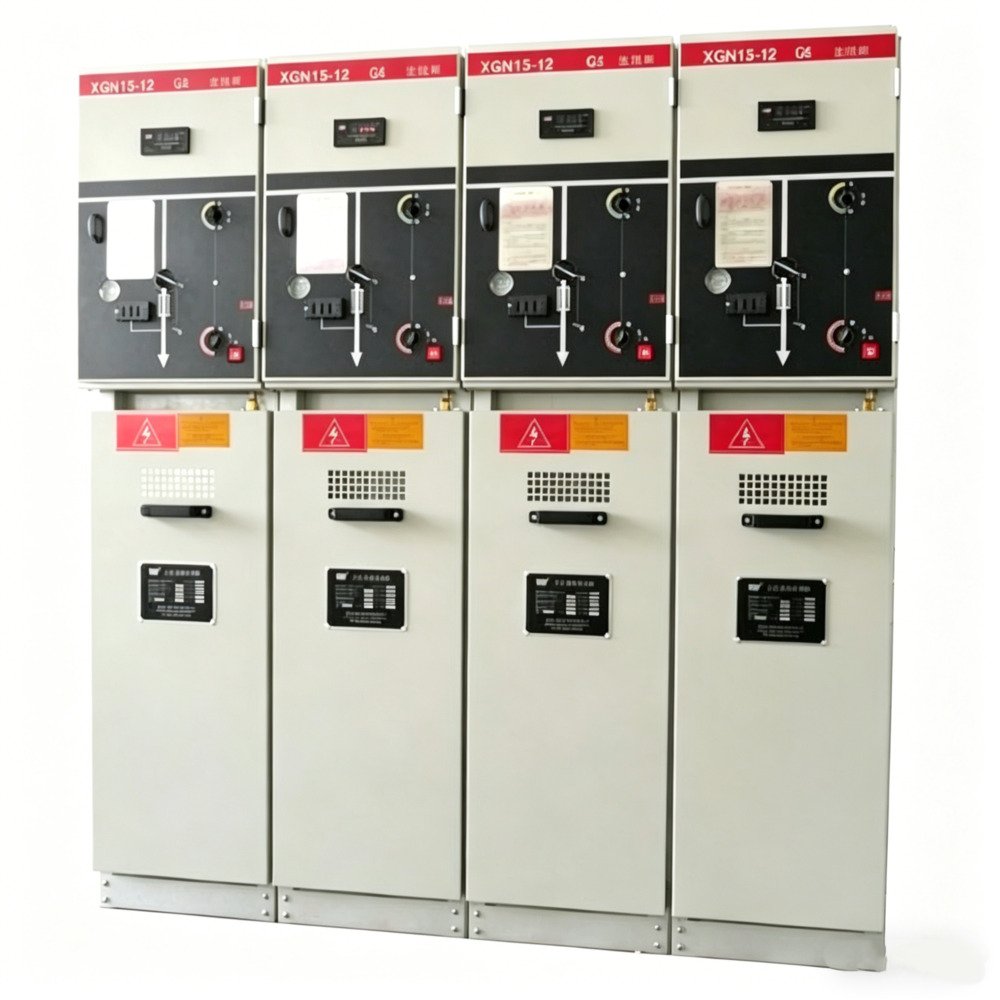
Why RMU Maintenance Matters (3 Key Reasons)
RMU equipment is widely used in compact secondary substations, industrial plants, commercial buildings, and renewable energy projects. It controls and protects power feeders in a closed loop structure. As a critical component of medium-voltage power distribution, RMUs directly affect the stability of the entire power network.
When an RMU fails, it can cause large-area power cuts, production losses, or even electrical hazards. Regular RMU maintenance achieves three key goals:
1. Maintain safe insulation and arc-extinguishing performance 2. Ensure mechanical and electrical components work correctly 3. Detect early signs of leaks, overheating, or insulation decline
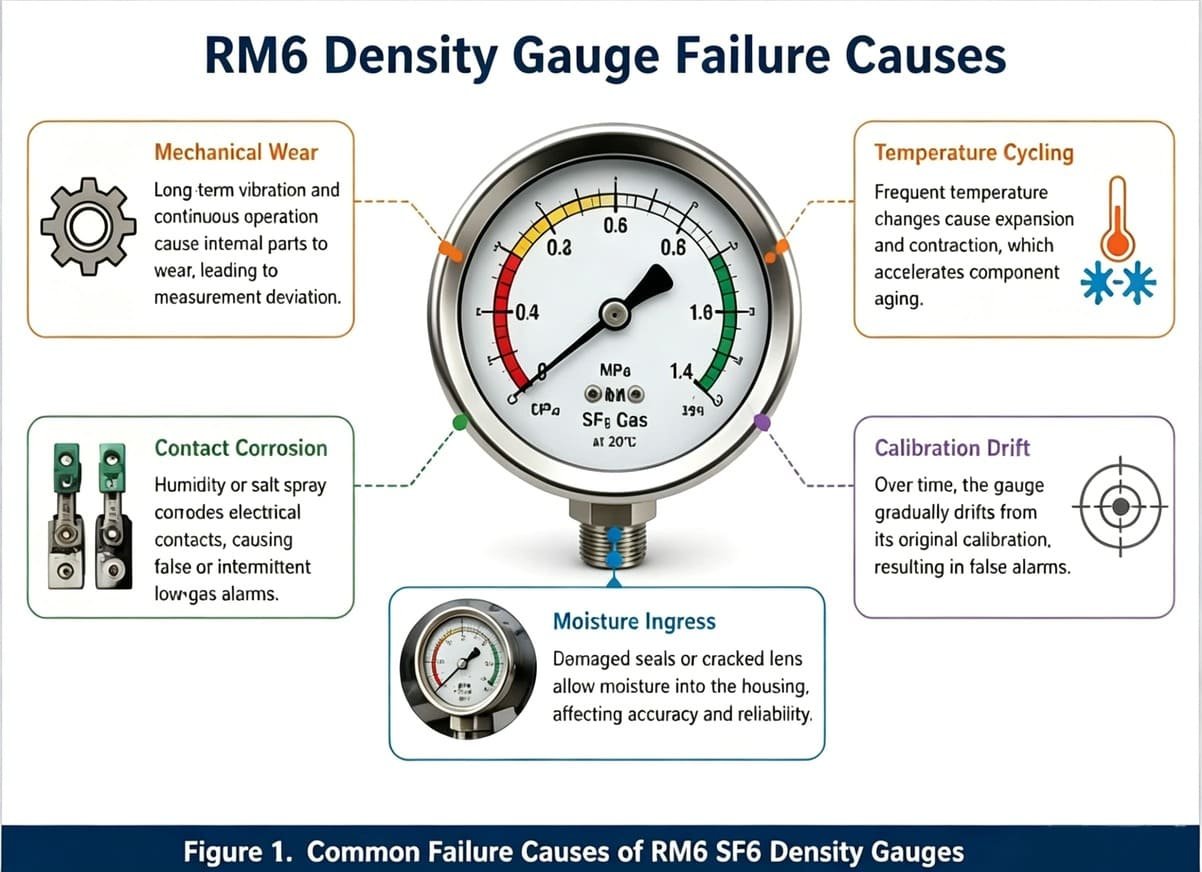
A key part of this is checking SF6 gas density monitor for RMU to prevent gas leaks. Without proper care, risks increase quickly. SF6 gas is critical for RMU insulation—even a small leak can reduce insulation performance and lead to arc flash, a serious safety hazard for on-site workers.
These problems cover SF6 gas leaks, loose parts, poor insulation and wrong switch movement. These faults cause sudden power stops and high repair fees. In addition to financial losses, RMU failures can also damage a company’s reputation, especially for utility providers and industrial facilities that rely on continuous power supply.
Core Tasks in Standard RMU Maintenance (Step-by-Step)
RMU maintenance uses simple, fixed steps for sealed gas type power units. Here are the key work steps for electric workers and field technicians. Following these steps ensures that maintenance is thorough, consistent, and compliant with industry standards.
1. Visual and External Condition Check
The first step is a simple visual check. Workers look at the RMU cabinet for rust, damage, cracks or wet marks. They also check cable ends, display parts and safety signs. All problems need to be noted and fixed right away. Too much dust inside the cabinet blocks air flow and makes parts hot. Cleaning is a basic part of this check.
2. SF6 Gas Density and Pressure Verification
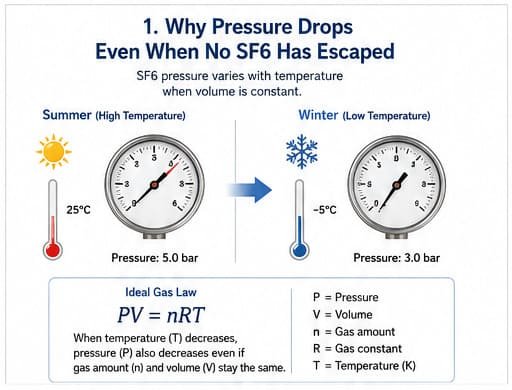
Most new RMUs use SF6 gas for insulation. Workers check the gas density gauge to make sure pressure stays at the normal level. Lower gas density means there may be a gas leak. If a leak happens, workers find the leak spot, collect the SF6 gas, fix the seals, and add new gas to the right level. This work keeps the equipment safe and stops electric arcs.
3. Mechanical Operation Test
Mechanical reliability is vital for RMU performance. Maintenance includes testing load switches, earthing switches, and interlock mechanisms. The operating mechanism must move smoothly without blocking or abnormal noise. Regular RMU mechanical operation testing accessories help prevent mechanical jamming during fault conditions.
4. Electrical Performance and Connection Testing
Electrical checks include measuring insulation resistance, contact resistance, and protection relay function. Loose or corroded connections cause heat spots and increase failure risk. Using proper tools, maintenance staff tighten terminals and test insulation health. RMU insulation resistance testing ensures protection systems trip accurately when a fault occurs.
5. Safety System and Auxiliary Function Check
RMU maintenance also covers safety systems. These include interlocks, warning signs, control circuits, and remote monitoring signals. All safety functions must work properly to protect on-site workers. Auxiliary components like indicators and alarms are also verified at this stage. This step is critical to ensuring compliance with global electrical safety standards.
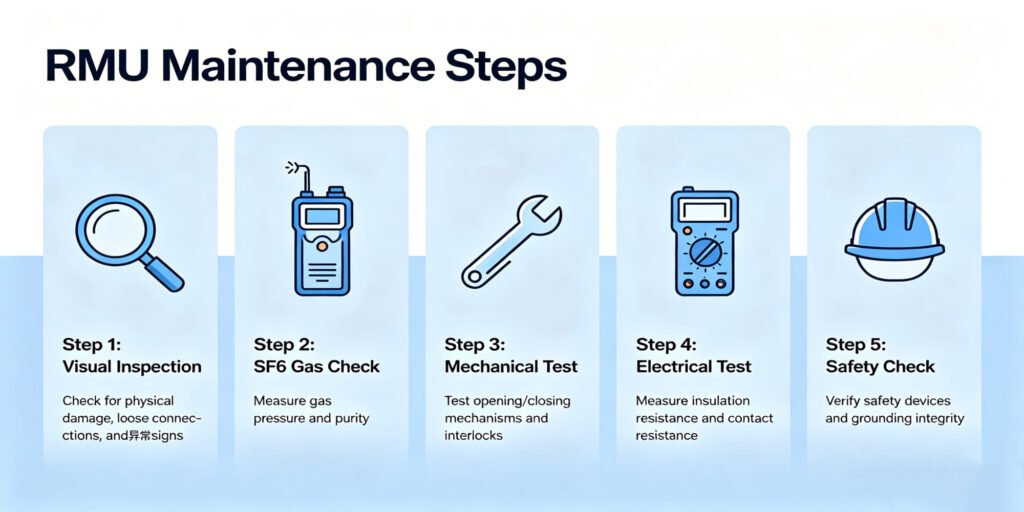
RMU Maintenance Steps Summary
Step 1: Visual Inspection – Check for physical damage, loose connections, and abnormal signs
Step 2: SF6 Gas Check – Measure gas pressure and purity
Step 3: Mechanical Test – Test opening/closing mechanisms and interlocks
Step 4: Electrical Test – Measure insulation resistance and contact resistance
Step 5: Safety Check – Verify safety devices and grounding integrity
Safety Rules for RMU Maintenance (Non-Negotiable)
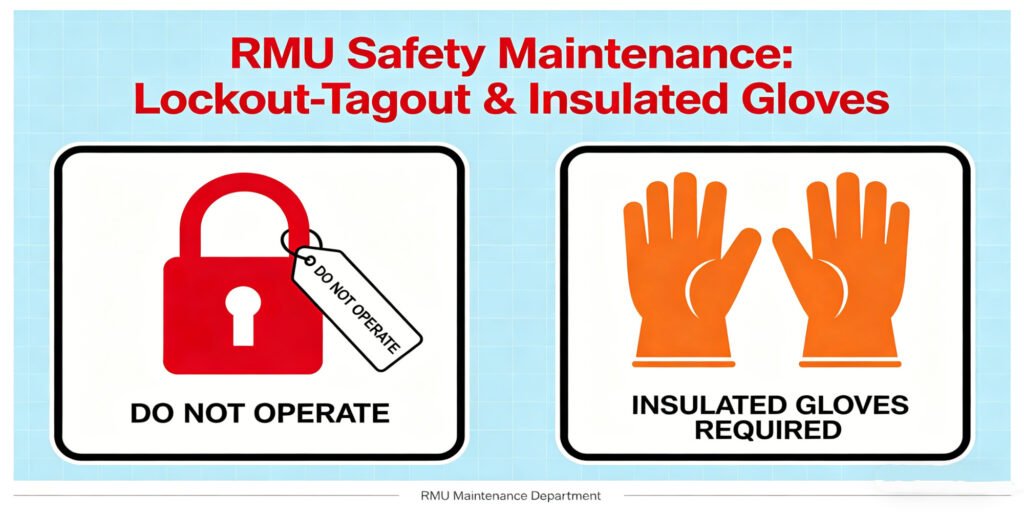
Safety is non-negotiable in medium-voltage equipment service. All RMU maintenance must follow strict safety procedures, as outlined by IEC 62271 and other global electrical safety standards.Image Alt: RMU safety maintenance lockout-tagout procedure
• Fully de-energize the RMU and use RMU lockout/tagout safety procedures
• Verify zero voltage before any work starts
• Apply reliable grounding to prevent electric shock
• Wear electrical maintenance PPE for RMU
• Work in teams and follow site safety guidelines
These steps reduce risks such as electric shock and arc flash. They are required by global electrical safety standards. Neglecting these rules can lead to serious injuries or fatalities, as well as costly legal and financial consequences for businesses.
RMU Maintenance Schedule (How Often to Perform)
A fixed maintenance schedule improves consistency and effectiveness. Most manufacturers and industry standards recommend the following schedule, which can be adjusted based on the RMU’s operating environment (e.g., harsh industrial settings may require more frequent checks).
• Monthly: Visual check and operation status observation
• Quarterly: Basic function and indicator inspection
• Annual: Comprehensive testing (gas, insulation, mechanical checks)
• After major faults/repairs: Additional full inspection
If you follow this plan, you can find small problems early. You can stop them from becoming big problems. For example, monthly visual checks can find dust or loose connections. Yearly full tests make sure all parts work well.
Conclusion: Key Takeaways for RMU Maintenance
In short, RMU maintenance is a set of simple daily work to keep Ring Main Units running well. It includes visual checks, SF6 gas checks, mechanical tests, electric part checks and safety checks. As a critical part of medium-voltage power systems, RMU maintenance ensures safety, stability, and cost efficiency.
RMU maintenance is very important for medium voltage power systems. It keeps work safe, runs stable and cuts extra cost. RM units with good care offer steady power, break down less and last much longer. If you follow the steps and safety rules in this guide, you can avoid expensive downtime, keep your team safe, and make your RMU equipment last longer.
If you have city power stations, factory power systems or green energy projects, basic RMU maintenance keeps your machines safe, your staff safe and your daily work running. If you need more help that fits your needs, our RMU experts can help you make a maintenance plan just for you.
Do you need a simple RMU maintenance plan for your site? Feel free to leave a comment, and we will reply to you soon.
About Xizi Energy
Xizi Energy is a professional manufacturer of medium-high voltage switchgear and RMU equipment, with years of experience in power system maintenance and solutions. Our team of certified technicians provides professional guidance to ensure your power systems run safely and reliably.
Professional Medium & High Voltage Electrical Equipment Manufacturer