
In high-voltage power systems, SF6 circuit breakers are core equipment in substations, and their stable operation depends on excellent insulation and arc-extinguishing performance. The pressure of SF6 gas is a key parameter that determines these two performance characteristics.
Abnormal pressure can directly lead to equipment performance degradation, causing serious faults such as insulation breakdown and arc-extinguishing failure, posing a threat to grid safety.
I. Core Functions of SF6 Gas in Circuit Breakers
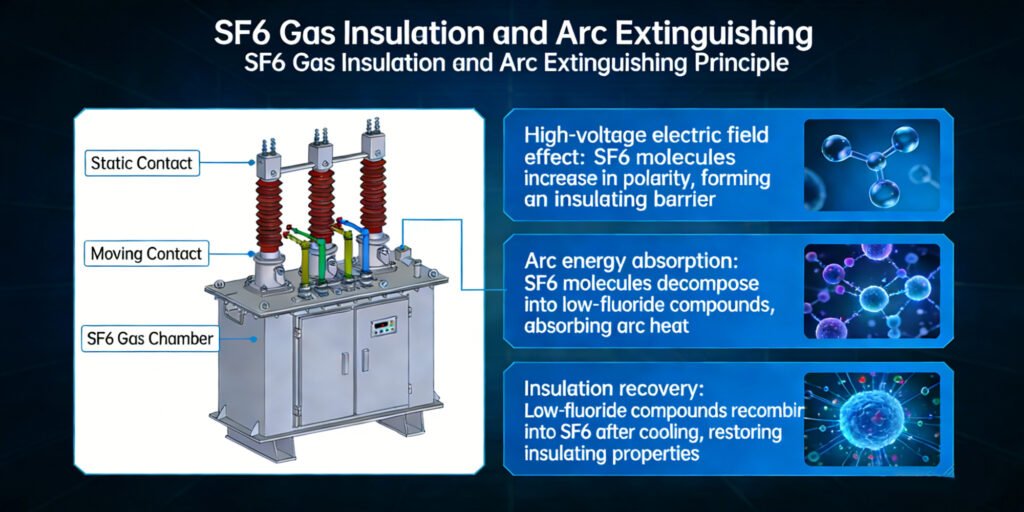
SF6 (sulfur hexafluoride), as an inert gas, plays a key role in both insulation and arc extinguishing, with its performance closely related to pressure (non-linear relationship):
First, for insulation, the insulating strength of pure SF6 is 3-5 times that of air, and at rated pressure, it can effectively isolate high-voltage conductors from the grounded casing, preventing discharge at the opened contacts.
Second, for arc extinguishing, its molecules have a very high electron affinity, allowing it to quickly absorb free electrons from the arc; the higher the gas pressure, the faster the arc extinguishing speed, and the stronger the circuit breaker’s current interrupting capability.
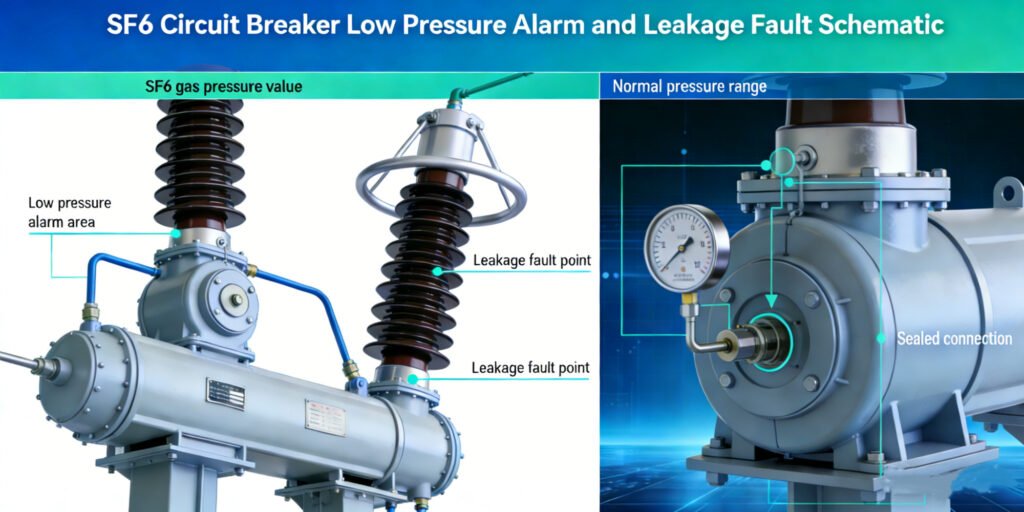
II. Low Pressure: Fatal Attenuation of Circuit Breaker Performance
When the pressure is below the rated value (especially the locking pressure), it is a common abnormality that directly leads to core performance failure. At the insulation level, when the pressure drops below 80% of the rated value, the insulation capability sharply decreases.
For example, if the pressure of a 110kV GIS device falls below 0.3MPa (rated 0.4–0.5MPa), it can easily cause contact flashover, condensation and aging of insulation components, creating a vicious cycle. At the arc-extinguishing level, insufficient gas pressure prolongs the arc extinction time, leading to contact burning and damage to the arc-extinguishing chamber. In severe cases, tripping under load can cause equipment explosions.
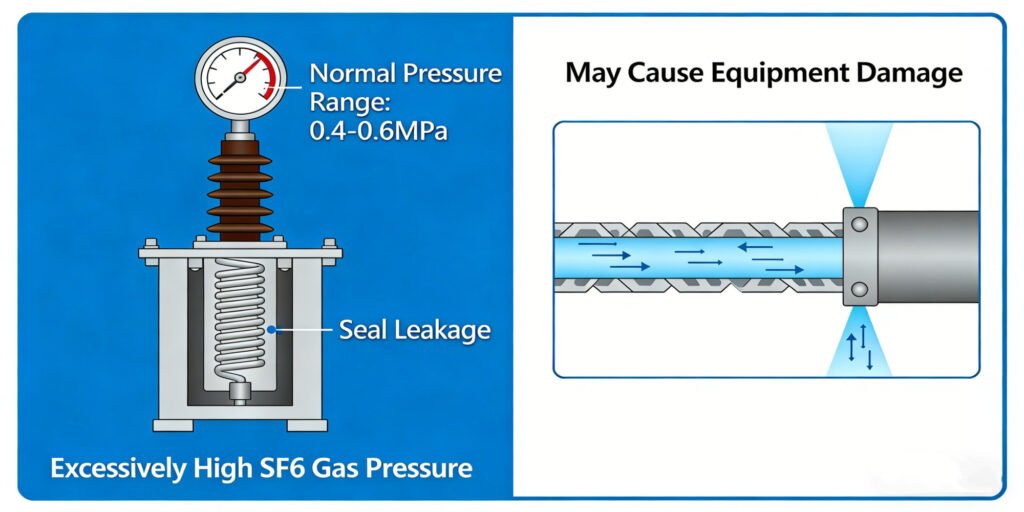
III. High Pressure: Easily Overlooked Hidden Hazards
Excessive pressure does not mean greater safety; on the contrary, it can create multiple hidden hazards:
First, it increases the burden on the sealing system. If the pressure exceeds the withstand capacity of the seals, it accelerates the deformation and aging of the gaskets. In high-temperature environments, pressure rises further, sharply increasing the risk of leakage.
Second, it can cause gas liquefaction. Excessive filling pressure raises the liquefaction temperature. For example, if a rated 0.6 MPa arc-extinguishing chamber is filled to 0.8 MPa, partial liquefaction may occur in winter low temperatures, and liquid SF6 completely loses its insulation and arc-extinguishing capability.
Third, it leads to excessive mechanical stress. Long-term high pressure can cause component damage, such as porcelain bushing cracking and deformation of the arc-extinguishing chamber housing.
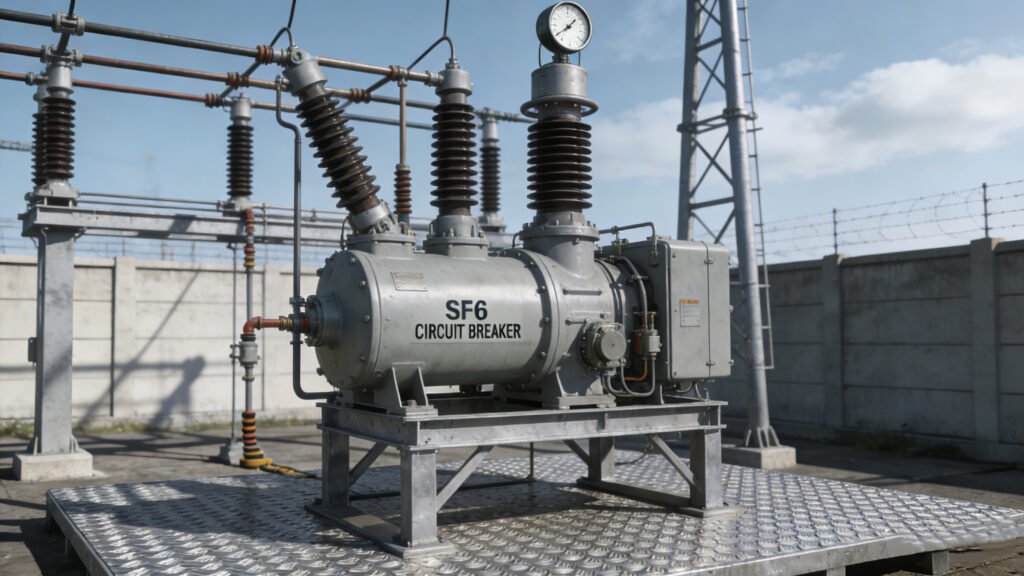
To ensure circuit breaker performance, pressure control requires three key measures: regular monitoring with density relays (temperature-compensated) for real-time pressure tracking and abnormal alarms; standardized inflation per nameplate rating with 24-hour standing re-inspection; and regular leakage detection via quantitative detectors, replacing aging seals promptly.
Xizi Energy is a Barometer manufacturer in China, specializing in precision barometers designed for medium and high voltage switchgear, SF6 load break switches, and gas‑insulated equipment.
Professional Medium & High Voltage Electrical Equipment Manufacturer