
I. Power Transformers
These are the largest and most critical components in power systems, directly responsible for voltage transformation and power transmission.
Their core function lies in elevating transmission voltages to minimize losses over long distances, or reducing voltages to meet distribution and end-user requirements.
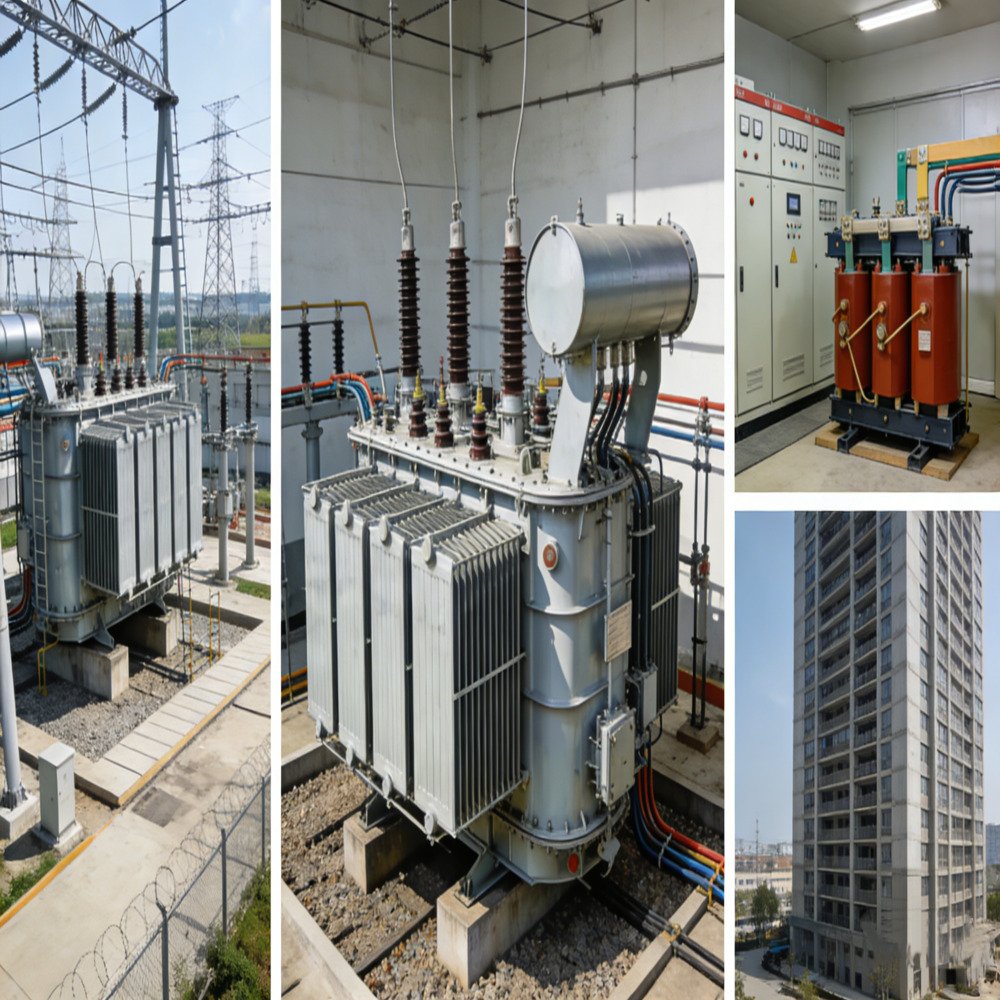
Step-up transformers: Typically installed at the output of power plants or renewable energy stations, these transformers elevate the medium-voltage electricity (e.g., 10.5kV, 20kV) generated by generators to ultra-high or extra-high voltages (e.g., 110kV, 500kV, 1000kV) for connection to the transmission grid.
Step-down transformers: Primarily located within substations, these transformers progressively reduce high voltages from the transmission grid to distribution voltages (e.g., 10kV, 35kV) or end-user voltages (380V/220V).
Interconnection Transformers: Used to connect transmission networks operating at different voltage levels, enabling power exchange and mutual support between grids. This enhances operational flexibility and reliability of the power system.
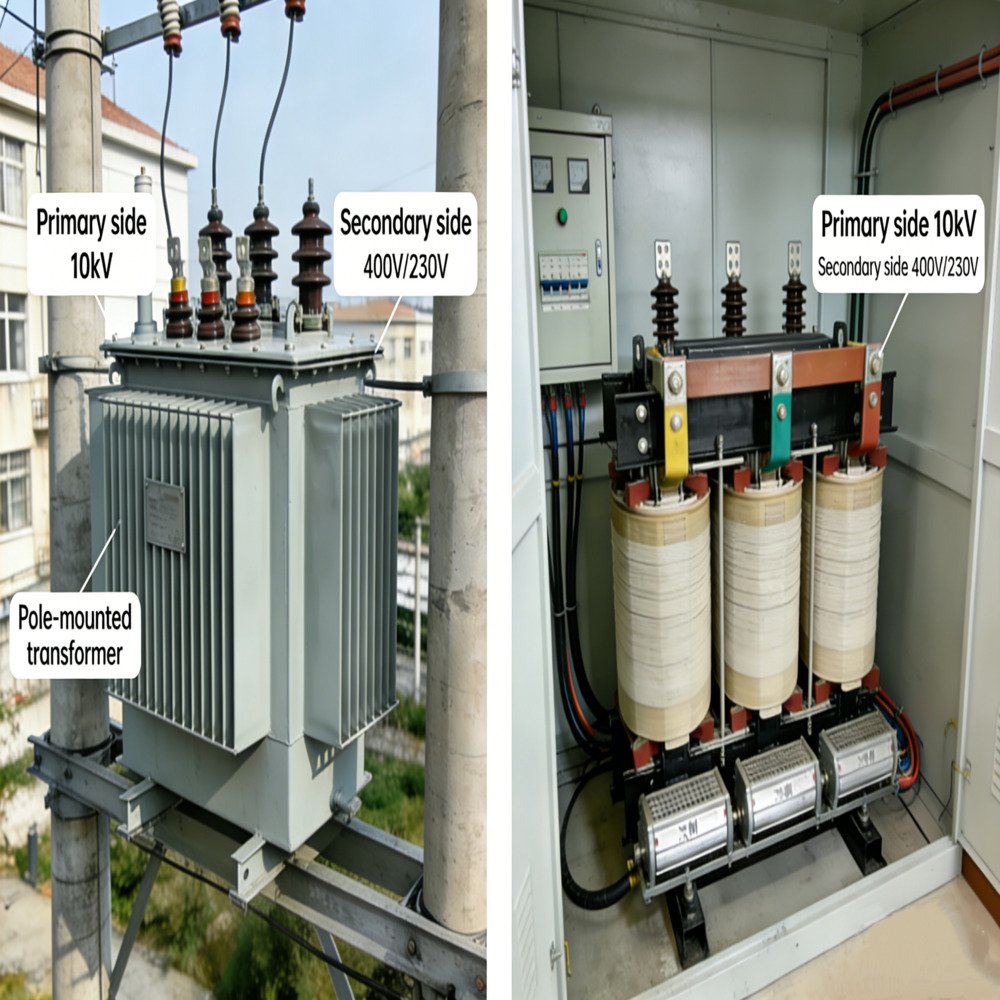
From an insulation and cooling perspective: Outdoor large-scale hub substations commonly employ oil-immersed transformers, relying on insulating oil for insulation and heat dissipation. In indoor locations with stringent fire safety requirements—such as high-rise buildings, subways, and data centers—dry-type transformers (air or resin insulated) are universally adopted.
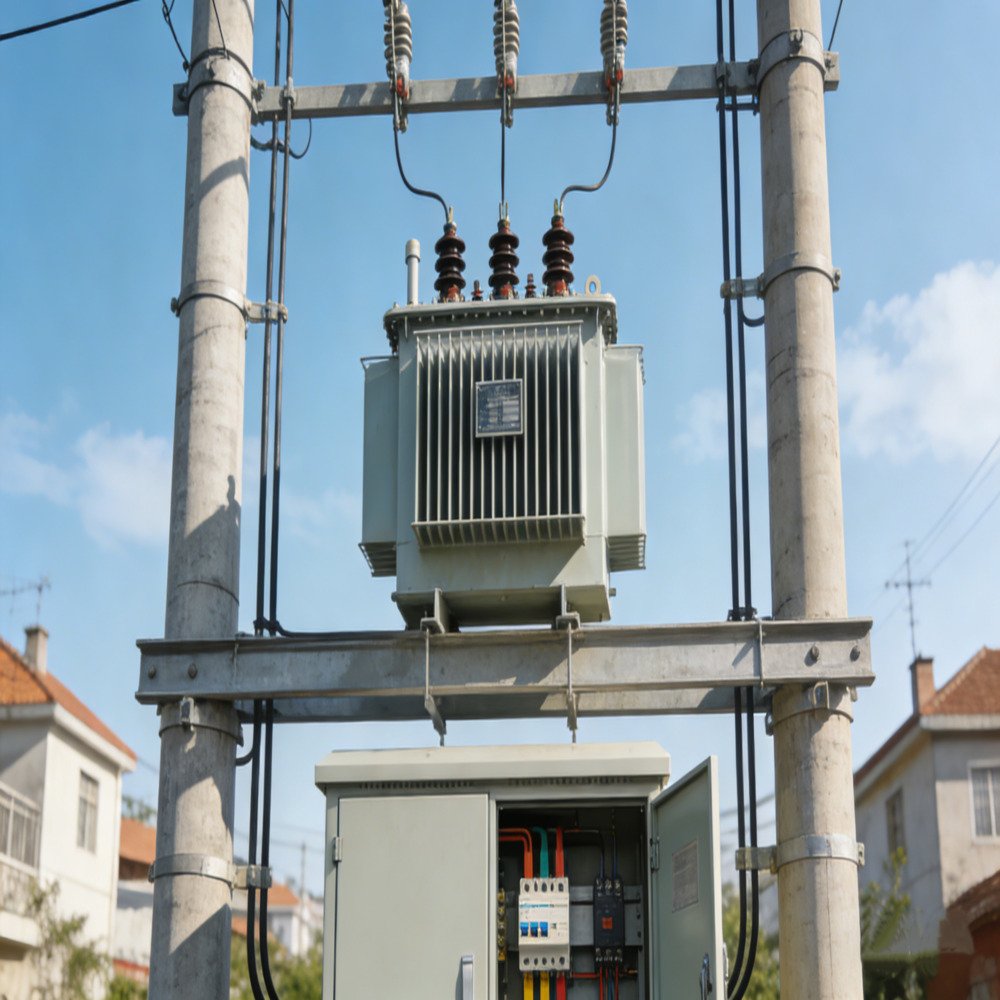
II. Distribution Transformers
The final link directly supplying power to end-users.
• Installation Points: Pole-mounted transformers, distribution rooms, box-type transformers.
• Voltage: Input 10kV level, output 400V/230V.
• Core Requirements: High efficiency range, low losses, strong short-circuit withstand capability.
Amorphous alloy cores are emerging as an energy-saving trend due to their low no-load losses.
III. Special-Purpose Transformers
Specialized types designed for specific system requirements.
• Autotransformers: Share a common winding section, used for interconnecting power grids with similar voltages.
• Converter Transformers: Core components of high-voltage direct current transmission systems, capable of withstanding combined AC/DC electric fields.
• Grounding Transformers: Provide an artificial neutral point for ungrounded systems, limiting overvoltages.
Xizi Energy is a stable and reliable supplier of electrical equipment. If you are interested in learning more, please contact us immediately.
Professional Medium & High Voltage Electrical Equipment Manufacturer