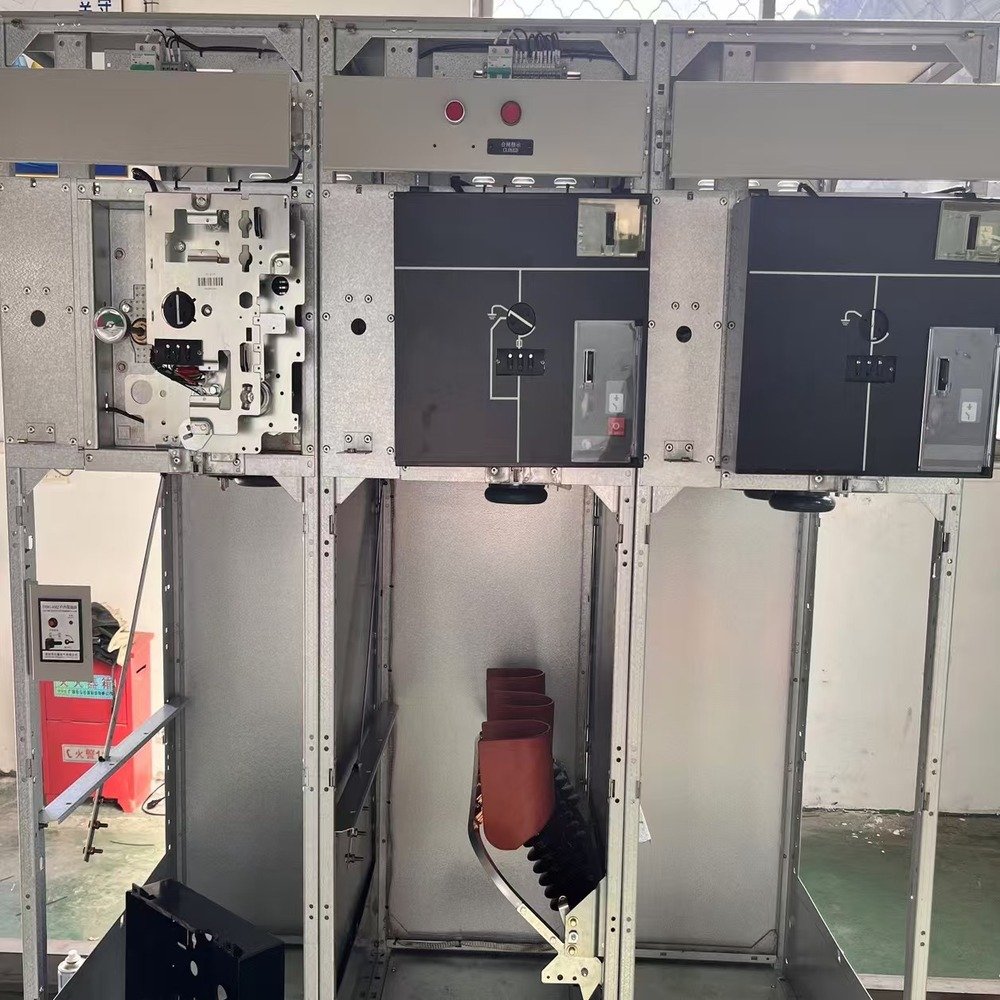

The grounding switch in switchgear is a mechanical switching device specifically designed to reliably connect the internal conductive components of the equipment (such as busbars, circuit breaker contacts, and line terminals) to the earth. Its core function is safety protection.
It does not exist independently but forms a tight mechanical or electrical interlock with the isolating switches and circuit breakers within the switchgear.
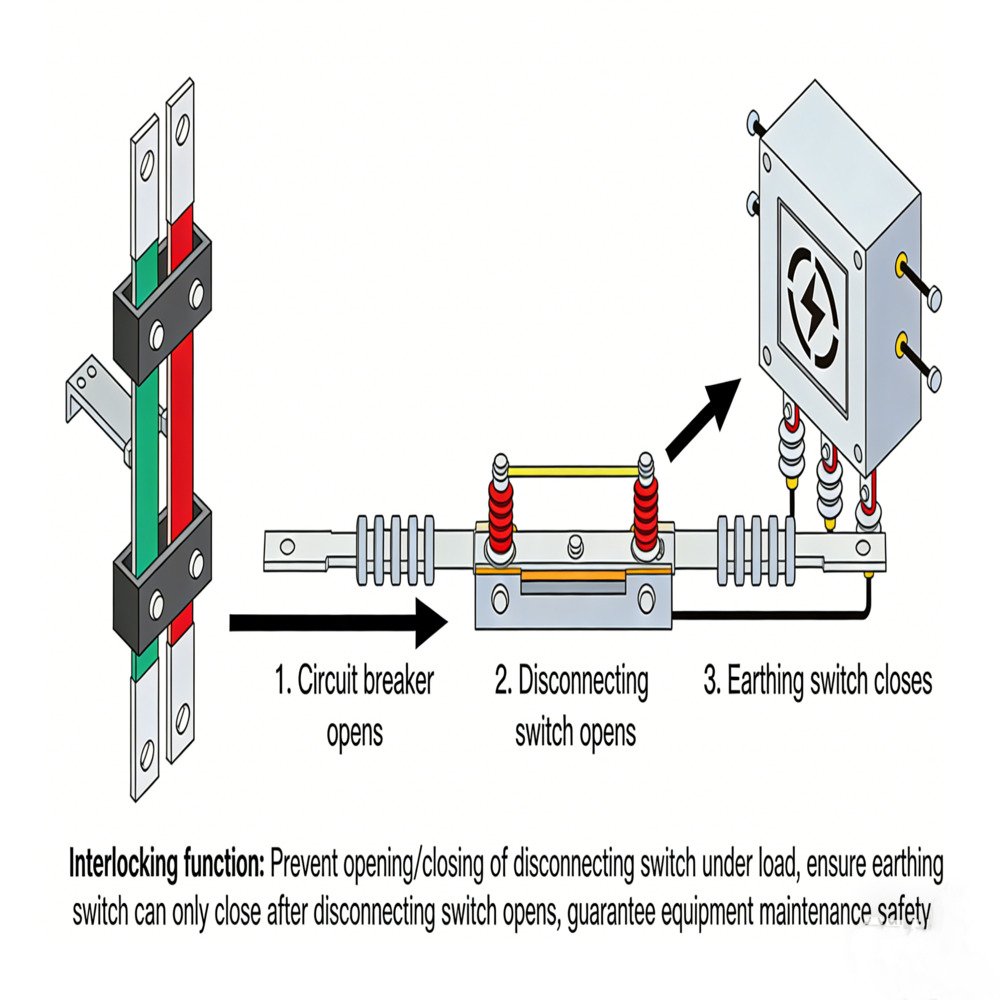
Structurally, it is designed to fit the compact space of switchgear, comprising three core components:
1. the conductive circuit, utilizing high-conductivity materials such as copper busbars and flexible connectors to ensure smooth grounding current flow;
2. the insulating support, isolating conductive parts from the switchgear enclosure to prevent cabinet energization;
3., the operating mechanism, typically manually or electrically driven, adapting to switchgear maintenance practices to enable rapid tripping and closing.
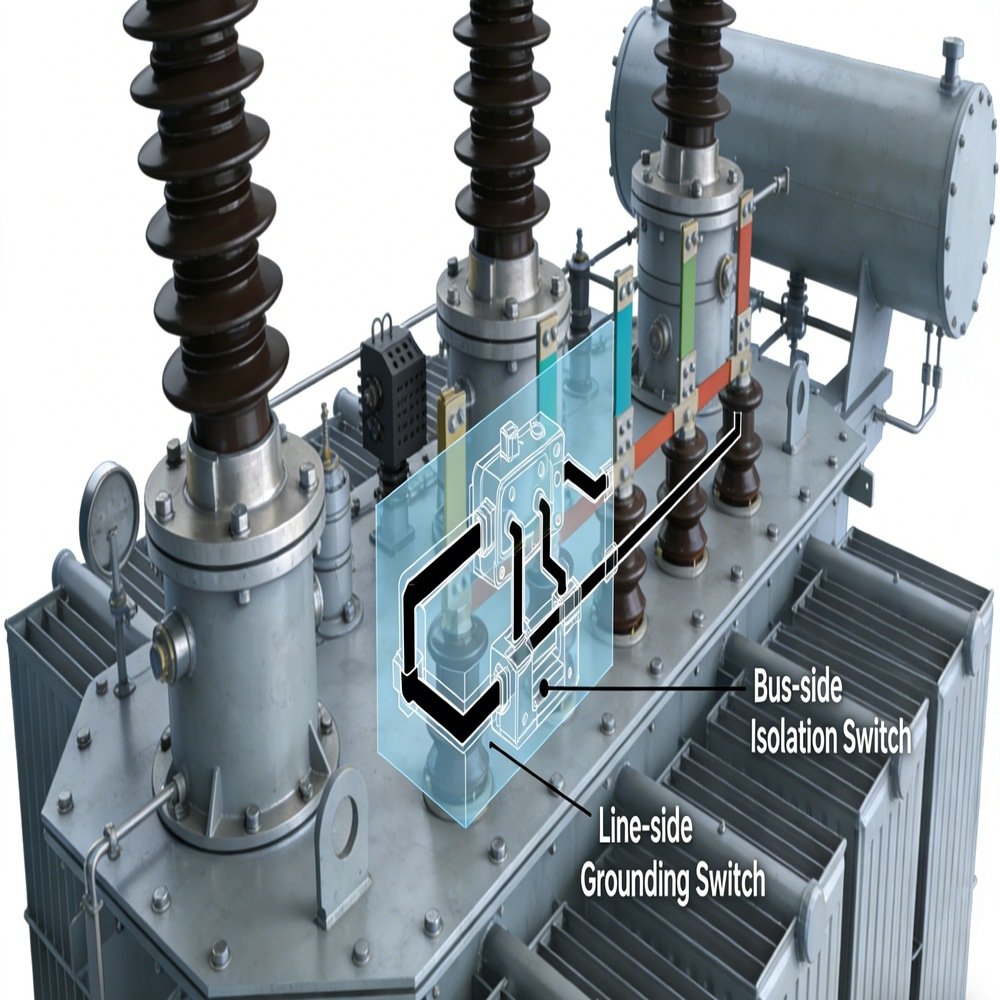
In switchgear, the primary role is ensuring maintenance safety: when switchgear is de-energized for maintenance, residual charge remains in internal capacitive components, and adjacent live circuits may generate induced voltage.
Closing the grounding switch establishes a low-impedance grounding path, diverting residual charge and induced voltage to earth. This reduces the potential of conductive components to a safe level, creating a secure environment for maintenance.
Second, it prevents fault escalation:
In case of accidental energization, lightning strikes, operational overvoltages, or other anomalies, the grounding switch rapidly forms a grounding short circuit. This triggers upstream protective devices to trip, isolating the faulty power source. This safeguards internal components from overvoltage and overcurrent damage while preventing the incident from propagating throughout the entire power system.