
Electric Operating Mechanism for Medium Voltage Switchgear: Working Principle, Components and Common Faults

Introduction
Medium-voltage switchgear relies heavily on stable operating mechanisms to complete safe, precise switching actions. As a core automatic actuator, the electric operating mechanism is widely adopted in power stations, industrial power distribution systems and new energy projects. It supports remote control and automatic switching, delivering far higher operational reliability than traditional manual structures.
Different from manual operation, this mechanism converts electric energy into mechanical displacement via motors, gear sets and transmission components. It enables millisecond-level opening and closing of circuit breakers, load break switches and RMUs with stable and consistent operating force.
In daily field maintenance of Schneider SM6, RM6, XGN15 and other common medium-voltage switchgear, most switching failures stem not from switch body damage, but from mechanism aging, poor lubrication, limit switch deviation or motor faults.
This article summarizes the working principle, core components, typical faults, maintenance and replacement guidelines of electric operating mechanisms, providing practical reference for field engineering staff to improve switchgear operating stability.
What Is an Electric Operating Mechanism?
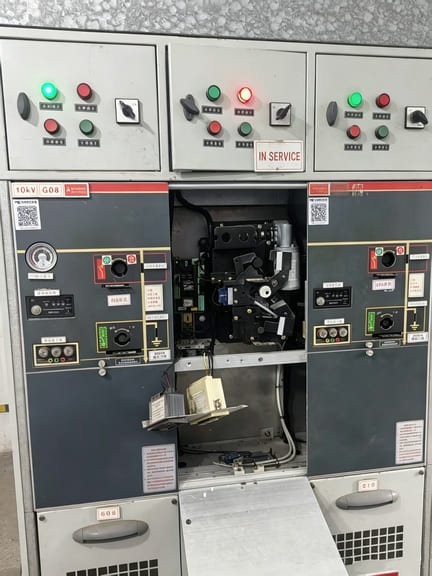
The electric operating mechanism is a motor-driven built-in actuator for medium-voltage switchgear. It stores mechanical energy in advance and releases it instantly to realize automatic opening and closing of switches and circuit breakers.
Core Advantages Compared with Manual Operation
Compared with manual operating mechanisms, the electric type supports remote unattended operation, features faster and more consistent switching action, can be seamlessly connected to SCADA monitoring systems, and effectively avoids personal safety risks caused by on-site manual operation.
Typical Application Scenarios
It is standard configuration for mainstream medium-voltage equipment, including ring main units (RMU), Schneider SM6 switchgear, gas-insulated switchgear (GIS), air-insulated switchgear (AIS) and load break switches.
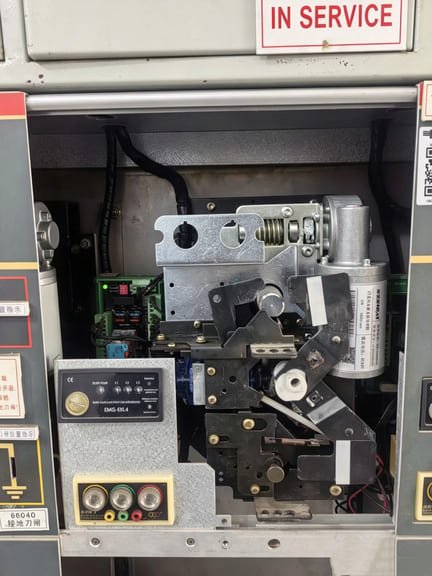
Main Components of an Electric Operating Mechanism
The electric operating mechanism is composed of multiple matched precision components. Each part undertakes independent and interlocked functions to ensure reliable energy storage and switching action.
Electric Motor
The core power unit that provides driving torque for spring energy storage, serving as the power source for the whole mechanical cycle.
Gearbox
Realizes speed reduction and torque amplification, converting the high-speed low-torque output of the motor into low-speed high-torque power suitable for spring compression.
Energy Storage Spring
Stores mechanical energy during the pre-charging phase. The instantaneous release of spring energy drives rapid switch action, ensuring fast switching speed.
Cam and Linkage
Key transmission structure that transmits mechanical displacement to switch contacts to complete opening and closing execution actions.
Limit Switches
Cuts off the motor power supply automatically after full spring charging, preventing over-charging damage and realizing precise stroke control.
Auxiliary Contacts
Feeds back real-time switch position signals to the protection and control system to support remote monitoring and interlock protection.
Working Principle of Electric Operating Mechanism
The operation of the electric mechanism is a complete closed loop of electric energy conversion, mechanical energy storage and rapid energy release, which can be divided into six continuous working steps.
Step 1 – Motor Starts
The motor is energized and rotates after receiving local or remote switching commands.
Step 2 – Spring Charging
The gearbox drives the transmission structure to compress the closing spring continuously until full energy storage is completed.
Step 3 – Energy Storage Locking
The latch mechanism locks the fully charged spring to maintain mechanical energy storage and wait for closing instructions.
Step 4 – Closing Command Triggering
After receiving the closing signal, the control system drives the latch to release the locked spring.
Step 5 – Switch Closing Operation
The spring releases stored energy instantly, driving the operating shaft to complete rapid switch closing action.
Step 6 – Automatic Recharging
After the switching action is finished, the motor restarts automatically to charge the spring, preparing for the next operation cycle. This working mode realizes high-speed switching of switchgear and avoids long-time high-load operation of the motor, improving equipment durability.
Importance of Electric Operating Mechanism
The operating mechanism is the executive core of medium-voltage switchgear, and its stability directly determines the safety and operating performance of the entire power distribution loop.
Core Operational Benefits
It accelerates fault isolation during circuit abnormalities, improves switching accuracy to prevent misoperation, reduces manual on-site intervention, lowers operation and maintenance safety risks, and cuts long-term equipment maintenance costs.
Value for Unattended Substations
For unattended substations and automated power distribution systems, reliable electric operating mechanisms are essential to support long-term stable remote automatic switching of equipment.
Common Faults and Causes of Electric Operating Mechanisms
In long-term field operation, mechanism faults are mostly caused by aging parts, poor lubrication and improper maintenance. The typical faults and root causes are summarized below for quick troubleshooting.
Motor Does Not Start
Main causes include control circuit power failure, burned motor windings, loose wiring terminals and internal control loop faults.
Spring Charging Failure
Usually caused by gear damage, bearing wear, spring fatigue and elastic attenuation, or mechanical blockage from dust and part deformation.
Slow Mechanism Operation
The main incentives are aging and hardened lubricating grease, low operating voltage, gear wear and motor performance degradation.
Switch Closing Failure
Triggered by latch mechanism failure, linkage dislocation and jamming, or abnormal signal feedback from auxiliary switches.
Frequent Motor Repeated Operation
It generally results from faulty limit switches that fail to cut off power, incomplete spring charging and unreasonable mechanism parameter adjustment.
Preventive Maintenance Tips
Proper routine maintenance minimizes electric mechanism faults and extends equipment service life. Field-verified standardized maintenance items are listed below:
1. Periodic Inspection: Inspect the mechanism every 6–12 months, adjusting the cycle based on operating frequency and on-site environment.
2. Component Cleaning: Clear dust and moisture from moving parts regularly to prevent blockage and corrosion.
3. Lubrication Update: Replace degraded grease with manufacturer-approved lubricant to maintain flexible mechanical transmission.
4. Spring Calibration: Check and calibrate spring tension regularly to ensure stable energy storage performance.
5. Auxiliary Contact Test: Verify the sensitivity and signal accuracy of auxiliary contacts.
6. Motor Performance Detection: Monitor motor operating current and spring charging time to assess motor health.
7. Fastener Inspection: Retighten all mechanical fasteners to avoid loose-component malfunctions.
8. Cyclic Operation Test: Perform annual full-cycle switching tests to validate overall mechanism performance.
Standard preventive maintenance effectively eliminates potential hazards, reduces sudden shutdown failures, and extends the service life of switchgear electric operating mechanisms.
Real Engineering Application Example
An in-service 12kV RMU experienced intermittent remote closing faults of the load break switch, threatening on-site power distribution stability.
Field troubleshooting ruled out motor electrical faults. The root cause was hardened, aged gearbox grease that increased mechanical resistance and prevented full spring energy storage.
After gearbox cleaning, lubricant replacement and limit switch recalibration, the spring charging cycle returned to standard, and remote switching operation fully recovered.
This typical case indicates that most mechanism faults stem from poor lubrication and mechanical abrasion rather than electrical failures, proving the value of regular maintenance and inspection.
Selection Guidelines for Replacement Electric Operating Mechanism
Severely aged or damaged mechanisms that cannot be repaired require replacement. The core selection criteria for compatible replacement parts are as follows:
1. Model Compatibility: Match mainstream models including Schneider SM6 and XGN15 medium voltage switchgear.
2. Rated Voltage: Consistent with equipment control voltage to avoid electrical mismatch faults.
3. Motor Parameters: Align with original motor power and operating specifications.
4. Spring Rating: Meet standard switchgear energy storage force and stroke requirements.
5. Installation Size: Consistent with original mounting dimensions and interfaces to avoid on-site modification.
6. Quality Grade: Adopt OEM or high-quality equivalent accessories for stable operation.
7. After-sales Support: Prioritize products with complete spare parts supply for easy maintenance.
Selecting well-matched replacement mechanisms for equipment like Schneider SM6 effectively reduces downtime and guarantees long-term switchgear operational stability.
For photovoltaic, energy storage and off-grid DC microgrid projects requiring dedicated 24/48V DC drive, we supply the 7S-QM-DC48V DC Electric Operating Mechanism designed exclusively for three-position SM6 ring main units.
Frequently Asked Questions
What does an electric operating mechanism do?
It converts electric energy into mechanical energy to complete stable and reliable opening and closing actions of medium-voltage switchgear, supporting remote and automatic equipment operation.
Why does an electric operating mechanism fail?
Common failure causes include motor electrical faults, gear and bearing wear, spring fatigue, lubricant failure and limit switch signal deviation.
How often should an operating mechanism be serviced?
Routine maintenance is recommended every 6–12 months. The specific cycle can be adjusted according to operating freque ncy and on-site temperature, humidity and dust conditions.
Can an operating mechanism be repaired instead of replaced?
Yes. If the mechanism shell and overall structure are intact, faulty parts such as motors, limit switches, bearings and springs can be replaced separately for on-site repair.
Is an electric operating mechanism compatible with Schneider SM6 switchgear?
Special compatible replacement mechanisms for Schneider SM6 are widely available. It is necessary to verify part numbers and technical parameters strictly before installation to ensure full compatibility.
Conclusion
The electric operating mechanism is the core executive component of medium-voltage switchgear, whose operating state directly affects the safety and stability of power distribution equipment. Familiarity with its working principle, component functions and typical fault characteristics helps maintenance personnel quickly locate and eliminate faults, reduce equipment downtime and improve power supply reliability.
For power utilities, industrial enterprises and new energy power projects, standardized routine inspection, scientific lubrication maintenance and timely replacement of aging parts are key measures to extend mechanism service life. Reasonable selection of high-quality compatible replacement mechanisms can also ensure long-term safe and efficient operation of medium-voltage switchgear.
If you need drop-in replacement electric operating mechanism for Schneider SM6 switchgear, view our 7S-SQ-D motorized operating mechanism spare part.
Professional Medium & High Voltage Electrical Equipment Manufacturer